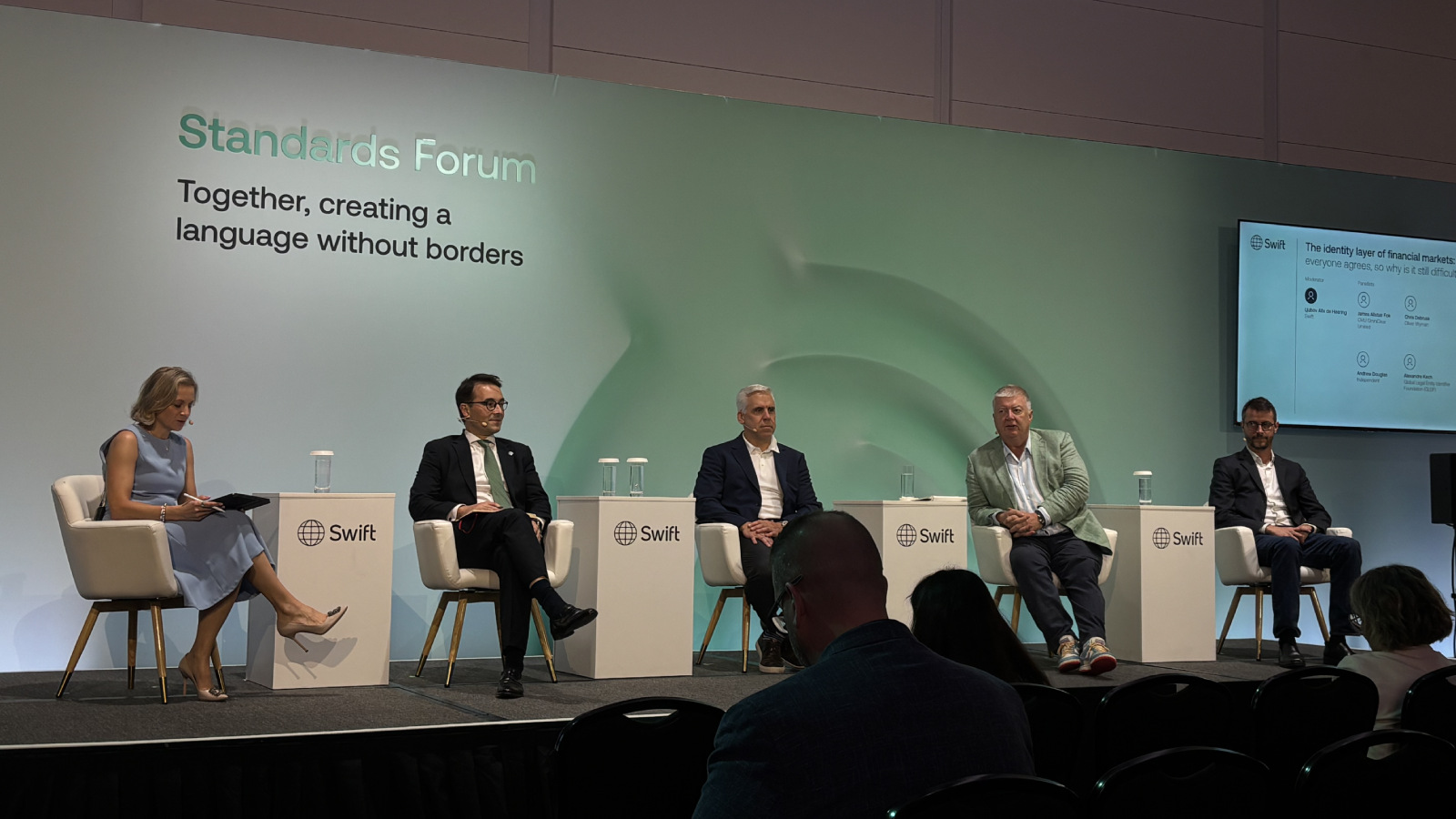



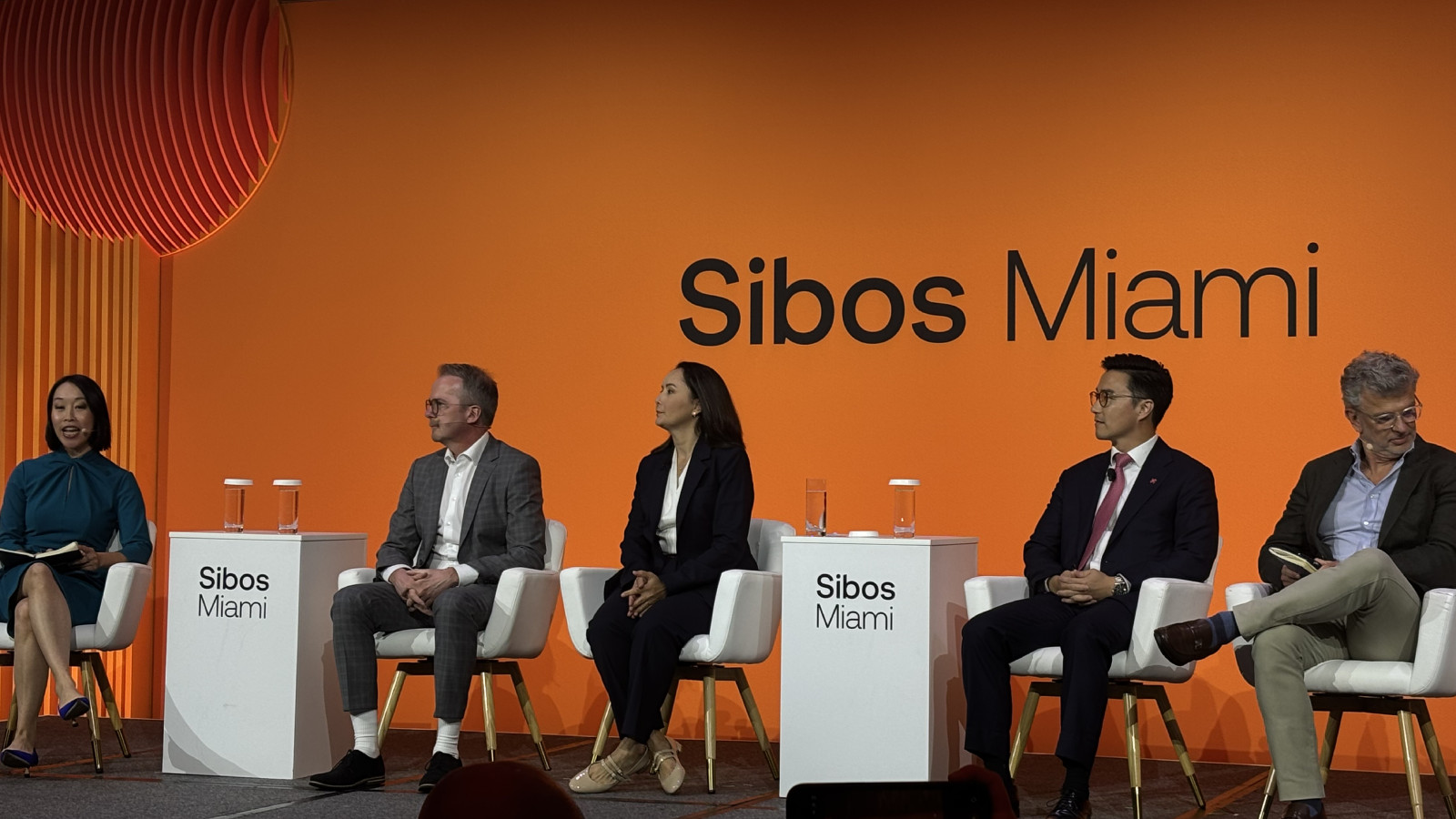
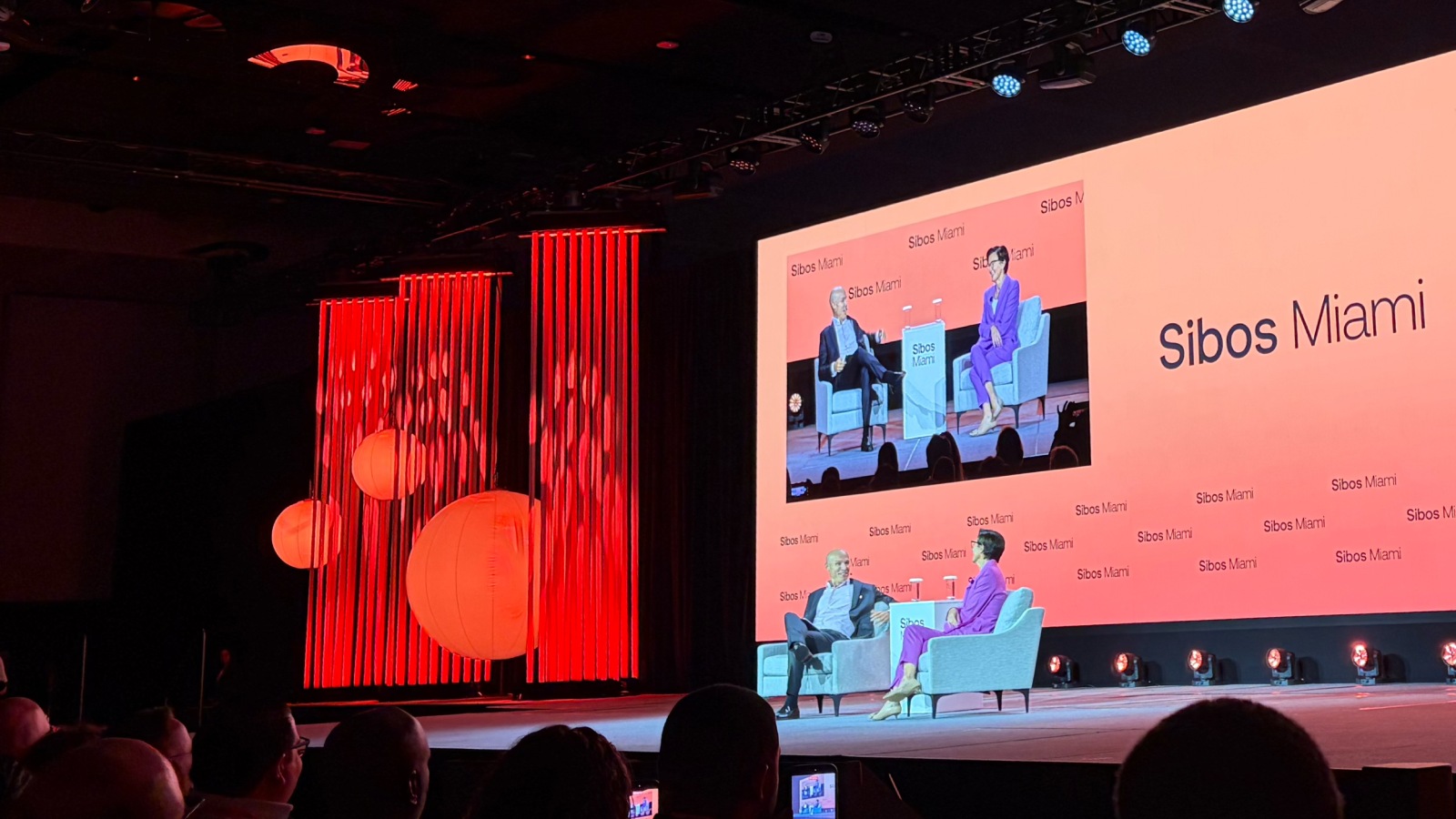
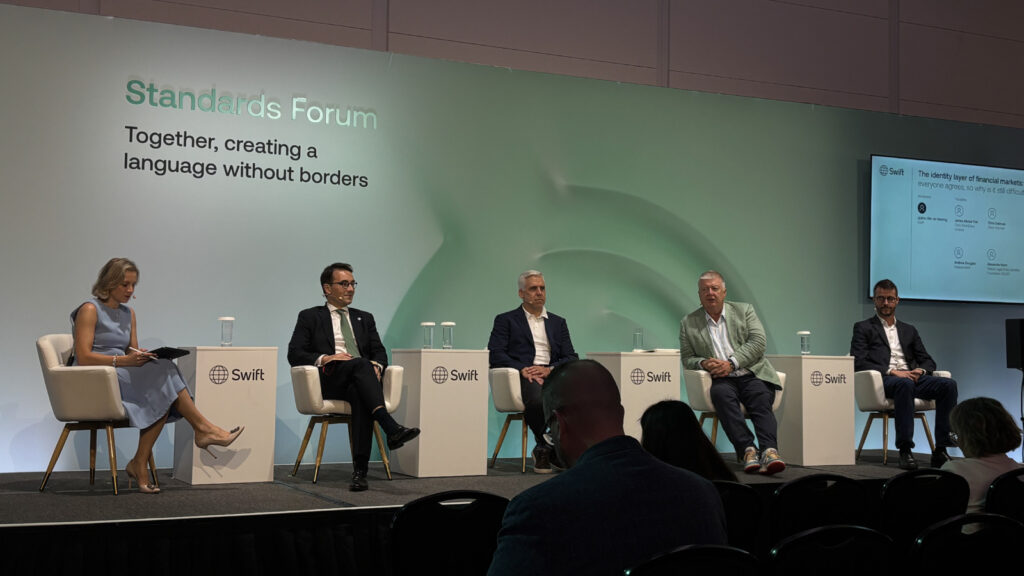
Financial markets have no shortage of identifiers. LEIs, BICs, ISINs and transaction identifiers all exist to answer a basic question: who or what is involved in a transaction? Yet agreeing on the value of identifiers has proved much easier than getting them embedded across the financial system. That was the question at the centre of the Sibos 2026 panel The identity layer of financial markets: everyone agrees, so why is it still difficult?
For Alexandre Kech, CEO of the Global Legal Entity Identifier Foundation (GLEIF), the problem starts with utility. Around 1,300–1,500 companies obtain an LEI each day, he said, but the roughly 3.5 million LEIs currently in existence still represent only a fraction of the estimated 400 million legal entities worldwide. “The importance of standardised identifiers like the LEI, like the BIC, like the UTI … is the utility,” Kech said. “How useful is it for the user?”
Regulation
Regulation can provide the push that voluntary adoption often lacks. Andrew Douglas, chair of the UK Accelerator Zone Task Force, argued that regulatory support had been instrumental in moving projects forward. “It needs external pressure to be brought to bear in order to make these things happen,” he said.

But mandates do not remove the practical problem of implementation. Chris DeBrusk, partner at Oliver Wyman, pointed to the complexity of legacy technology inside banks. A common identifier may sound like a simple addition, but connecting it across thousands of applications and older systems can require years of work and significant investment.
That makes the business case crucial. DeBrusk highlighted the push for a single view of the customer, as well as the growing importance of high-quality data for AI, as potential drivers for banks to connect information across their businesses. “AI requires good data. You get good data, you get good results,” he said.
Complications
Cross-border markets add another complication. James Fok, chief commercial officer at CMU OmniClear, argued that the answer is not necessarily to force every market onto the same standard. “I’m a very strong advocate, not of convergence, but of interoperability and interoperability by design,” he said.
The distinction matters. Markets may need to agree on the basics, the identity, instrument and transaction, without having to abandon the systems and structures that have developed in individual jurisdictions. Mapping between identifiers can provide the connection without requiring everything else to converge.
That leaves the industry with a less straightforward task than simply agreeing on a standard. Regulators can create pressure, commercial incentives can strengthen the business case, and market infrastructures can help spread implementation costs. But the systems still need to connect. For Kech, that requires greater cooperation between industries that are often tackling similar problems separately. “Break the silos,” he said.
Sibos 2026 plays out in Miami from 28 September to 1 October. We are there, view our coverage here.