

On day one of Sibos Miami, the heads of State Street and BBH spoke in separate fireside chats. Both shared differing takes of the same agenda and AI’s post-trade use cases.
Between them, State Street and Brown Brothers Harriman look after more than US$60 trillion of institutional assets with State Street alone accounting for close to US$58 trillion. The two have history: State Street agreed to buy BBH’s Investor Services business in 2021, before the deal was abandoned a year later.
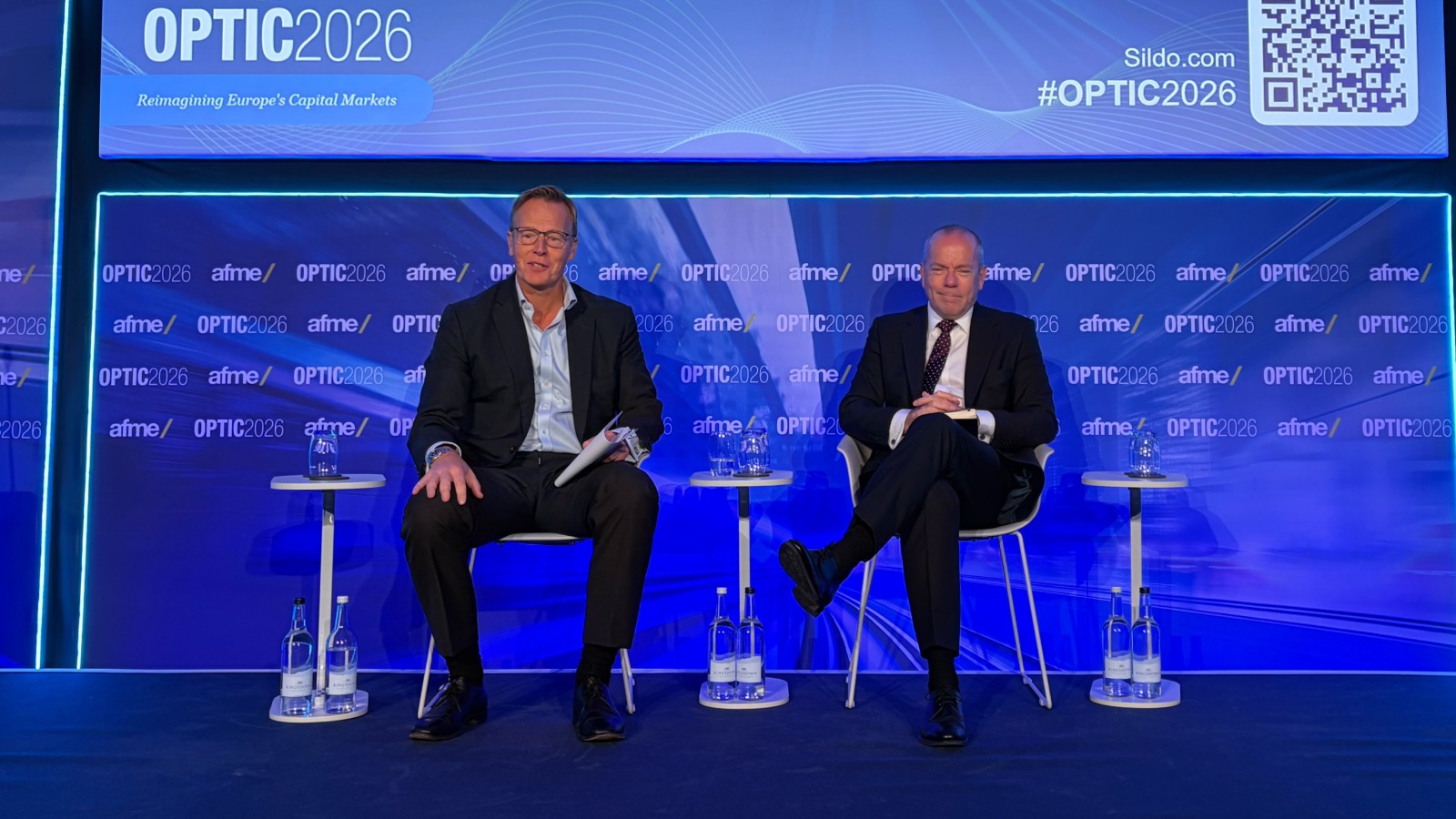
Bill Tyree, BBH’s managing partner, who retires at the end of the year, spoke with Silvia Pavoni of The Banker. Ron O’Hanley, State Street’s Chairman and CEO, was interviewed by John Watkins of Global Custodian. A central theme is AI and the future of work and offering specifics on its where they see it transforming post trade ops in the future.

AI beyond the process improvements
Banks measure AI by models, agents and users, Tyree said: “It’s become very quantitative.” BBH instead tries to “measure the client benefit”. He described a three-level “AI value stack”: personal productivity, then agents chained together to redesign workflows, and finally “the nirvana, the holy grail”, AI-native products that clients build into their own workflows.
O’Hanley said the value will go to “those that actually apply it well”. For custodians, “the promise of AI is true operating model transformation”, a phrase he admitted is “very overused”. That means removing whole steps, not necessarily people: corporate actions, for example, will no longer sit “over in the corner” but become “part of a continuous flow”. And “end-to-end doesn’t end at our walls”, he said; it extends to clients and providers.
Agents in the settlement chain
Tyree’s clearest example was Europe’s move to T+1, whose complexity “is so much more than the complexity was in the US”. BBH is developing an AI agent that watches trades match and alerts an operator to a likely fail.
Already announced is Braid, a new BBH affiliate selling AI-driven data transformation. Mapping work that “took days and weeks” now takes “seconds and minutes”
O’Hanley was cautious on ever-faster settlement. Atomic settlement is “probably not going to get to that. It’s probably going to get to something that’s settlement as necessary,” he said. “You’re actually putting risk in the shorter and shorter you get.”
He sees AI agents moving from executing instructions to initiating them, but only under tight controls. Otherwise, he warned, the industry risks “a made-for-TV movie of some kind of agent running amok in the financial system”.
“This is the quantum moment”
O’Hanley gave the day’s starkest warning on cyber. After his first briefing on the frontier model Mythos, ahead of Project Glasswing, an initiative to evaluate next-generation AI tools for defensive cybersecurity across critical infrastructure, “I walked out of that meeting and said we’ve been fearing the quantum moment and this is the quantum moment,” he said. “I can’t overstate enough how serious the problems are that it’s creating.”
Remediation that once took weeks now takes “usually closer to hours”. The same tools have delivered a “significant double-digit increase in productivity” among State Street’s developers. “We’re not laying off any developers.”
Tyree framed it as governance. “Trust is developed through good governance,” he said. BBH runs a single firm-wide AI committee, co-chaired by its heads of cybersecurity and change, built to create “tension” between control and innovation. “If you’re a regulated bank, you had better have a strong central governing body.”
Different worries on talent
Neither expects AI to shrink his workforce. “We don’t look at our people as inefficiencies that AI can eliminate. We look at our people as strategic investments,” Tyree said. As a partnership, “we don’t have a share price that will go up because you did a layoff.”
His concern is the universities. Almost all of BBH’s 60 summer interns told him: “At college, we’re not allowed to use AI … because they think we’re cheating.” Looking ahead, he wants “critical reasoning” and “the ability and competence to make decisions with imperfect information”, skills often honed in the humanities.
O’Hanley has increased graduate hiring “because they are the AI natives now”. His worry is losing experience. “If we lose that reservoir of this is how it all works, are we losing the pattern recognition ability to be able to say … have you thought about X?” Citing a history of the 1873 crash, he noted that each generation “forgets about what caused that crisis and does it again”.
Digital: the bigger shift?
Tyree closed with a prediction. “The bigger transformation is going to come from digital, which I think has momentum, even though it doesn’t really have a business case yet.”
O’Hanley shares the optimism. Tokenised money market funds could make “a six trillion dollar” pool of US assets eligible as collateral, and tokenisation could give retirement savers access to illiquid assets. Both said the rules must cross borders: Tyree for AI, O’Hanley for tokenisation.
AI dominated the agenda in these fireside chats. But as Tyree put it, digital “might be a bigger transformation than the AI, although I think AI will probably support it.”
Sibos 2026 plays out in Miami from 28 September to 1 October. We are there, overview our coverage here.