
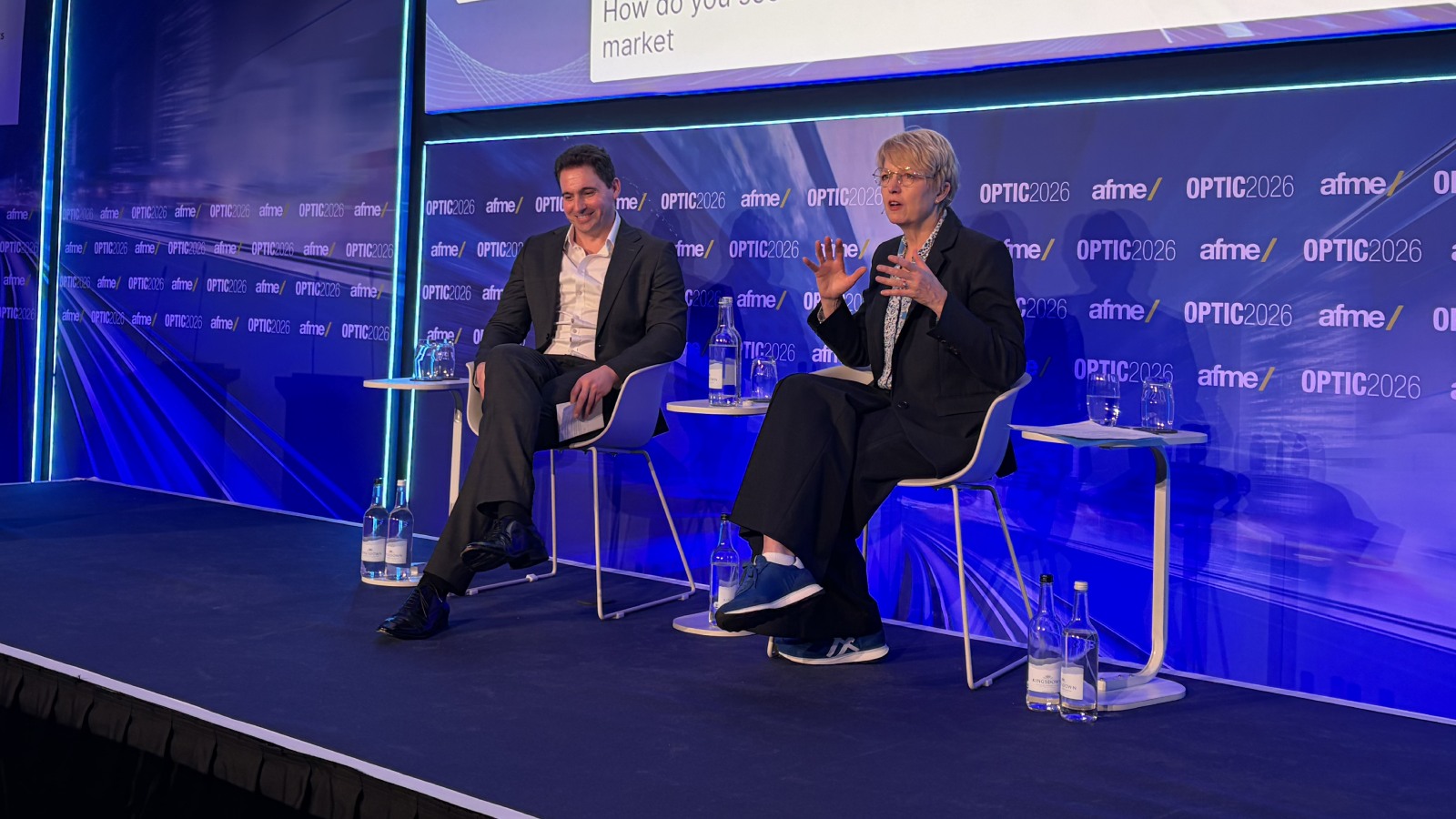


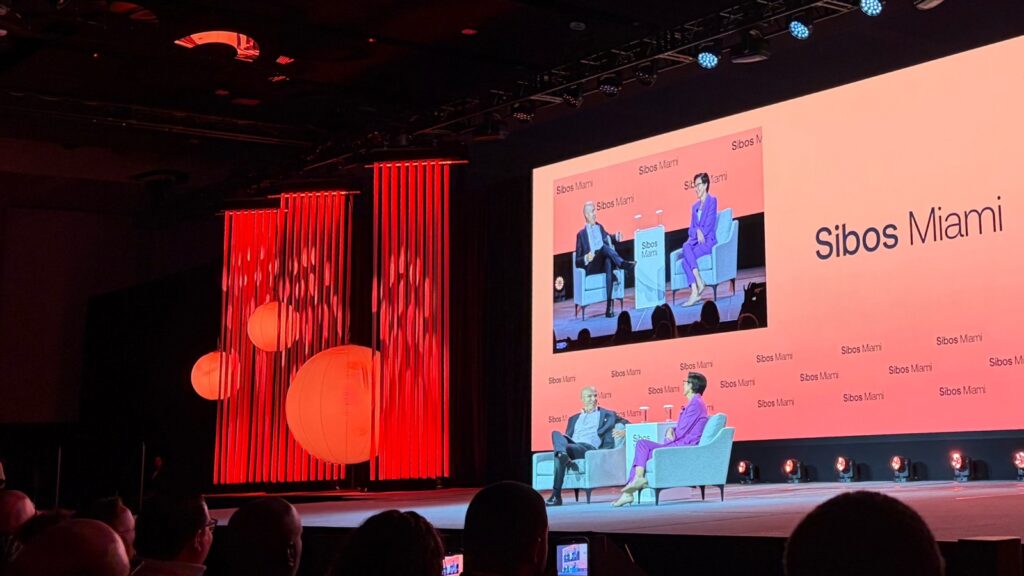
Everyone wants plumbing that works, whether that involves physical pipes in our homes, or the more metaphorical ones behind the scenes in our banks. For some, like Dan Katz, first deputy managing director of the IMF, it’s their job to worry about it. Others, such as Jane Fraser, chair and CEO of Citi, are concerned about making sure their clients don’t have to worry about it. Speaking at the opening plenary at Sibos 2026, Katz and Fraser set the scene for this year’s conversations.
“Clients want a world where they’re not worried about how the plumbing is working,” says Fraser. According to her, the banks’ real job is to work out what clients actually need. Her list: always-on, instant, safe, trusted and “incredibly efficient on the balance sheet”, along with a way to join the traditional rails to digital assets and AI. “Our clients want this to be as uncomplicated for them as possible,” she says. “They want to make sure it’s as seamless, as easy as possible.”
Behind the scenes, it is Katz’s mission to ensure those clients get exactly that. In his speech, he highlighted three points of focus for a banking system that’s AI-intensive: how AI can improve the existing payment system, how the financial system needs to be re-engineered to support an AI-intensive world, and how policymakers should respond to risks that are unique to AI.

Build on the old
According to Katz, the beauty of AI – in particular, agentic systems – in payments is their ability to “interpret context and operate without requiring a new set of instructions for each transaction”. Agents make it possible to automate complex transactions that currently require extensive human involvement, such as coordinating machine-to-machine payments, and optimising timing based on liquidity, costs, and contractual obligations. “Some of this is possible through programmability,” he concedes, “But programmability only takes you so far. It requires explicit instructions for each task and operates within predefined parameters.”
He believes that the scale of benefits from applying AI to the existing payment system architecture should not be underestimated. “Payments are about much more than just the public infrastructure that supports them. A full payments product requires regulatory compliance, dispute resolution, and customer support. Those functions are needed regardless of whether payments run on blockchain rails or other infrastructures,” he points out. “In my view, many of the benefits promised by a reimagined financial system can instead be delivered by upgrading the core payment systems that we already have… This is where in the short run we are likely to see more tangible benefits.”
Connect the dots
Moving on to how the financial system could be re-engineered to support an AI-intensive world, Katz desribed tokenisation as “especially promising”. He mentioned CHIPS, a multi‑bank initiative to create a shared tokenised deposit settlement platform, as an example.
For Fraser, the promise of seamlessness the that she is looking for is “one of the reasons I love tokenisation”. Citi has also jumped on the tokenisation bandwagon. It is taking existing client accounts, moving money on the blockchain through digital deposits linked into Citi Token Services. The programmability that comes with it means “you start solving these different pain points for clients, creating new capabilities that weren’t there before”. She first presented blockchain to Citi’s board 15 years ago and said client adoption has been “very slow”. Now, “it feels like we’re beginning to hit this inflexion point”.
The seamless experience only works if the pipes connect. Pointing to Citi’s new on/off-ramp partnership with Coinbase, which was announced on Monday, she says, “You can’t have only the crypto and the digital asset without the linkage to the traditional rails.” Innovation has to come without breaking trust. “If you move fast and you break things, we are failing in our mandate. Our mandate has to be move fast while retaining trust.”
Katz echoed that in his speech, saying, “The challenge for policymakers, of course, is to support this innovation without compromising stability. And that begins with legal and regulatory frameworks that permit different payment technologies to compete on their merits… Authorities should avoid erecting unnecessary obstacles to interoperability across network.”
Put the brakes on
For is final point – the risks unique to AI – Katz says, “Tokenised markets depend heavily on shared, complex infrastructure and a small number of third-party providers. That means a cyber incident can propagate widely enough to become systemic, either with the financial system we have today or with the financial system we’re building for tomorrow.”
He questioned whether “increasingly powerful AI systems could pose such severe risk to society as a whole that new regulation is needed to slow the pace of development”.
“To the extent that new interventions are needed, they should be proportionate, targeted, and internationally coordinated while taking great care not to discourage competition and innovation. AI can be transformative for the payment system. Handled well, it can help build a payment system that is more efficient, more competitive, and better suited to the economy of the future.”
Sibos 2026 plays out in Miami from 28 September to 1 October. We are there, view our coverage here.