
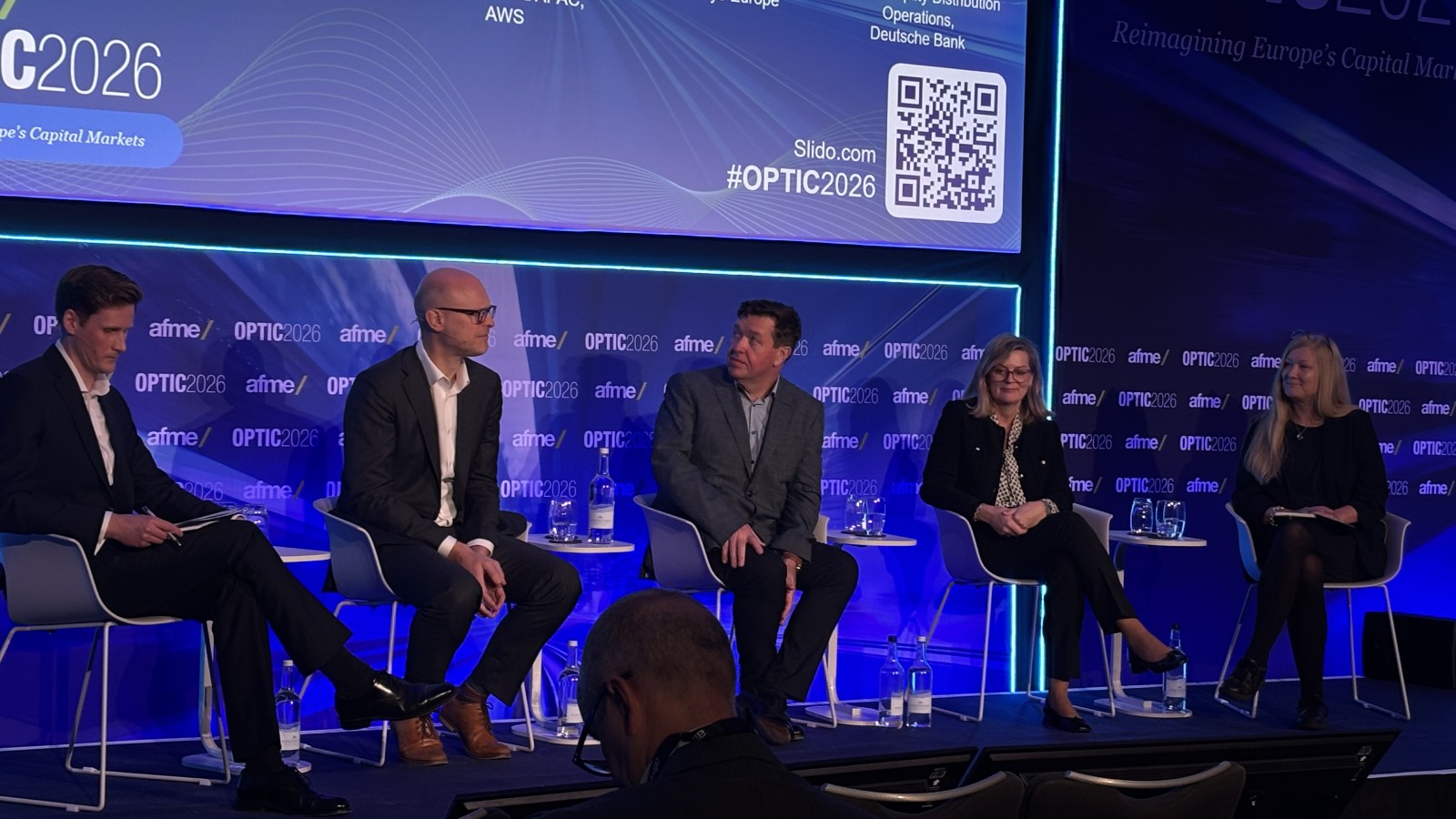
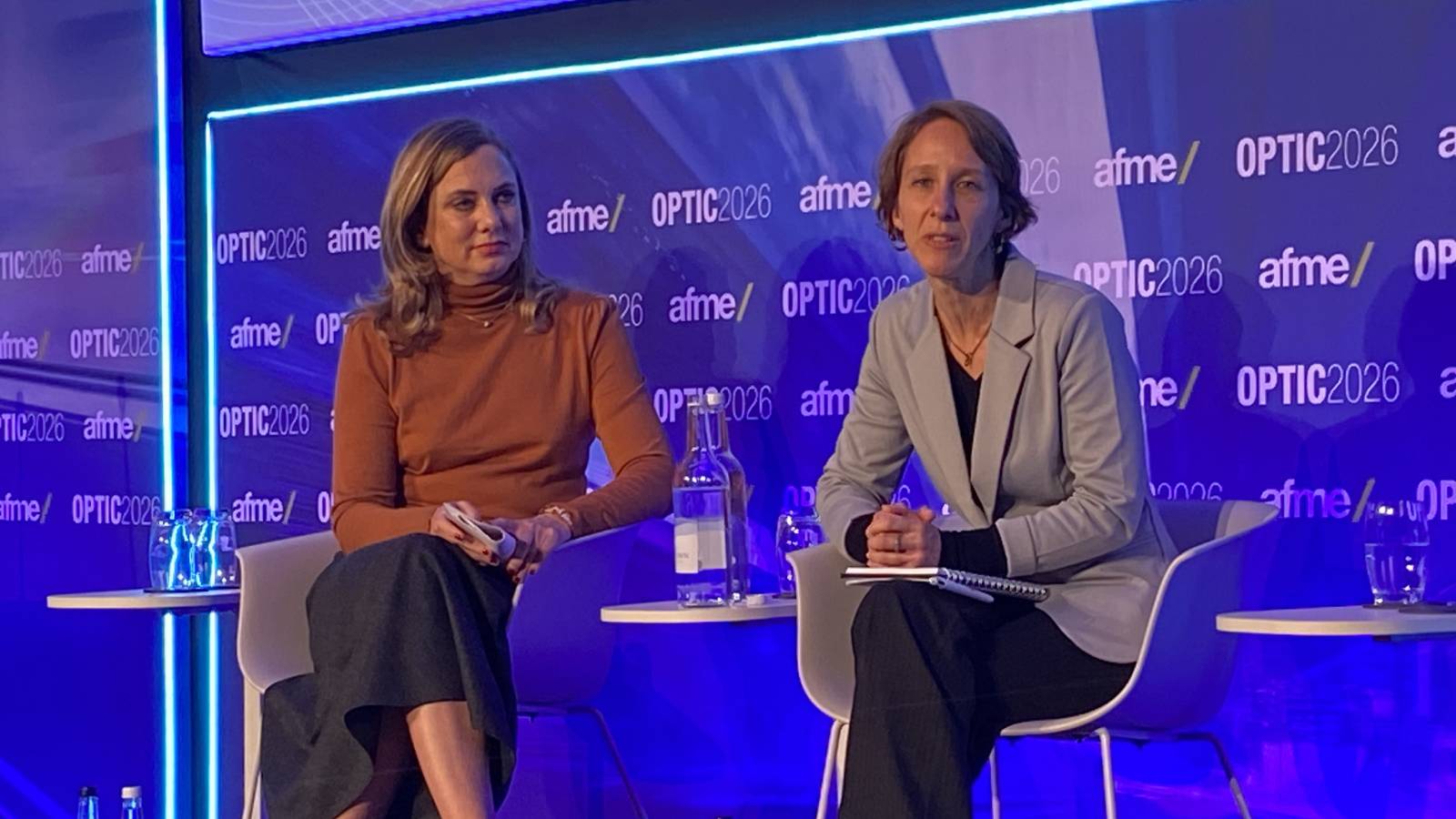
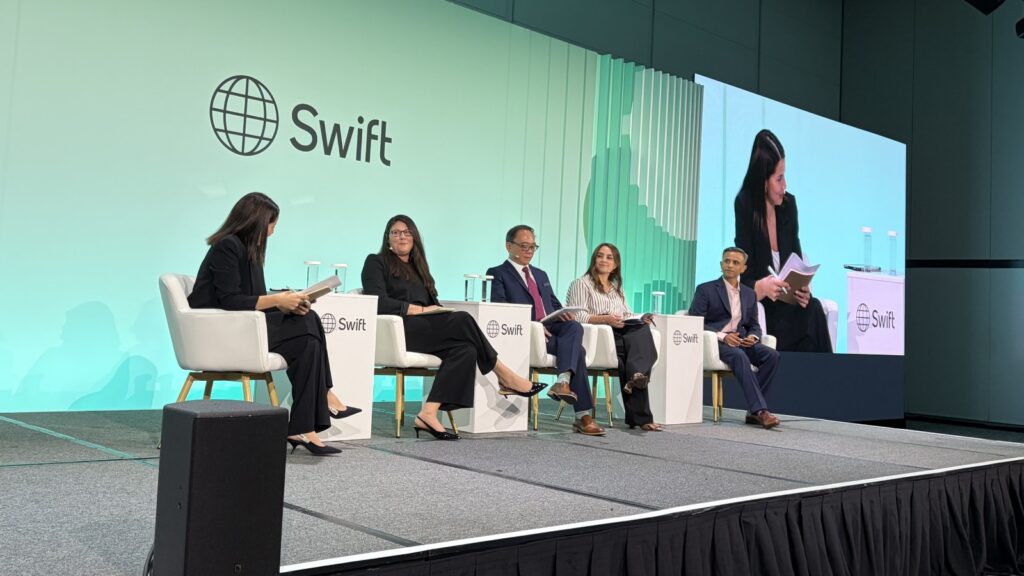
If they only had a dollar to put towards corporate actions modernisation, what would they put their dollar against – standards, data, AI, or interoperability? This was a question put to the panel in the session titled “Reducing fragmentation through corporate actions modernisation” at Sibos 2026. The answer was unanimous: data, always data.
“My dollar goes to data because corporate actions outcomes depend on the information that you have,” explains Bidhu Shekhar Rusia, executive director of Corporate Actions at S&P Global Market Intelligence. “All the other aspects – AI, standardisation, and interoperability, are equally important, but their benefits only scale up with better underlying data.”
Katelyn O’grady, product head of Global Custody at Brown Brothers Harriman, agrees, saying, “Data is the core bedrock and infrastructure that everything needs to be built on.”
Building trust
With so much riding on the data, the next question, naturally, was how to build a trusted source. For Rusia, trustworthy data needs to meet three requirements: validated, transparent, and timely.
He made a quick point about the last requirement: “If you are getting the best quality data after the key deadline of an event, it is of no use.”
O’grady, chips in as a user of that data, “Validation is a big point because we are always going to get discrepant data at some point. But what’s interesting about standards is that they have really been about curating how data is communicated, not about defining who the true source of the data is – who is the one source of truth that should be the go-to whenever there is the need for validation, which is almost always?”
For her, trust needs to go one step beyond “just knowing what the source of the data is” to making sure that the data is “accessible to everybody at the same time”.
“The way the custody chain is structured today, your best recourse is to go to the layer above you in the chain… you are completely reliant on that first step,” she continues. “But wouldn’t it be so much more transparent if you were able to have one location where everybody in the chain could see the same truth at the same time?”
Seeking solutions
One of the challenges with data harmonisation is that even technology and regulation can’t necessarily help matters.
“Technology has significantly enabled us to automate the complexity,” says Rusia. “But has it helped us eliminate the complexity? The answer is no.”
Available technology is only as good as its uptake, but this an industry where many participants are still questioning the need to automate when Excel sheets and PDFs will suffice.
As for regulation, Rusia observes that “even the rollout of standards is becoming a cause of fragmentation”.
“What is happening in certain markets is that the flexibility which the format provides is being used to fit the existing processes – so, the extension schema that comes along with ISO 20022 messages. Every market is building its own extension schema. We have seen examples in certain European markets where for one message type, there are three versions of XSD in one single market.”
Chien Min Rimy Gui, head of the Securities Services business at DBS, summarises the overarching sentiment of the panel: even the most sophisticated systems will not help with data harmonisation if the everyone does not have the same definition and terminology what what the data point is. “Otherwise, the fragmentation will continue.”
Sibos 2026 plays out in Miami from 28 September to 1 October. We are there, view our coverage here.