




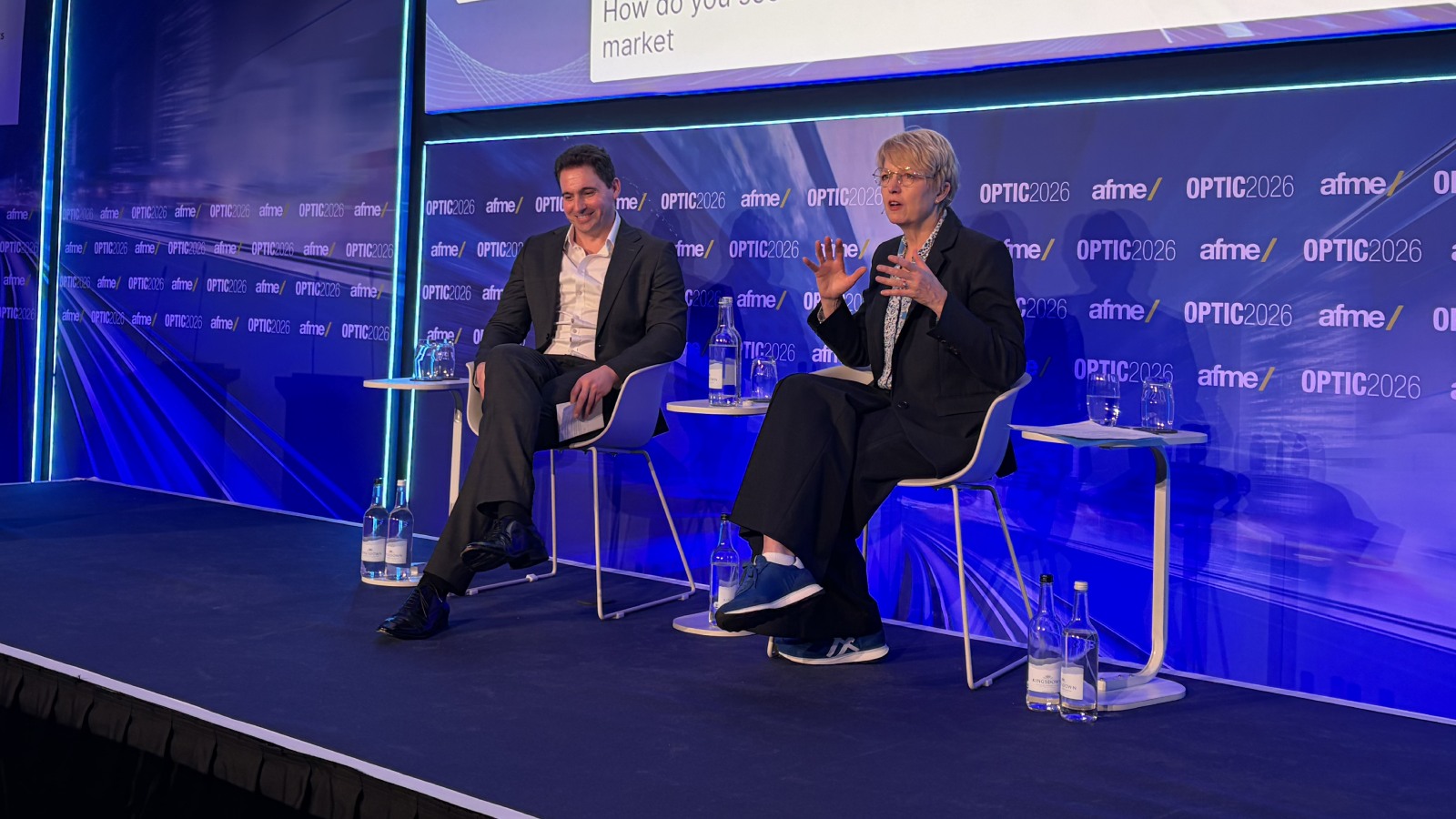


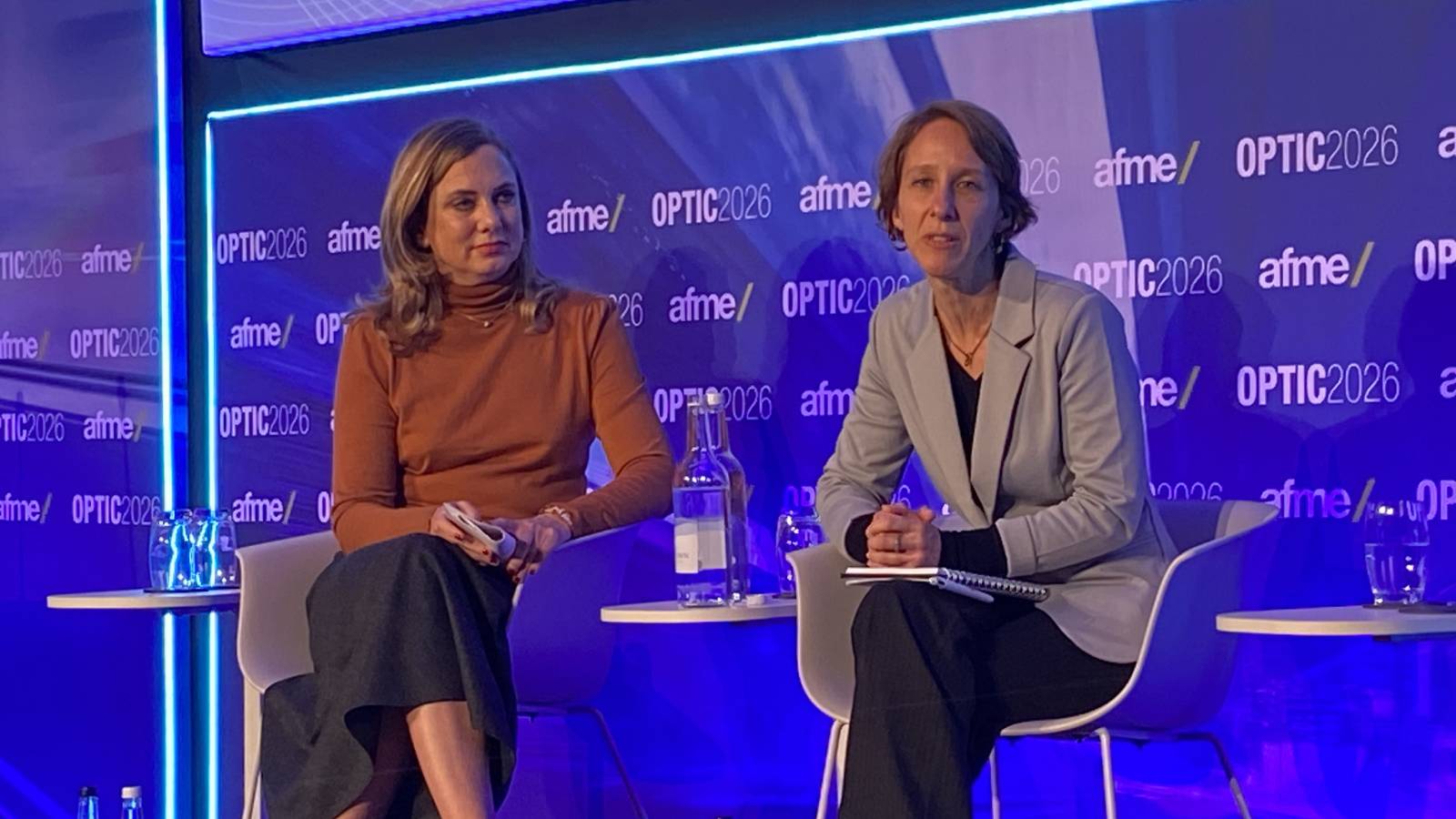




The deadline for T+1 transition is drawing near for the UK, Switzerland and the EU. In the session titled “T+1 and the race for global settlement alignment” at Sibos 2026, six experts – including some who have already experienced the change in other markets – took to the stage to share insights on what to do and the pitfalls to avoid.
For India, T+1 is old news – it implemented the shorter settlement cycle for equities three years ago in 2023. Vijay Chandok, managing director and CEO of the country’s National Securities Depository Limited (NSDL) warned the audience that the most challenging aspect of the transition might not be what they expect. “If you think that technology is going to be the big challenge, the bad news is that it’s the easier challenge,” he says. “The tougher challenge was changing the mindsets of all the market participants – getting the buy-in from all of them to get their operating processes aligned. That was a tougher one because it called for behavioural shifts.”
He shared India’s process for success. The country took a phased approach to shortening the settlement cycle, gradually implementing it over four quarters. Every quarter saw more “blocks of stocks” traded under T+1, starting with those relatively less traded, and ending with the most actively traded. Although this meant that T+1 co-existed with T+2 for a year, it also allowed the industry to gain more than just a theoretical understanding of T+1 by the time it was the last quarter, when the most actively traded stocks with the most foreign investors were affected by the change.

The case for tough love
While India took a rather “soft” approach to help the industry adapt, Hannah Elson, global head of custody at JP Morgan, cautioned against being too protective of market particpants. According to her, a lesson can be learnt from the delay of Swift’s Standards Release 2026: “That was a situation where all the big market infrastructures, banks, and payment providers were ready. And I think today we’d probably all sit here very confidently and say we’ll be ready for T+1 a year from now, but actually it’s about everybody else.” She expressed concerns that shielding the market too well from the challenges of the transition might only result in a lack of urgency, which would also create risk.
Sachin Mohindra, executive director at Goldman Sachs, compared the transition to T+1 to a decluttering process, and shared a more positive outlook. “If anything, it has strengthened our client relations because it has allowed us to start having conversations that we probably didn’t dive into earlier on – asking very difficult questions about the way certain processes work,” he says. “It allows you to look at where you have redundant processes. I liken it to downsizing your house – you’re forced to get rid of the clutter, you have no choice. T+1 gives people no choice but to fine-tune and optimise their processes.”
Manageable hurdles
According to Mohindra, the challenges of T+1 should not be so surprising. “The great thing about T+1 is, you can model it and simulate it today,” he says. By pretending to be in a T+1 environment and setting up a cut-off today, then observing the trades that would unmatch and fail the next, firms can identify the root cause of those fails and understand what needs to be done.
The reality is, of course, not so rosy. In a poll posted to the audience on the aspects of operating in a T+1 environment that pose the greatest systemic risk, trapped liquidity and funding mismatches came up as a concern.
Dimitri Pattyn, deputy director general of the European Central Bank (ECB) addresses this, “T+1 doesn’t necessarily create an overall liquidity shortfall. I think it’s more about clients having less time to identify and mobilise cash and securities. For international investors, the interaction between European time zones and local market processing becomes particularly important.” The challenge is thus about operational liquidity. “It’s making sure that you’ve got the right asset in the right currency, at the right time, in the right location, when settlement’s ready to occur.”
Another challenge that keeps coming up in the conversation about T+1 is that of FX. For Elson, it would boil down to data – “Having a real-time understanding of your cash position is critical.”
The main difficulty with FX under T+1 is that it will now have to be done before trading. “It requires a different approach in terms of how clients are set up to do their FX and how they execute their FX,” says Elson. She has observed two main approaches taken by her clients: setting up a regional desk to allow for earlier FX trading outside of their time zone, and looking to their custodians to take the FX burden.
Step by step
Unlike the US, which took what he called a “big bang” approach of moving everything in one shot to T+1 in May 2024, Mohindra considered it a plus that the EU, UK, and Switzerland are looking at an approach with more checkpoints in place – in particular, the 6 December 2026 date for meeting allocation and confirmation requirements. “We need these checkpoints in order to make sure that we have a controlled migration,” he says. It would allow for the flagging of market participants that are failing to meet these checkpoints, as well as time to resolve the issues causing the failure.
He warns against getting fixated on a threshold and using it as a be-all-end-all target. “It’s a little dangerous because there can be an element of complacency to think, ‘Well, we hit 95%, we’re good now, we’re ready for T+1.’ But for those really high volume clients, that 5% is probably larger than most other clients put together… I think the name of the game is really about continuous improvement. It’s not about a single target. It’s about how you make sure you’re constantly improving your performances and getting closer to 100%.”
Sibos 2026 plays out in Miami from 28 September to 1 October. We are there, view our coverage here.