


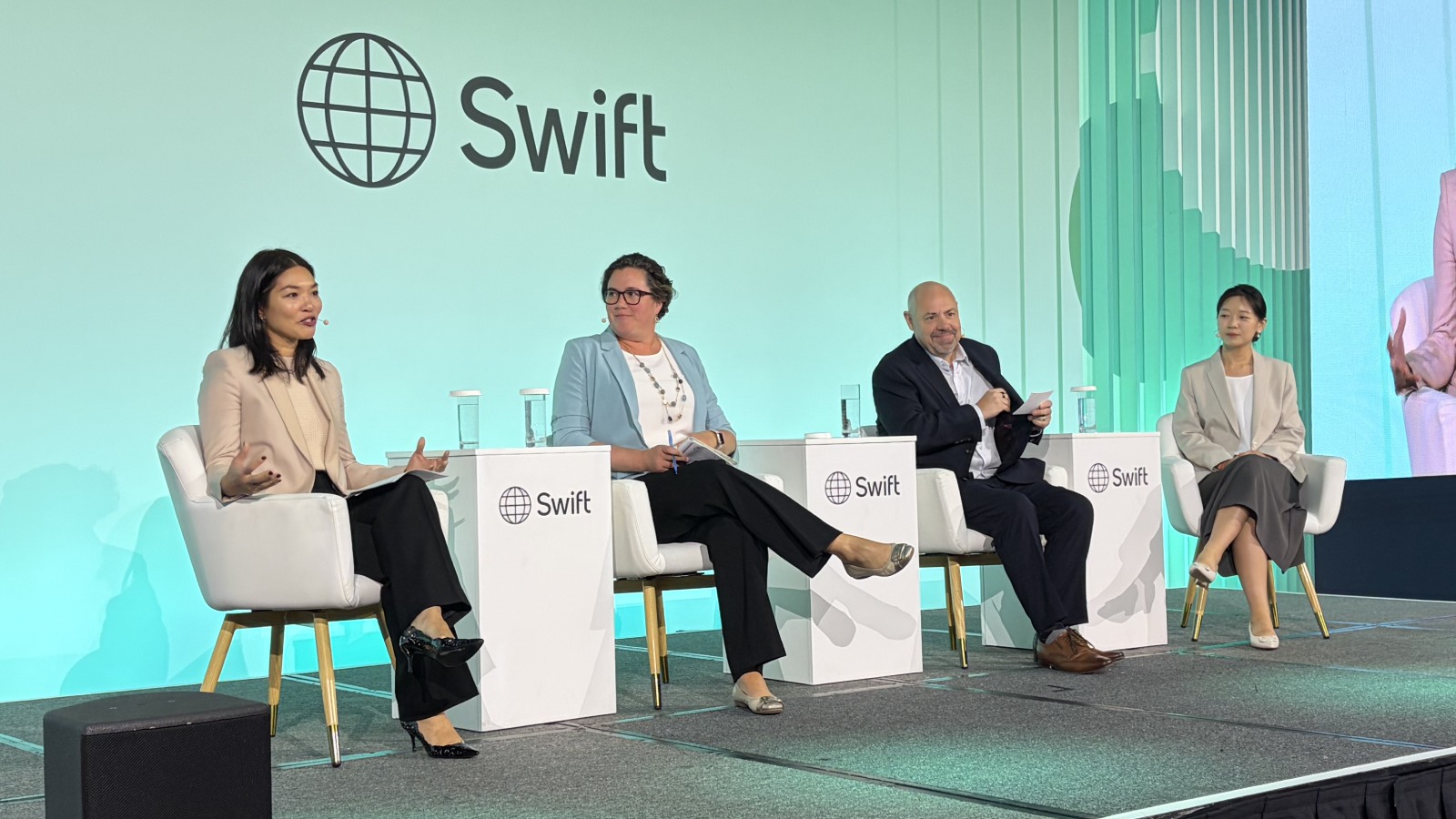









INTERVIEW | Overnight trading – once the preserve of a handful of alternative trading systems (ATSs) – is rapidly evolving toward a near-continuous 24/7 model that will fundamentally reshape the post-trade ecosystem. As the industry tests for 24/5, we asked Val Wotton, head of equity solutions at the Depository Trust & Clearing Corporation what participants should do next.
The clearest view of the road to 24/7 equities in the U.S. and what’s on the industry’s mind, says Val Wotton, is found in a recently convened Securities Industry and Financial Markets Association (SIFMA)-convened “ops and tech” roundtable discussion, which brought together regulators, exchanges, broker-dealers, buy-side and sell-side participants, and infrastructure providers to map out the operational, technological, and regulatory prerequisites for 24/7 trading.
While it’s grounded in demand, particularly from international retail investors, panelists were clear that institutional adoption will follow once the infrastructure and regulatory framework catches up with the retail-driven demand already present. Panelists repeatedly stressed that overnight trading cannot scale safely without corresponding changes to market data dissemination, trade reporting, clearing, settlement, and supervision frameworks.

Clearing: The NSCC’s critical role
The DTCC’s National Securities Clearing Corporation (NSCC) sits at the heart of the transition and is planning to operate 24/5 – from Sunday 8 pm Eastern Time (ET) to Friday 8 pm ET – beginning on 28 June 2026. This expansion will enable the NSCC to apply its central counterparty (CCP) guarantee immediately to overnight transactions, reducing counterparty risk across time zones and enhancing systemic resilience.
A critical element of the transition is the preservation of a single U.S. trade date boundary. Panelists broadly supported the proposal for the U.S. trade date to continue ending at 8 pm ET, even in a 23/5 model. This consistency is essential for clearing, settlement, and reporting alignment.
Market data and the SIP gap
Securities Information Processors (SIPs) and Trade Reporting Facilities (TRFs) currently do not operate fully overnight – a significant constraint on institutional confidence. Several buy-side participants stressed that the consolidated tape and real-time National Best Bid and Offer (NBBO) are not merely technical conveniences; they are prerequisites for trading at scale without amplifying market-impact risk.
All panelists agreed that the planned expansion of SIP and TRF operating hours is necessary – but not sufficient. Full alignment across settlement, clearing, and price reporting remains the bar that institutional participants require before they will move off the sidelines.
Batch processing: The hidden constraint
One of the less visible but operationally significant constraints is the reliance on overnight batch processing cycles. Historically, the trading downtime between sessions has provided firms with the time needed to run affirmation and allocation processes, post-trade reconciliation, risk checks, and system maintenance. Many of these workflows assume a daily pause of more than one hour. Compressing that window to one hour – or eliminating it entirely- without redesigning downstream processes creates real operational fragility, particularly for firms with significant small- and mid-cap or less-liquid exposures. The industry must redesign these workflows for near-continuous operations without compromising risk management.
Corporate Actions: The primary operational risk
Corporate actions processing was identified as the foremost area of operational concern. The current framework is already fragmented during core hours; overnight trading materially heightens the risk of inconsistent handling of splits, dividends, and symbol changes.
The roundtable produced a detailed set of modernisation proposals, including: elimination of guaranteed delivery and protect periods; a standardised 6 pm ET cutoff for voluntary expirations aligned with DTCC’s election cutoff; mandatory trading halts for complex income, mandatory, and voluntary events; a 24-hour minimum notice period before implementing corporate action halts; improved and standardised notifications to prevent late dissemination; incorporation of corporate action information into SIP feeds; and issuer education programmes.
The biggest takeaway from the roundtable is that the pace and scope of any expansion must be determined by infrastructure readiness and operational preparedness, not by the ambition of the trading venues themselves.
Q&A: The operational and human realities of 24/5 settlement
The industry-wide testing phase for 24/5 trading in US equity markets officially commenced on January 11 to ensure firms are ready to process trades ahead of NSCC’s June transition to a 24/5 schedule. What do industry participants need to build – and what does that mean for people and processes behind the infrastructure in a 24/5 world?
Val Wotton: From our perspective, the first step is already underway. We’ve extended our operating hours significantly. Where we previously opened at 4 am, we now open at 1:30 am, and by June we’ll be operating continuously from 8 pm Sunday through 8 pm Friday.
That means trades executed overnight – particularly through ATSs – are already sitting at our ‘front door,’ waiting for us to open. The next logical step is to guarantee those trades, so the industry has confidence that overnight activity is treated with the same robustness as daytime trading.
The important point is that settlement remains T+1. The systems don’t change. We can manage the risk – whether it falls into start- or end-of-day margin – within the existing framework. The industry has coalesced around an 8 pm. ‘close’ so anything after that is effectively the next day’s transaction date. That simplifies the control environment. We’re very confident in the NSCC to go live in June, subject to regulatory approval.
Q: What needs to happen next for exchanges to follow?
Val Wotton:Nasdaq and Exchanges have communicated that they are ready from a technical standpoint, but two industry issues still need alignment: volatility controls – specifically what limit-up/limit-down thresholds should be overnight – and corporate actions, where exchanges plan a pause between 8–9 pm to process events. Vanilla actions may fit in that window; complex ones like reverse splits may require halting the underlying until completion. SIFMA is developing best practices in these areas.
These more complex issues won’t prevent NSCC from going live, but they determine when exchanges can fully switch on, as well as the SIPs and FINRA, who have both communicated they will be ready when the exchanges are ready to go live.
Q: What does the market still need to operate confidently in 24/5?
Val Wotton:To besafe in the knowledge that rules that apply during the day, apply overnight. Three things matter most: price transparency – a consolidated tape showing overnight bid/offer is essential for discovery and fairness; real-time reporting – the trade reporting facility must operate seamlessly across the full 24/5 window; and investor protections – limit-up/limit-down and circuit breakers must reflect the reality that overnight liquidity is thinner and spreads are wider.
For hedge funds and institutional investors, the question is liquidity. Retail – especially Asia and US West Coast – will likely continue to drive early adoption of 24×5 trading.
Q: Will operations desks need to expand?
Val Wotton:Every firm will need to assess that. Technology already runs 24/7, and most firms have follow-the-sun support. The question is seniority – do you have the right decision-makers available out of hours?
If a trading desk is taking risk overnight, firms must demonstrate proper supervision, whether that’s onshore or offshore. Operationally, many firms already operate a follow the sun model for client service and tech support. The bigger question is trading and risk management: if there’s a major market announcement at 2 am, who acts? Do you rely on algos? Can APAC risk teams cover US equities? There’s plenty of precedent – firms already support Middle Eastern markets on Sundays – but the supervisory model needs to be robust. It’s less about headcount and more about the quality and authority of the people making decisions.
Q: What’s the biggest mindset shift firms need to make?
Val Wotton:This isn’t just a technology change—it’s an operating model change. Firms need to think about supervision, risk, transparency, and the human element of running a market that never closes.