



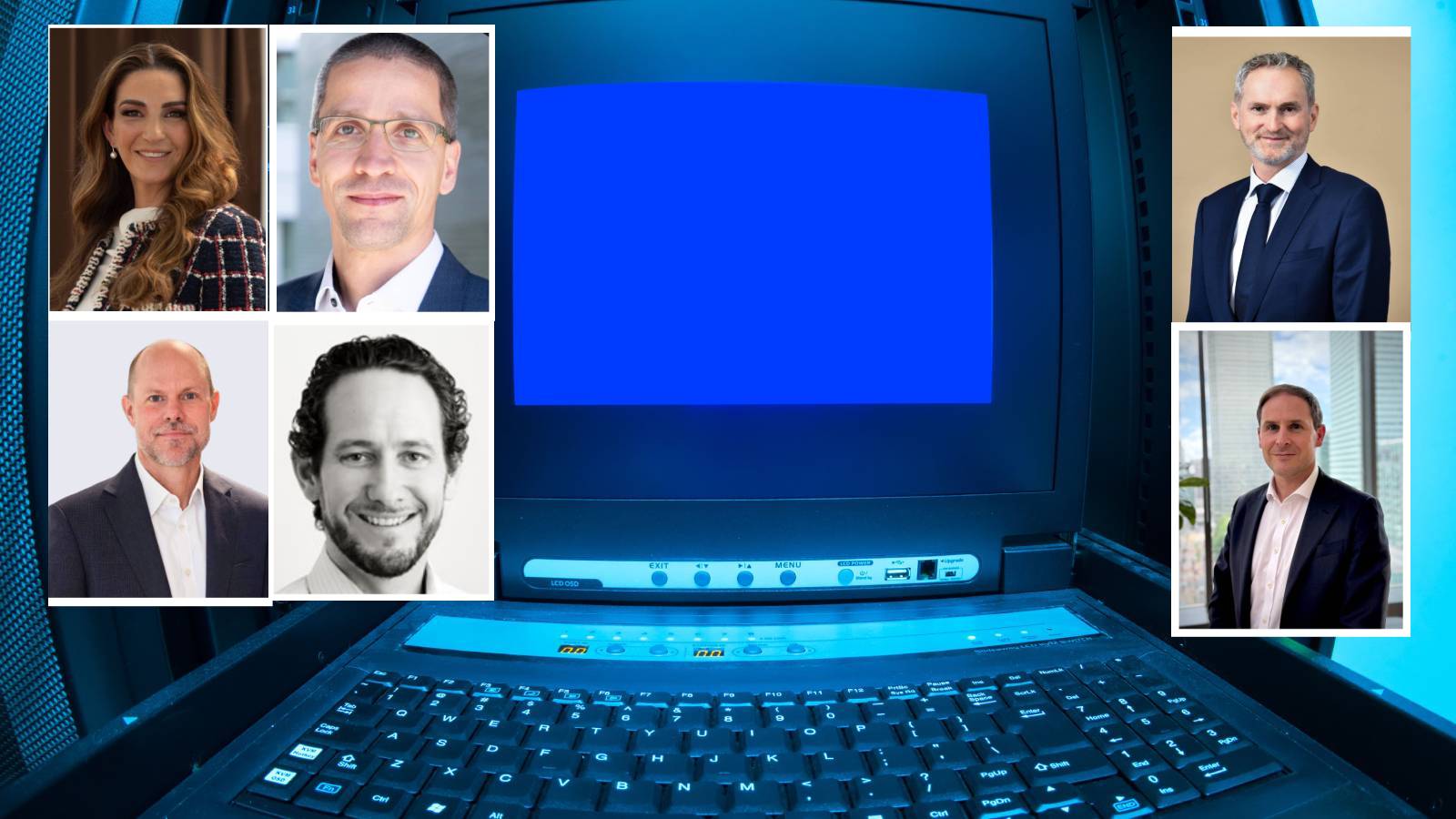





Artificial intelligence is moving from experiment to execution in post-trade, according to industry leaders at Sibos in Frankfurt. In a session moderated by Jon Watkins, Managing Editor of Global Custodian, experts from Nvidia, Brown Brothers Harriman, BNY and S&P Global Market Intelligence explored how the technology is reshaping efficiency, compliance, and data management.
Ioana Boier, Global Head of Capital Markets Strategy at Nvidia framed the discussion with an automotive analogy: “There’s data, there’s AI, and then there is AI factories.” She compared data to fuel, AI to the engine control unit, and compute power to horsepower. “You cannot have AI without good data,” she said, stressing that intelligent outcomes and decision-making rely on the combination of quality data, AI models, and the capacity to run them. Boyer noted that this balance is essentially a trade-off between speed and intelligence: more computational capacity allows faster reactions and deeper insights, pushing the “Pareto frontier” forward.
Feedback Loops
For Jay Hinton, Global Head of Product at BNY, the real power lies in feedback loops. “Not only does AI produce insights, but it’s a generator of data as well, consumer of data. You end up with what is hopefully a virtuous cycle, where the more you learn, the more data you produce, the more useful outcomes you generate.”

Ankush Zutshi, Managing Director – Head of Software, Enterprise Solutions at S&P Global Market Intelligence , pointed to use cases where AI is already tackling complexity, including ESG datasets that lack standard identifiers. “AI is also helping us create a lot of unified, right data models, which can then actually be used further as a raw material for AI output.”
Accelerated onboarding
Yet the panelists were unanimous that AI will not displace domain knowledge. Hinton was blunt: “I don’t believe it. I think if anything, it allows you to deploy more of them and develop more nuance.” Zutshi agreed, adding that models trained on historical context cannot resolve entirely new situations.
Kevin Welch, Transformation Officer at Brown Brothers Harriman highlighted another angle: onboarding. “You digitise some of that subject matter expertise for your best people. And actually, you create a knowledge base around that that you can query. It allows the onboarding of new employees to really get accelerated.”
Billions on the line
Looking forward, the challenge will be scaling and governance. Boier stressed the importance of real-time processing, while Welch argued that firms need a mix of in-house and external expertise to execute transformations. And for Zutshi, human oversight will remain non-negotiable: “You can’t tell the regulator, oh, you know what, AI did that. When you’re talking of things like we have billions of dollars at stake in penalties, fines, or actual losses, you probably will need a human in the loop.”
The panel ended on a pragmatic note. Welch summed up the mood: “I think we’re going away from experimenting and really now looking at how do we get value from these tools.”
Sibos 2025 plays out in Frankfurt from 29 September to 2 October, with about 12,000 registered delegates. We are there, overview our coverage here.