








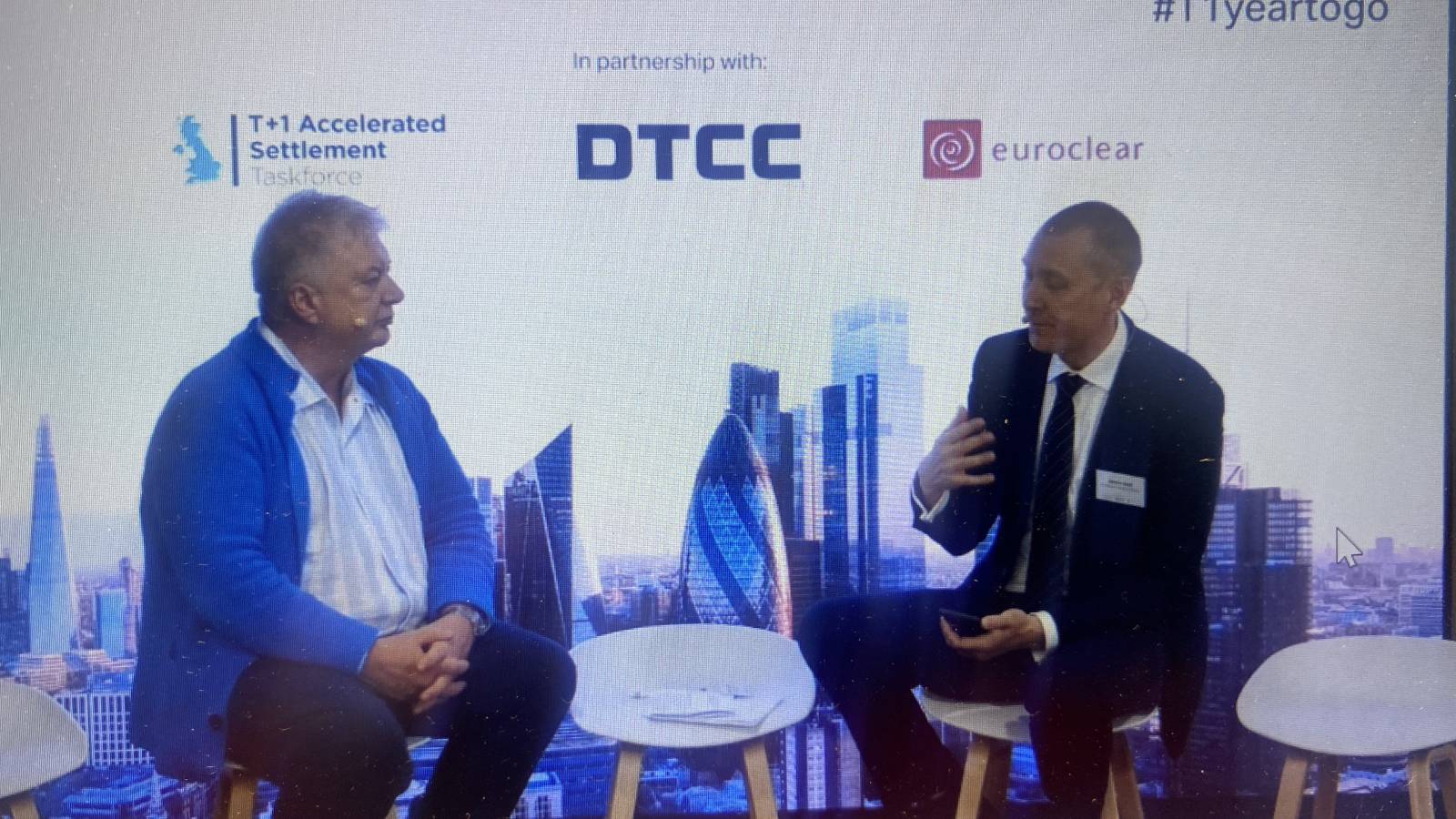


Evolving margin requirements for cleared and non-cleared trades are putting increasing pressure on the industry to optimise collateral management. At Sibos 2025, in the session titled “Navigating the new world of digital and tokenised assets: impact on trade lifecycle, collateral, and STP optimisation”, representatives from Nasdaq and Banco Santander presented a case study to show how Nasdaq’s Calypso solution is enabling collateral mobility with tokenised assets.
In June this year, Nasdaq successfully connected blockchain technology from the Canton Network to the Calypso platform. As described by Brad Wilmot, senior vice president of Strategy and Solutions at Nasdaq, the Calypso solution is “a cross-asset front-to-back solution that automates and facilitates the capital markets process”. The move to connect it to blockchain technology enabled real-time, 24/7 automated margin and collateral management across multiple derivative types, from crypto and fixed income to exchange-traded and over-the-counter (OTC).
Sophie Marnhier-Foy, head of Client Solutions Strategy at Nasdaq said of the implementation: “Banks are always looking for a way to optimise their collateral cost and capital, and accelerate settlement. We have proven that there is a way to do that by extending collateral inventory to a blockchain.”

Wilmot shared his observation that some financial institutions are still seeing traditional finance (TradFi) and decentralised finance (DeFi) as two separate segments. With Calypso, however, it is possible for the two to converge.
Early bird
John Whelan, managing director of Crypto and Digital Assets at Banco Santander’s Corporate and Investment Bank took the stage next to share his case study of using the Calypso platform.
Banco Santander is one of the banks that has gone live on Fnality, a wholesale DLT payment infrastructure. In October last year, the bank, along with Llyods Banking Group and UBS, successfully completed the first uncleared bilateral margin payments using a digital representation of funds held at the Bank of England (BoE) on the Sterling Fnality Payment System (£FnPS). The transactions marked the inaugural instance of a fully regulated DLT-based payment system being used to settle margin for the purposes of real-world inter-bank derivative exposures.
Instant gratification
“The next step is for any trading activity that goes through Calypso to integrate the digital and cash version,” Whelan says. He revealed that Fnality is currently going through the process of control mobilisation with the BoE before going into full production with £FnPS.
“We will then have the ability to settle digital with the same capabliity as we would with central bank money – and Fnality is 24/7/365. Once you have the digital version, it’s quite possible to settle pounds at midnight on a Saturday night using Fnality when the BoE is closed. That’s an amazing, powerful tool that we did not have until very recently.”
To round off a session, Marnhier-Foy shared with the audience how Nasdaq views digital disruption: “A question we’ve been asking ourselves and the strategy team at Nasdaq is, is there a way to change the perception so that we don’t view change as disruptive or as a risk? There may be a way to embrace change so that we (at Nasdaq) can bring you tools to optimise your collateral and accelerate your cash products. How can we make the best of what’s happening and create additional business growth?”
Sibos 2025 plays out in Frankfurt from 29 September to 2 October, with about 12,000 registered delegates. We are there, overview our coverage here.