
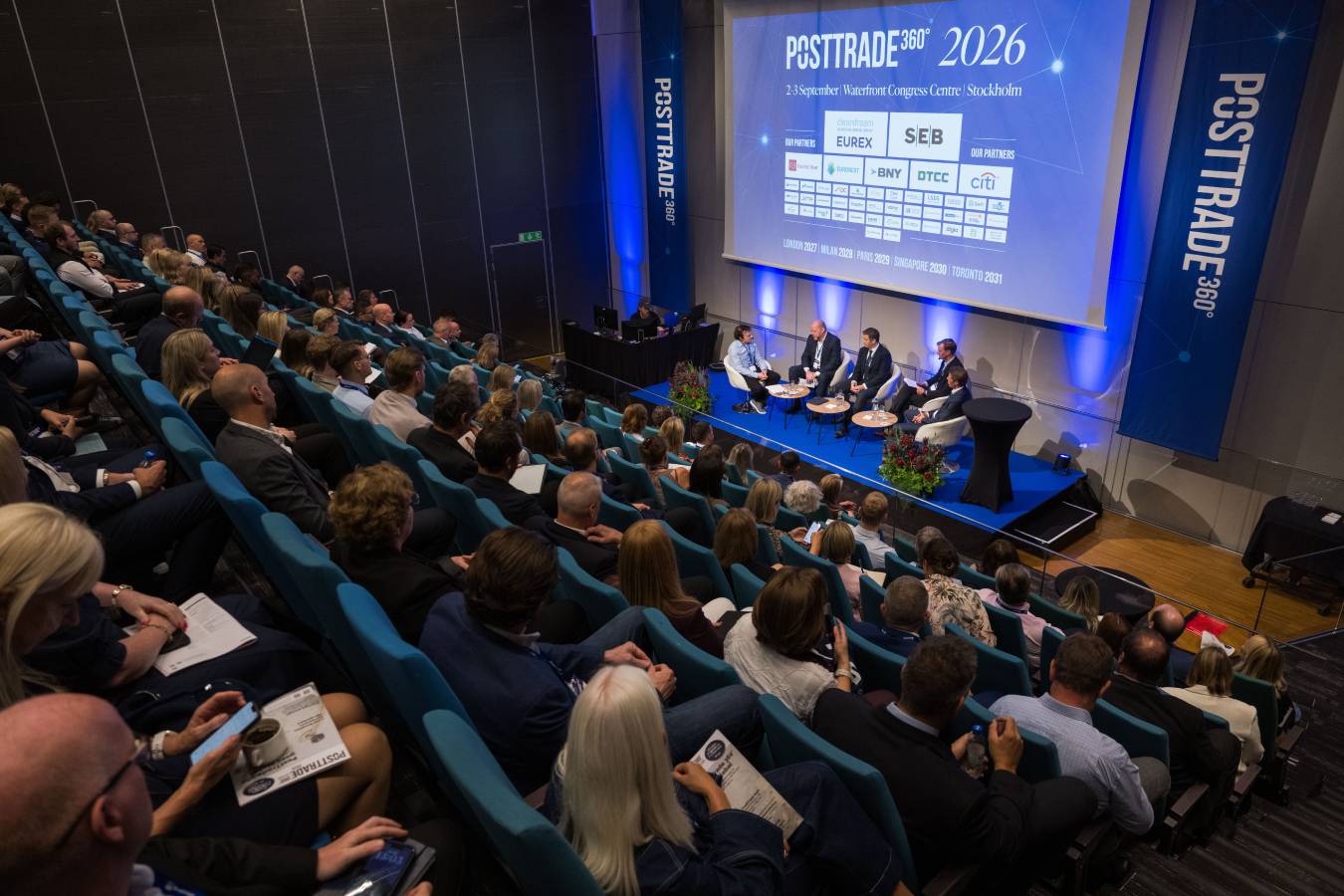









INTERVIEW | At PostTrade 360, CCP heads will discuss how megatrends are driving their strategies as they compete in a new regulatory paradigm. Christian Sjoberg, president at Nasdaq Clearing, will argue that the real story is less about competition among existing CCPs, and more about a new type of opponent altogether.
The years go by fast in the CCP space. The last time PostTrade 360 convened key players to discuss strategic moves, the EU’s post-Brexit agenda of shifting euro swap clearing back into the bloc dominated discussion. This year moves that conversation forward, with themes such as the Market Integration and Supervision Package, and the changes accompanying the Active Account Requirement (AAR) under EMIR 3.0, marking the next phase of EU financial market integration, systemic risk reduction, and collateral mobility.
While acknowledging the importance of these themes, Sjoberg offers a different take. “I’d like to talk more about the readiness and importance of modernisation. When we look at these megatrends — always-on markets, combined with cloud and AI — do we really know who our future competitors are?”

He encourages the industry to think harder about where competition will actually come from: rival CCPs, as before, or new business models that challenge the CCP model itself — and whether incumbents are ready either way. That, he argues, is what makes modernisation so urgent, and raises the question of how CCPs get there. “Many CCPs are running on significant legacy technology. A lot of them are still on batch-based systems, and it’s critical that we move ahead and modernise — not just our technology, but the way we let that technology solve problems differently than we have before. Many of our processes today are shaped by the limitations of legacy systems, when in fact we could use technology very differently to solve the same problems and still meet the necessary regulatory requirements.”
That shift matters for a traditionally volume-driven industry. “We’re very used to watching other CCPs and competing with them — some asset classes have been competitive for a long time, because we compete with each other, and we compete with OTC-cleared markets. CCPs, in general, are quite used to competition.
“What I’m less certain of is that we’re used to competition from new providers. New technology and innovation are enabling competitors we haven’t seen before to enter the market — with new value propositions like 24/7 trading, integrated trading and clearing, and quite sophisticated risk management, but without being organised as a CCP. In certain asset classes, they operate very similarly to how we do. That’s a challenge we need to be clear-eyed about, and one we all need to be ready for.”
Sjoberg is careful to note this isn’’t about CCPs trying to emulate these providers — CCPs are highly regulated entities with extensive risk-management obligations. But it does mean looking hard at how to modernise their own value proposition, with new technology as one part of that.
Beyond regulation, are there other megatrends adding urgency here — aside from new entrants?
“If you include tokenisation as part of this new technology, that’s part of what could change things — particularly for securities clearing, in cash equities. With settlement moving from T+2 to T+1, I expect we’ll see growing attention to atomic settlement, and new DLT models emerging. I think clearing with very short settlement cycles is likely to be more affected by this than clearing houses dealing with longer-term liabilities and positions — derivatives, for example. They face other threats, but not so much from the DLT side, in my view.”
* For more information about the PostTrade 360° conference 2-3 September 2026 and to register, click here