





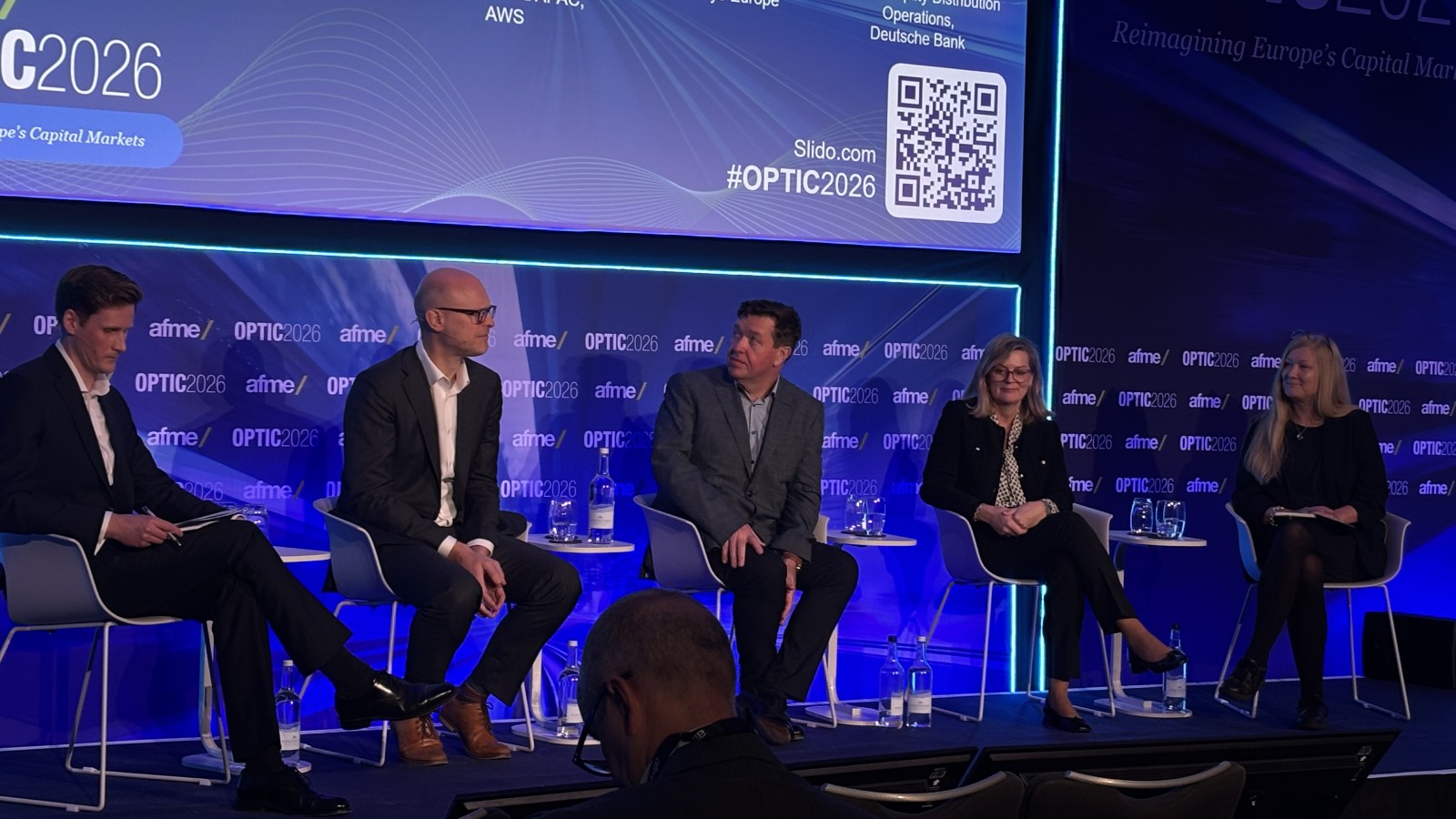
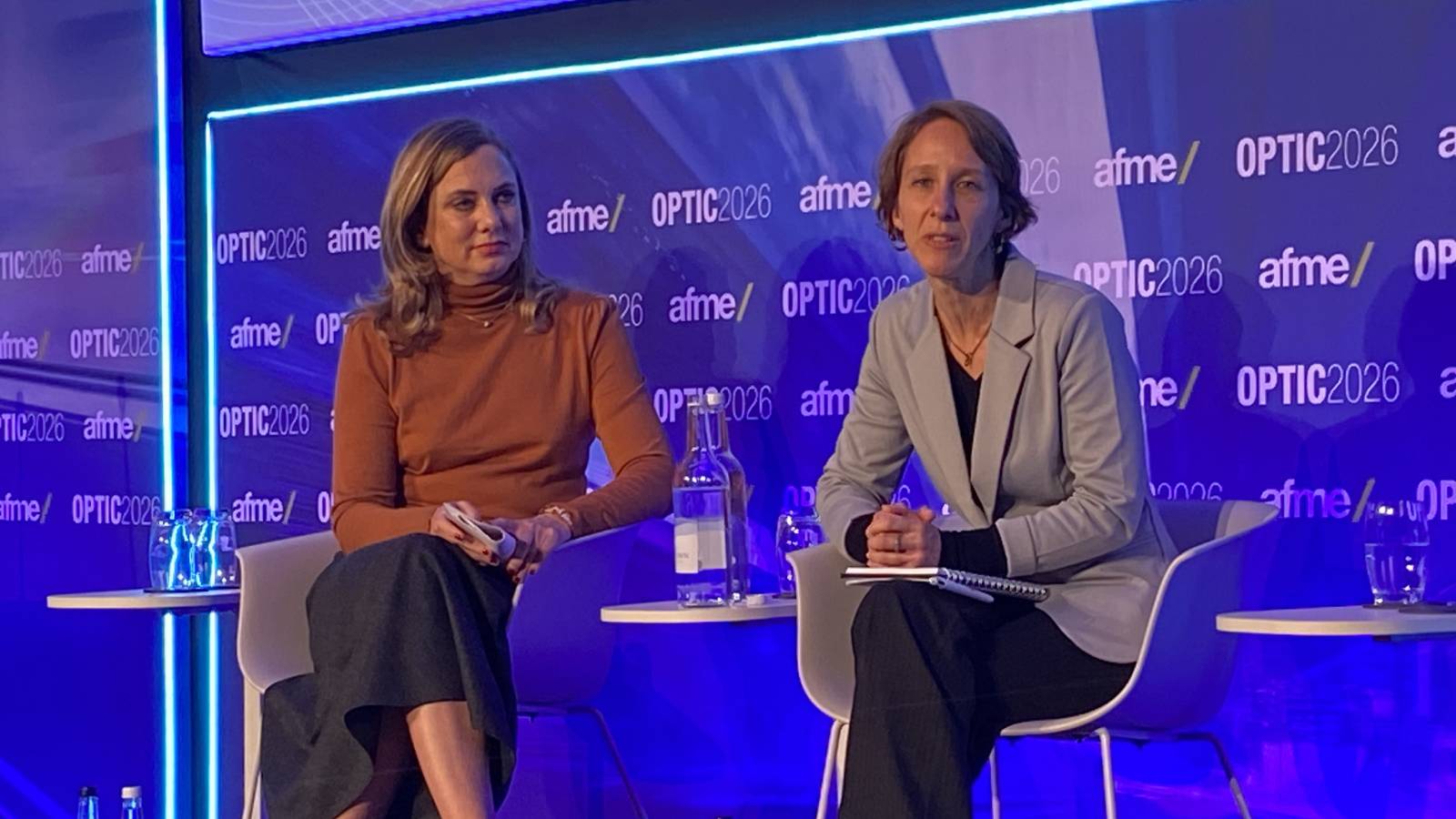


The question is no longer one digital settlement asset or many, but how to make a growing menu easy, affordable and safe for clients to use. A Sibos panel of market infrastructures and custodians explored how risk management, modernised systems and AI can help that menu scale.
The “death by PoC” angle was missing at Sibos this year. Instead, the conversation was about building out a menu of settlement assets, and what it will take to make that menu work at scale.
Everything points to plurality rather than a single settlement asset, with digital money taking centre stage. According to The ValueExchange’s DLT in the Real World 2026 survey with the International Securities Services Association, 71% of the industry expects to use stablecoins in live transactional activity (mainly USD) in 2026/2027. In Europe, 47% are ready for the digital euro by the time it comes out at the end of the year.

That risks fragmenting liquidity pools further. What matters is making it easy to connect, reducing costs, and managing credit and liquidity risk. That means introducing some friction and slowing down just enough to make that happen, but staying fast enough to encourage capital market flows.
Isabelle Delorme, global head of Product Strategy & Innovation at Euroclear, went further. The goal, she argued, is not instant settlement but intelligent settlement, and that means using DLT and AI together, not choosing between them.
A menu, not a race
Ying Ying Tang, global head, Product Management, Financing & Securities Services, Standard Chartered, called digital money “the fabric of the securities ecosystem”. In Asia, tokenised deposits and stablecoins are already used alongside fiat, she said, “until one day the demise of fiat comes along. When? I don’t know, but I do know that the day is coming.”
Tom Sullivan, who is responsible for DTCC’s tokenisation service, said that in a live demonstration this summer, 10 DTC members and their clients ran 22 transactions across eight use cases, some settling one asset directly against another with no cash leg. The open design means the market can “choose the best currency that works for them, even if it’s not currency at all”, Sullivan said.
Chris Cox, head of investor services at Citi, pointed to the bank’s newly announced partnership with Coinbase, which will let clients move between stablecoins and tokenised deposits. Digital money in all its forms is becoming part of clients’ toolset, he said, as the market moves into “an area of regulatory clarity and regulatory incentive”.
Credit risk doesn’t disappear
For Delorme, choosing a form of digital cash is a decision about risk. “The ultimate choice of a form of digital cash is about deciding the degree of credit risk that we accept that remains in the cash leg.”
Atomic settlement removes part of the credit risk but raises the need for intraday liquidity. The question, she said, is when moving to T+0 becomes “counterproductive because the additional cost of funding and the liquidity risk increase in parallel”.
Her answer is to combine DLT and AI. DLT makes atomic settlement possible. AI then decides, trade by trade, whether to settle atomically or to wait for incoming cash so the trade avoids extra funding cost.
“Blockchain doesn’t remove the credit risk,” she said. “We are not seeking instant settlement. We go into intelligent settlement, where settlement happens when it’s the right moment, both from a credit risk perspective and for optimisation of the funding costs.”
Avoiding digital islands
In Europe, Euroclear and Banque de France have launched Pythagore, settling digital short-term commercial paper against central bank money, with 14 major issuers signed up. “It’s not copy and paste what we do today,” Delorme said.
Sam Riley, head of securities services at Clearstream, warned against “building these islands”. A security issued on-chain should settle against central bank digital euros and off-chain on T2S, “and have those two worlds being fungible with each other”.
In the US there is no CBDC, but Sullivan said the GENIUS Act has given stablecoins clarity.
Asia faces the greatest fragmentation, with 16 currencies and 16 settlement systems. Tang said Hong Kong and Singapore are ahead of the rest. Without common standards, she warned, the region risks “going back 50 years, without Swift, without standards”.
Invisible to the client
Every extra option risks adding cost, so clients must be able to keep using existing connectors, with identifiers that work on today’s rails, Riley said. That raises a basic question, he said: “What is the D, what is the P?” If a firm buys a stablecoin with digital cash, is that DvP or PvP? “It can be both.”
Corporate treasurers show what is at stake. Cox called treasury “often one of the most underfunded parts of any corporate”, yet it is responsible for the organisation’s lifeblood and reconciles its cash every night. If using a stablecoin means taking new infrastructure to risk committees and boards, he said, adoption will struggle. “Not all tokenised deposits are equal, because they have different credit profiles.”
The prize for treasurers is real, though. Tang said Standard Chartered clients already use tokenised deposits to move cash between their accounts in different countries almost instantly. They can then sweep it into tokenised money market funds with near-instant subscription and redemption, earning a better yield than cash sitting in a bank account. Asia, with 16 currencies and rates, is well placed to benefit.
Collateral is the bigger unlock. Cox estimated that a large global institution might have about US$76bn tied up in collateral and margin, with roughly a quarter earning no return. “The proof is in the pudding,” he said.
The ten-year view
Delorme said the most optimistic forecast she had seen puts digital securities at 10–15% of the market in ten years, up from about 0.01% today. Most are nearer 5%, so traditional rails will carry most activity for years, and should benefit from the same risk modelling.
What the industry cannot afford is more fragmentation. “If we only land with more fragmented pools, we will have failed,” she said. “What we want is to drive more flows into the capital markets.”