









INTERVIEW | From Q1 2027, Euroclear clients will be able to manage cross-currency settlement activity through an automated FX solution as markets move to shorter settlement cycles.
The service, made possible through a strategic collaboration with HSBC, will enable clients to automate their FX execution directly into the market infrastructure’s settlement engine. AutoFX links HSBC’s global FX pricing, conversion and liquidity capabilities with Euroclear’s settlement infrastructure — automatically sourcing the required currency to help clients reduce operational risk while supporting settlement certainty and streamlining cross-border settlement activity. The tool will integrate FX conversion and execution, initially for more than 30 currencies, directly into the securities settlement process, enabling Euroclear’s clients to manage cross-currency transactions more efficiently.
The service is designed to support Euroclear’s clients as European and UK securities markets prepare for T+1 settlement. The anticipated transition, due in October 2027 for Europe and the UK, will reduce the time between trade execution and settlement, improving market efficiency, reducing counterparty risk and strengthening resilience. At the same time, the compressed post-trade window will require firms to complete funding, liquidity and FX activities more quickly, increasing the need for greater automation across the settlement process.

Clients will get real-time visibility over FX activity through an execution dashboard, access to intraday FX fixing points to align with settlement schedules across time zones, transparent pricing, and enhanced liquidity optimisation capabilities designed to reduce excess funding requirements. AutoFX will be available in early 2027.
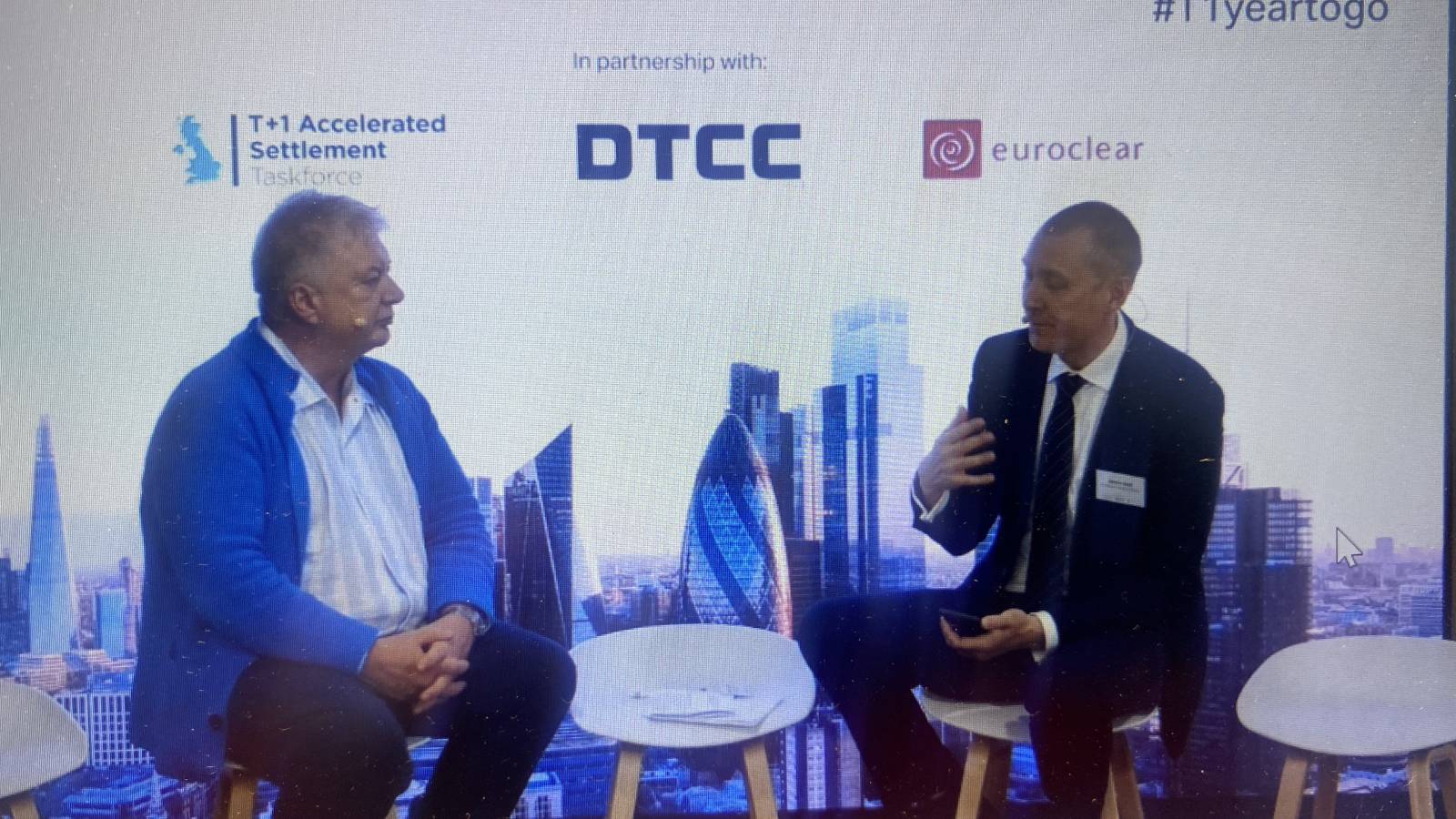
We caught up with Mike Reece, Head of Market Liquidity at Euroclear, to find out more.
How does this complement what Euroclear already does?
We already offer a suite of FX services today, but ahead of T+1 we wanted to deliver a fully automated, scalable AutoFX product across virtually all of the currencies we settle — there are only a few restricted currencies we don’t cover.
With shorter cycles coming, combining HSBC’s FX execution and liquidity capabilities with Euroclear as a trusted post-trade infrastructure gives us what we believe is a market-leading solution. It fits squarely into supporting settlement efficiency and funding, as part of a much broader range of solutions we’re delivering for T+1.
Who is this for?
The service will be fully available to all clients, in all regions. Europe is a key focus given the October 2027 deadline, but we’re also seeing strong demand in Asia, both from clients and for markets. Looking further ahead, we expect growing momentum for T+1 in markets like Hong Kong too. So while it’s directly relevant to European activity now, it will become increasingly relevant as more markets move to T+1.
We’re focused on transparency and flexibility in how we deliver the service. Clients will get an intraday portal to view their settlement and FX activity throughout the day, and flexibility in setup — for example, the ability to set multiple execution points aligned to currency or settlement windows, on a T+0 or T+1 basis depending on how they want to trade their FX. Once that setup is in place, everything runs fully automated.
How relevant is the solution in a T+0 and beyond context, given the post-trade functions that will be needed in the new digital-asset landscape?
Highly relevant. In any environment where timeframes are narrowing, a fully integrated, automated layer adds significant value. As clients look toward T+1 and beyond, they need faster settlement, quicker issue-spotting and resolution, and proactive planning to get ahead of problems before they arise — and optimised funding, liquidity and FX will be essential to that, however tight timeframes become. Integration and full automation across the broadest possible suite of solutions is key.
How does this fit within your broader accelerated-settlement strategy?
It sits alongside a broader T+1 strategy where we’re delivering significant change — extending the settlement day, increasing recycling, adding gating, expanding auto-netting, and so on. AutoFX comes alongside that, and we have other collaborations too — for example with Meritsoft and Taskize, providing data and analytics through our Euroclear EasyFocus+ tool to help clients take pre-emptive action and resolve settlement issues before they happen.
There’s also a broader theme here about changing ways of working. Come 2027, end-of-day manual FX won’t be a viable solution — certainly once T+1 lands, and arguably before. But investing in full process re-engineering and new technology is expensive. If we can provide an automated, integrated solution, clients get the benefit of proactive funding without major upfront investment, while stripping out the manual operational effort and risk that goes with it. And that value extends beyond T+1 — taking out cost and risk has relevance for the future too.