





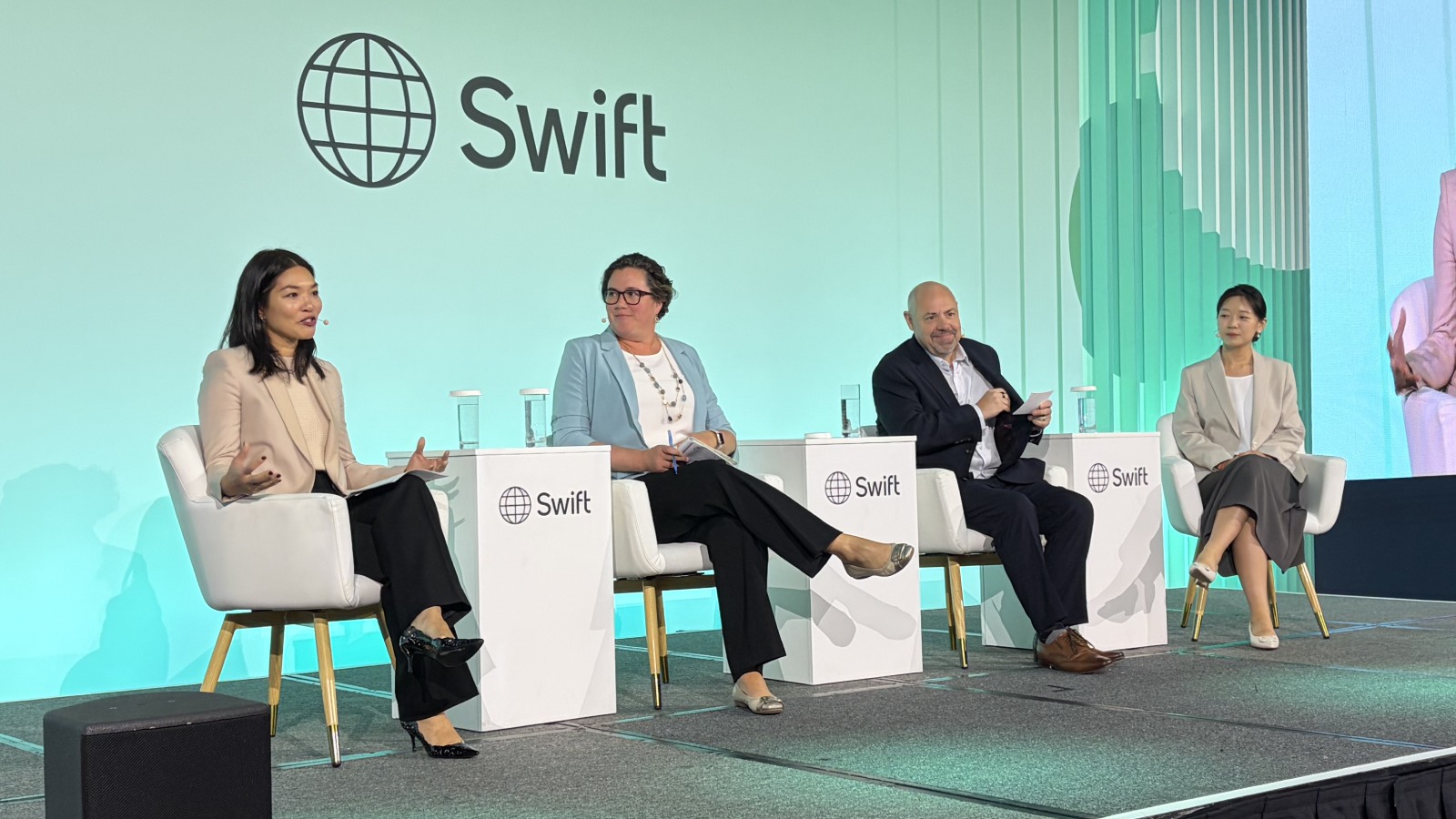






With 12 months until the UK, EU and Switzerland move to T+1 on 11 October 2027, the UK Treasury called for delivery, the FCA warned laggards to expect tougher supervision, and State Street’s Dan Hickey described the switch as a stepping stone to atomic settlement.
The message from the UK Accelerated Settlement Taskforce’s (AST) one-year-to-go event, hosted by DTCC and Euroclear, was blunt. The case for T+1 has been made, and the year ahead is about execution.
“A manual process today in a T+1 environment will be a fail tomorrow,” said Daniel Hickey, global head of custody at State Street.

Opening the day, Lucy Rigby, Economic Secretary to the Treasury, said the date was set and “the focus for all of us now is on delivery”. She called the move “one of the most important reforms to the UK and European financial market infrastructure in a generation”.
“The challenge ahead is no longer establishing the case for T+1 or agreeing the destination. The challenge now is very firmly in delivery,” she said. “No single organisation can deliver T+1 alone. Success depends on collective readiness.”
Trade matching and SSIs top the list
On a panel moderated by Emma Miles, T+1 programme director at Euroclear, Hickey said State Street’s top 100 clients were “in a really good place”, and the task now was “bringing everyone on that journey”. His two priorities were trade matching and standing settlement instructions (SSIs): “You just cannot afford to carry on manual processes into T+1 around those areas.”
He also flagged knock-on effects. European funds that settle on a T+3 basis now face a two-day funding gap, prompting talks about earlier NAVs and custodian SLAs. Firms that skip the investment “will have to throw bodies at it for a period of time until they can get to that automation”, as some did in the US.
Paul Fulton of Citi, who worked on the US transition, where brokers lost 80% of their processing time, was blunter: “Throwing bodies just would not work.”
Matthew Johnson, head of global strategy for institutional trade processing at DTCC, argued that “automation isn’t a problem” because costs are falling. The real problem is behaviour. Putting on a “provocative hat”, he asked whether front offices on both the buy and sell side should charge more to clients who “refuse to automate or still want to send bits of paper at the end of the day”.
His data was encouraging. Same-day matching rates for equities across EU, UK, Swiss and Liechtenstein markets are well above 98%, while fixed income has climbed to around 93.5%, up from below 90% at the end of 2025. DTCC made place of settlement (PSET) mandatory on all CTM messages from 3 October, and 99.98% of transactions now carry it. “You can’t track a PDF, you can’t track an email or an Excel or a dreaded fax,” he said.
Mimi Yan, executive director at FMSB, said UK supervisory backing for the SSI standard had added “extra impetus”. Her advice: “Don’t be afraid to talk… this is very much a collective effort.”
A stepping stone to atomic
Hickey urged firms to look beyond the deadline. “T+1 for me is an incredibly important milestone on a journey,” he said. “We’re on a journey towards atomic settlement. However, atomic settlement isn’t the right solution for each market.”
State Street’s answer is what it calls “T-flexible”. Firms could choose when to settle while keeping the benefits of CCP netting, and the long-run goal is 24/7 settlement across traditional and digital assets. “The more you invest in the automation here, the more benefit you’ll get on the other side,” Hickey said.
Yan struck a more cautious note. Firms, she said, should decide whether they want to train like “a heptathlete” or simply go “out for a run three times a week”.
FCA: “Not all firms are doing as well as they say”
In a fireside chat with AST chair Andrew Douglas, Jamie Bell of the FCA said most firms were on track. But small and medium-sized buy-side firms should expect the regulator to be “going through the gears” and to become “more intrusive”, using settlement data from Euroclear.
“Spoiler alert, not all firms are doing quite as well as they say they are,” he said. For firms that are not ready, “it’s going to feel quite uncomfortable”, and the FCA has “a panoply of supervisory tools” it can use.
He also had a warning for firms with atomic or tokenisation ambitions: “Let’s not lose focus on actually delivering T+1.”
Bell said asset managers who wait for perfect clarity from their custodians before acting risk squeezing their testing windows. “If you haven’t started that process, you better get on with it.”