

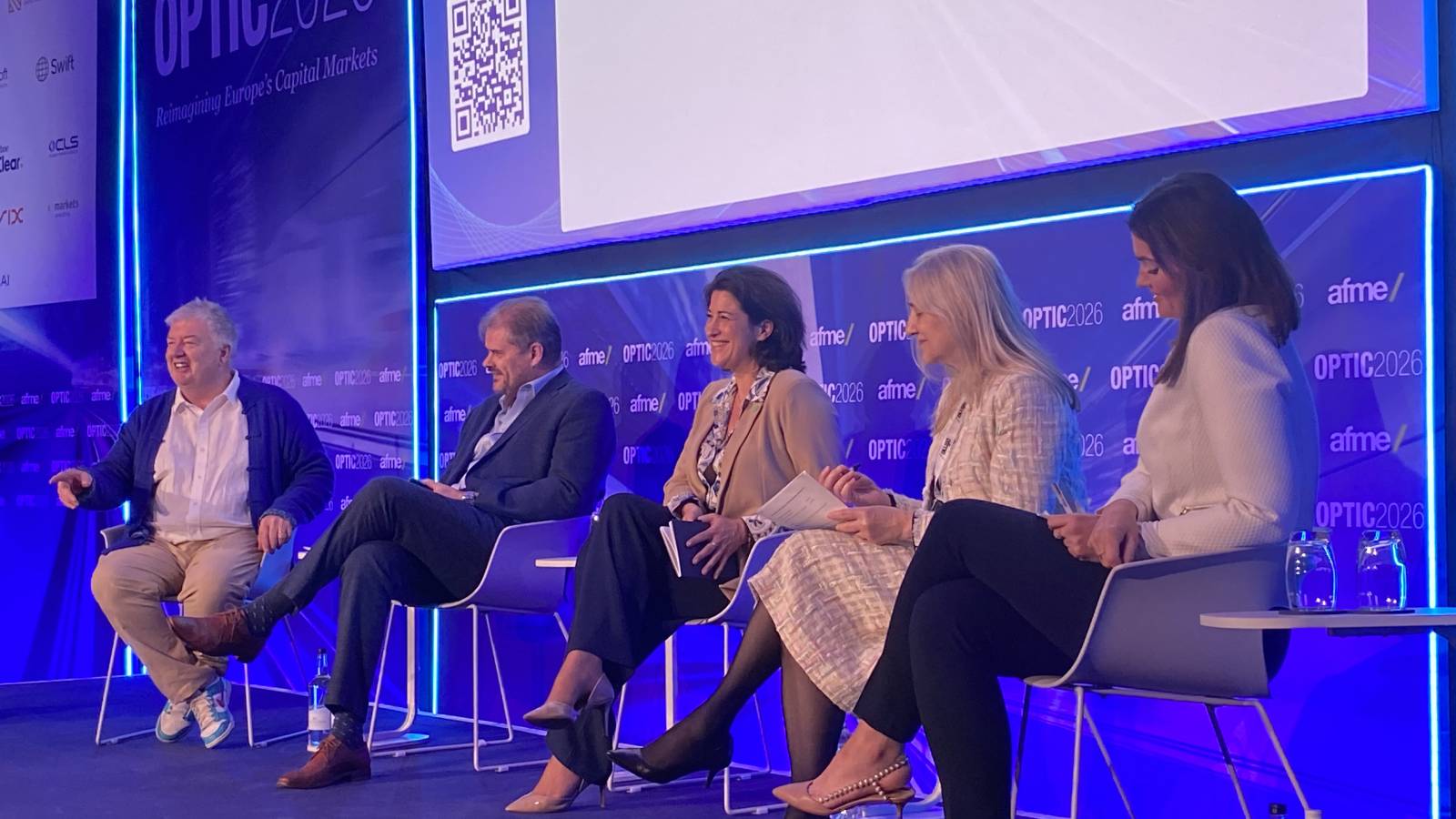
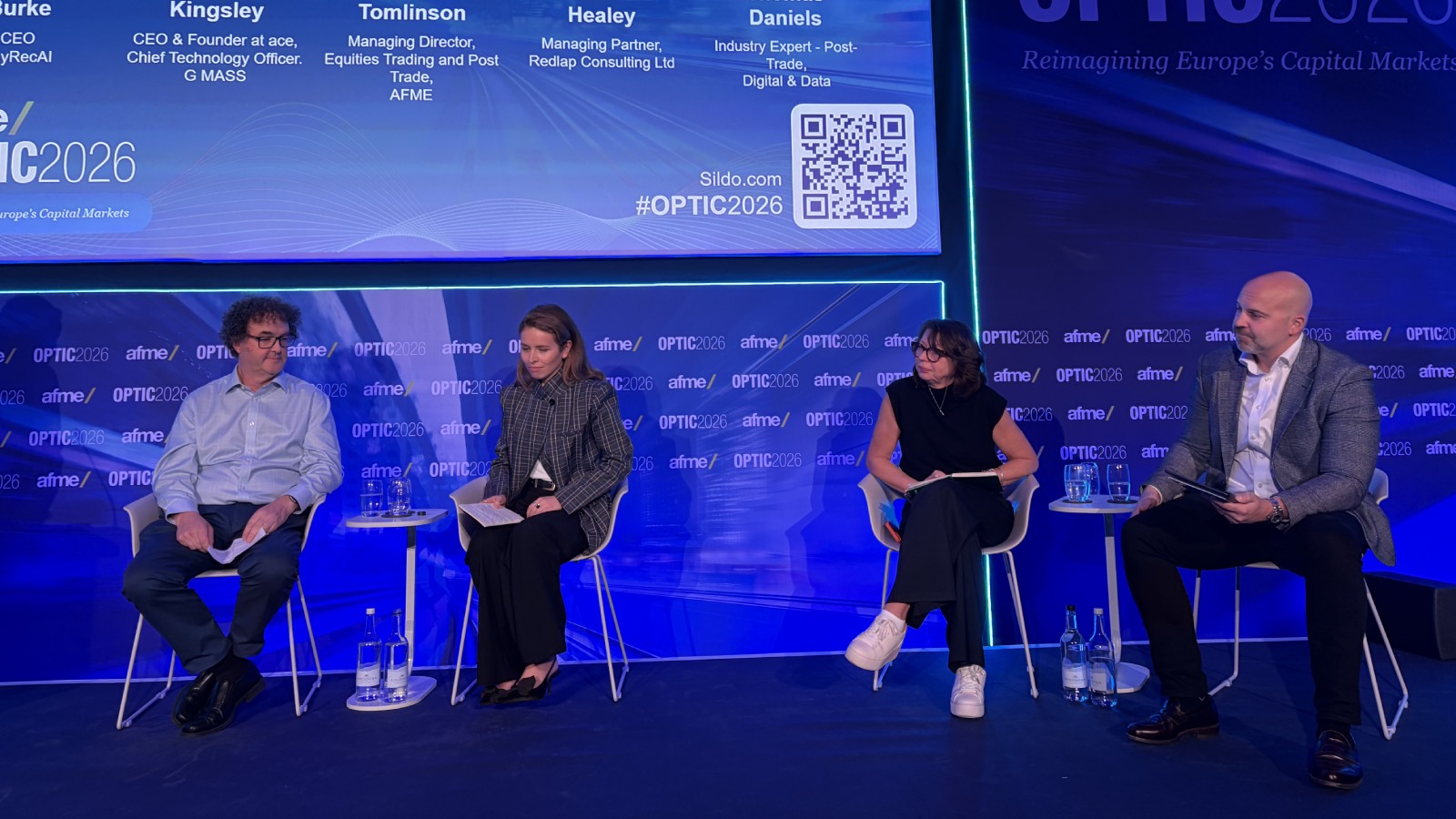

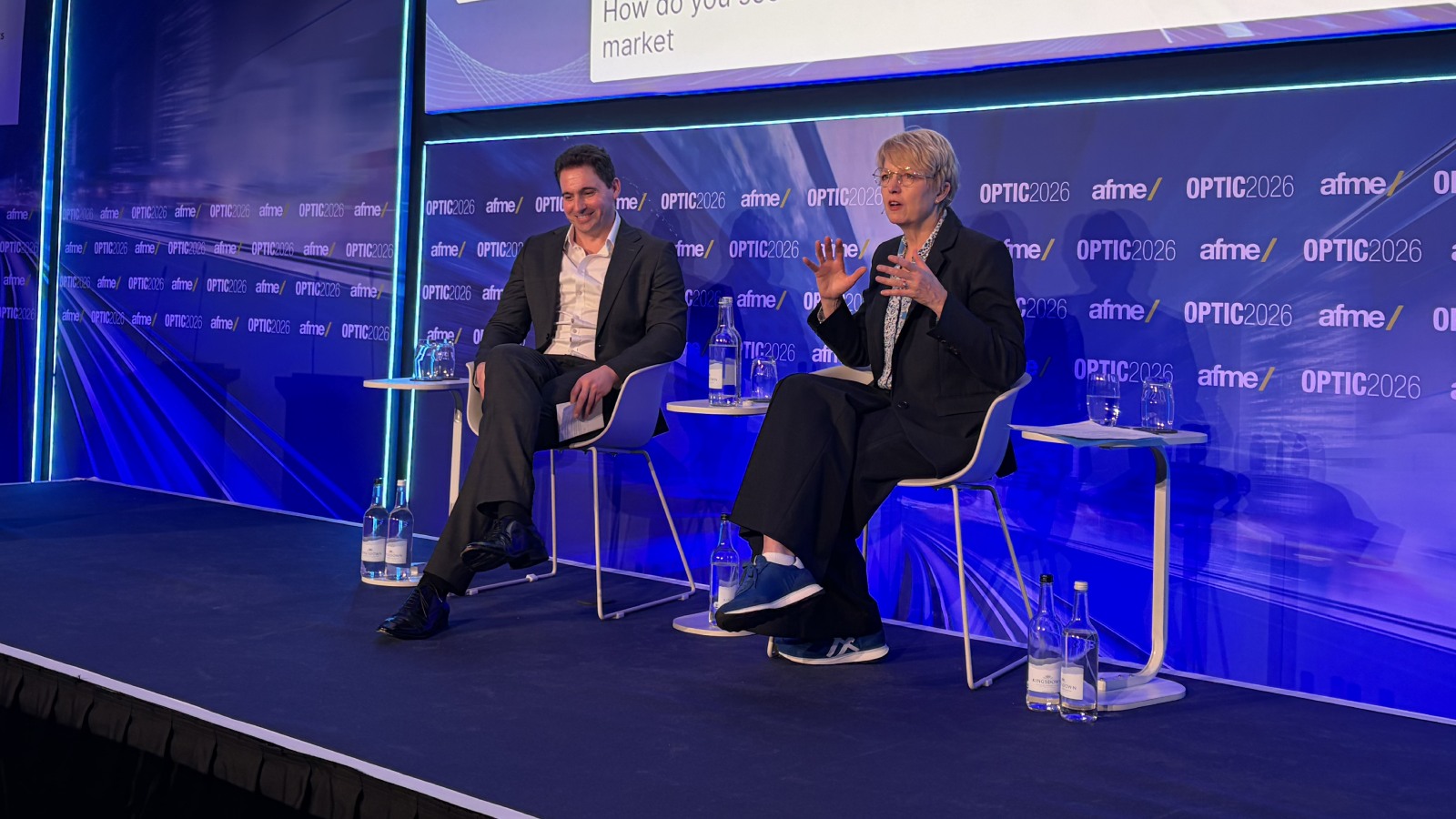

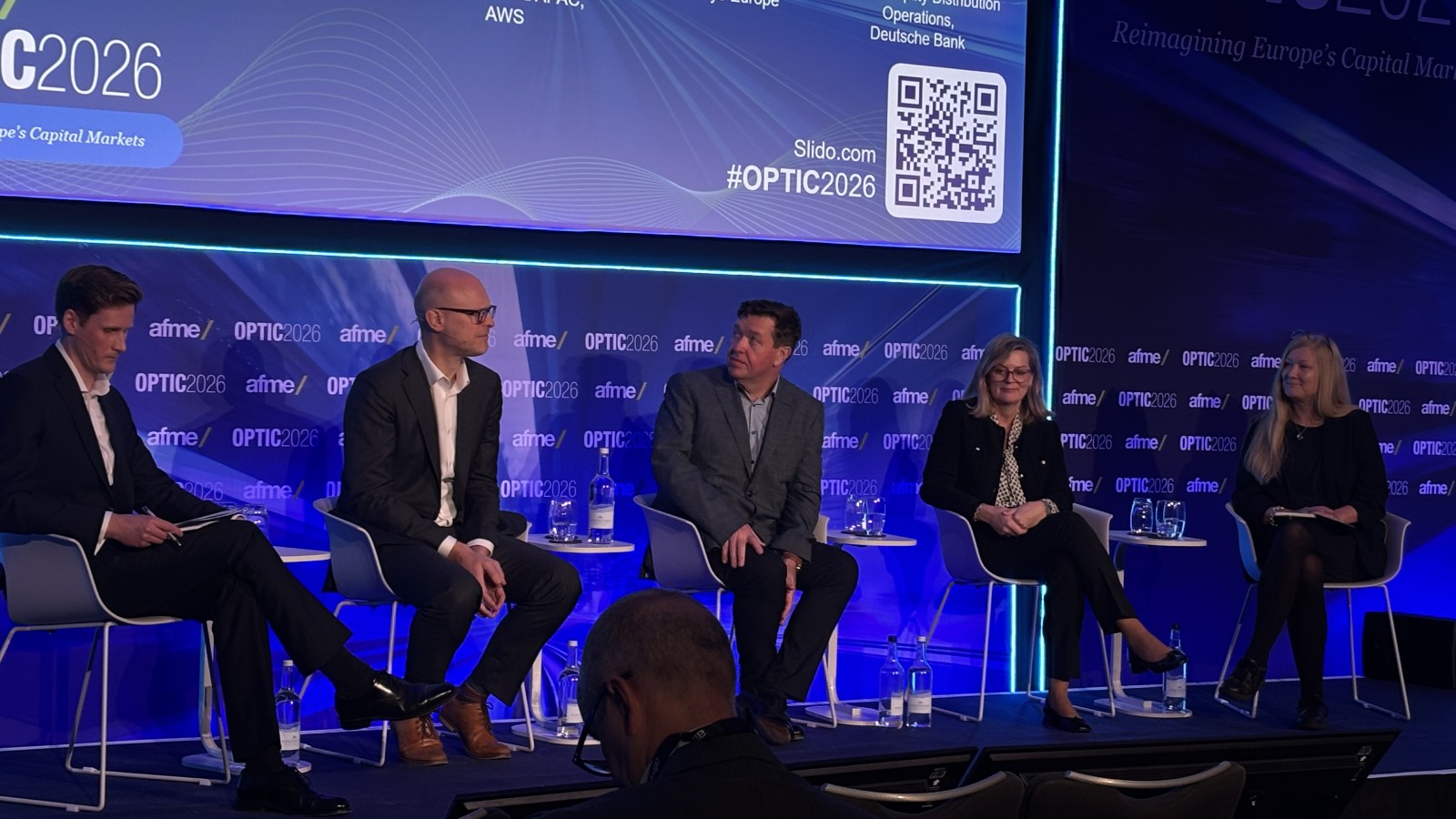


DEEP LOOK | Tokenisation initiatives and digital asset sandboxes are accelerating, raising fundamental questions about their relevance for clearing and settlement. At WFE Clear 2026 in Toronto, Deutsche Bundesbank’s Martin Diehl moderated a panel with experts from a CCP, CSD and a regulator on near-term risks, benefits and how to translate lessons from pilot regimes and sandboxes into real use cases in clearing and settlement processes
How is digital collateral and tokenisation currently used in clearing and settlement, and how do you see it evolving?
Efthimia Kefalea, head of Derivatives Clearing Market Development, Eurex Clearing, Deutsche Börse Group: Eurex launched a service, offered to clearing members, which enables DLT-facilitated collateral mobilisation. We have been live for a year, and our clearing members are already using a DLT system to mobilise collateral across different custodians and post it to the CCP.
What do I expect? I don’t want us as an industry to build further silos. I see the strength of this technology in connecting markets. My vision is for a more connected world, especially in the area of collateral, where we see a huge fragmentation — a challenge not only for us as CCPs, but also for our clients. I want to see infrastructures talking to each other more, creating a harmonised ecosystem that gives more business possibilities to our clearing members.

John McPartland, independent financial regulation and market infrastructure policy advisor: Harmonisation would be a step forward in advancing tokenisation if there were some uniformity. The end objective is to figure out a way to transfer wealth during non-traditional banking hours. There is a move in the industry to trade something that looks like 24/7, and the markets we serve are going to demand that wealth be transferred outside of traditional banking hours. Not all products do that today, but by WFE Clear 2028, people are going to have to figure it out.
Barry King, head of Post-Trade Policy, Bank of England: The main use case that is emerging is collateral. Making that work and making it seamless—thinking about how collateral can move and how it is managed, and how tokenisation can facilitate that—is a key way forward.
The authorities’ role in facilitating the gradual emergence of tokenised assets alongside existing traditional assets will be the key to unlocking their potential. It is about the linkages between what we have now and where we may be going in the future.
Val Wotton, global head of Equities Solutions, Depository Trust and Clearing Corporation (DTCC): DTCC’s activities include our newly launched digital assets solutions business — following the SEC no-action letter—and, most importantly, our tokenisation service, which creates the foundations to build functionality, products and applications that will drive real benefit across the industry, not just from a US perspective but globally. The primary use cases are all around collateral: the ability to manage margin accounts far more effectively, leveraging smart contracts so that participants don’t have to over-collateralise. We want to provide the foundations on which applications can be built, which drives interoperability across the market more broadly.
In the UK, US and Europe—what is the current status of tokenisation and digital collateral, and where do we stand on cash on ledger?
Barry King: The UK Ministry of Finance this week appointed Chris Woolard as a digital markets champion to consolidate progress in London. A few current initiatives: a digital securities sandbox running until 2029, at which point we will move to a permanent regime; a Digital Gilt issuance plan based on the HSBC Orion digital assets platform, with the first issuance expected around the end of this year or early next; and, on collateral eligibility, we have already clarified our view that tokenised versions of existing collateral should be accepted. Those are some of the key things we are moving forward with in the UK.
Val Wotton: From a US perspective, post the GENIUS Act, the reality is that we are moving out of proof of concept. This is now real and tangible, and that is an important statement to make. Under the no-action letter, what it allows us to do is look at tokenising the Russell 1000, ETFs on major indices, and then Treasuries—bills, bonds and notes.
The focus is very much on real-world assets, making sure they have the same legal and economic rights as securities do today. Who would have thought corporate actions would become the hottest topic globally right now? Whether you operate 24/5 or 24/7, you have to be able to process corporate actions. So for us to deliver a tokenisation service, this is not some kind of POC. This is industrial-grade. This is DTCC putting its name behind a product that will come to market in H2 this year. It is real, it is tangible, and it is what we are working on significantly.
This is no longer theoretical. These are real-world assets we are tokenising, which have real implications if we get it wrong — and hence where we find ourselves.
Val Wotton
From a resiliency, cyber and controls perspective, setting up a wallet will require OFAC and KYC checks. We have worked on the compliance controls that sit within the smart contracts, which means that if there were a situation of malfeasance, for example, we have the ability to pause, freeze or, in certain circumstances, claw back tokens from the on-chain ledgers. A huge amount of work has gone into designing how smart contracts are going to operate.
We are open access; there will be multiple ledgers, each operating differently around its privacy controls. And you need to think about how you protect the underlying keys. The process is about laying the foundations on which we can build utility—and open access is essential to enable the market to grow, both in the US and internationally, particularly around the flexibility of collateral 24/7 and the distribution of equity.
Efthimia Kefalea: In Europe, we focus on central bank money on ledger as a priority, while also needing commercial bank money, as we do today.
We have made a great deal of progress, not only during our own trials but also through one of the most prominent international initiatives led by the BIS—called Agorá. It is a unique, once-in-a-generation initiative: a collaboration between seven central banks and more than 40 private sector financial institutions. We are very privileged to be the sole CCP participating in it. What we are building is a unified ledger consisting of currencies across seven different jurisdictions, enabling payments and cross-currency payments on a 24/7 basis.
We have found very good solutions to long-standing challenges through that new technology—for instance, how to define settlement finality. What we are looking at is having both central bank settlement money and commercial bank money on the ledger. We know how it works, and we believe CCPs are uniquely positioned in this space: if you have the right risk frameworks and clearing processes in place, CCPs can seamlessly bridge flows from both traditional and digital ecosystems under the same risk framework.
Another very important milestone: the ECB announced that starting 30 March, it will accept DLT-issued digital assets in Europe as digital collateral. We are also looking to extend digital collateral under our own programmes — watch that space.
What are the key benefits you expect from bringing the industry together around these technologies?
John McPartland: You have the CCP in the middle, then clearing members, but the next tier are all market participants. Market participants by and large do not have access to central bank money, but they do have access to commercial bank money. An ideal structure — whether it is distributed ledger or blockchain — would be multi-currency and would somehow allow clients to make payments to clearing members back and forth outside traditional banking hours. That is, I think, what we are going to end up with.
How should the industry think about risk in a tokenised world?
Barry King: The risks are fundamentally the same ones the industry has always faced, but the way they manifest is different in a tokenised world. There are new dependencies and new points of failure to consider. There is a new technology layer, new possibilities, and policies we do not yet know how to apply. New considerations arise in relation to different parts of operations. We need to ensure we have the same rights from a legal and regulatory perspective.
It is the same risks everyone in the industry is used to thinking about. We just need to think about them in different ways, in different parts of our operations.
Barry King
Clearly, there is an important need to achieve linkage between digital assets and traditional assets — doing that in a way that is safe, sound, transparent and, ideally, multi-jurisdictional is the key.
Val Wotton: On a public channel, the expectation is that we will be able to monitor activity. But some ledgers have very strong privacy controls around them. We cannot monitor those. There are a lot of questions we need to work through as an industry when it comes to solving that.
Digital markets—particularly cash equity markets in the US—are extremely efficient, with a very high proportion of volume processed through netting. If we have good netting capabilities around on-chain activity, there may be a use case for assessing potential risks on the institutional side. But how do you do netting on-chain? How does cross-margining work across both digital and traditional assets? How does a CCP manage that more broadly? These are the questions that make the SEC no-action mechanism so valuable—it allows us to learn how to scale and how to bring more assets online sensibly.
One of our core principles has always been around good control of location. Forty years ago, the issue in the US was multiple CSDs spread across the country. The risk today is that, unless we think about settlement asset efficiency equally, we will simply create the same fragmentation problem on digital rails. If we can focus on good control of location — tracking the movement of tokens across wallets—we give our participants far greater clarity over their assets.
You have argued that CCPs are an integration platform for new technologies. What does that mean for the transition path?
Efthimia Kefalea: This digital transition is not something that will take place over a few months or even a few years. It will be a continuous journey for the industry. Some clients are early adopters who are there whenever we launch a new service in the digital space. Others want to see tangible benefits first before they move. As an FMI, we have to cater to all types, because our obligations are the same regardless. That is also why CCPs need to be able to integrate both ecosystems — digital and traditional — under the same risk understanding and clearing processes. We proved that during the ECB trials: we were in production, not testing, and we cleared digital-native instruments issued on DLT exactly under the same framework as transactions coming from the traditional space. We proved to our regulators, with seven different central banks in the room, that this is possible.
What matters is not whether an instrument has been issued on paper, electronically or using DLT technology. What matters is the underlying legal and regulatory regime, and the underlying economics. As long as issuance takes place on a regulated CSD, we do not introduce new risks into the ecosystem.
Think simply and try not to overcomplicate solutions. What matters is that we keep the trust and the resilience in the market and the ecosystem.
Efthimia Kefalea
Tokens are just digital representations of traditional assets. Cryptographic technology gives us a new way to represent things, but I don’t need special legal powers around tokens if we already have direct access to the underlying assets. Simplicity is key.
How do we proceed from here? What are the critical next steps?
Barry King: We need regulation that encompasses both digital and traditional infrastructures, with clear ways of ensuring interoperability between the two. Connecting all of that up and having a regime that works well in practice is the goal. We also need to think carefully about the new emerging forms of activity within this space and how they fit within existing frameworks.
John McPartland: There are two items I think need to be addressed. The first: central bank digital currencies for wholesale use. Central banks have very little to lose. Some central banks do not pay interest on central bank money receipts, and there is pending legislation in the United States that would prohibit the payment of interest on certain instruments. No one is going to use a settlement instrument that pays no interest — that is close to a certainty.
The second is more operationally critical, and especially relevant for people running CCPs. Imagine it is three years from now. A CCP has material initial margin on a distributed ledger blockchain, and a clearing member has just defaulted. The CCP does not want the market to know it has lost a firm, and it certainly does not want the market to know exactly what positions it is about to liquidate in the next two hours.
What the CCP holds is a digital representation of a financial asset on a distributed ledger — from a technology standpoint, a smart contract. If secrecy is not achievable, if the larger clearing members can see what is about to be sold, that creates a fundamental challenge for default management that needs to be solved. There has to be a mechanism in place. A CCP’s default management process exists not only because of market risk and credit risk, but also because it must be able to liquidate positions without telegraphing those intentions to the market. This challenge needs to be addressed before distributed ledger-based margining can work at scale.
Efthimia Kefalea: Tokenisation and DLT are a solution in the space of collateral — and we all acknowledge that here — because they solve a very specific and real problem: collateral fragmentation. Clearing members hold collateral across different global custodians, ICSDs and CSDs, and CCPs cannot maintain direct connections everywhere. It is impossible to manage and too expensive.
The solution through tokenisation and DLT gives us a very powerful tool to enable collateral mobilisation without the need to physically move assets. That is exactly the problem we solve, and that is why it will be a success. There are other areas where one should step back and ask what problem the technology is actually trying to solve. But when there is a specific, real problem, DLT can be a powerful tool. It is not a universal database—it is a targeted solution. Think simply, and the right applications become clear.