









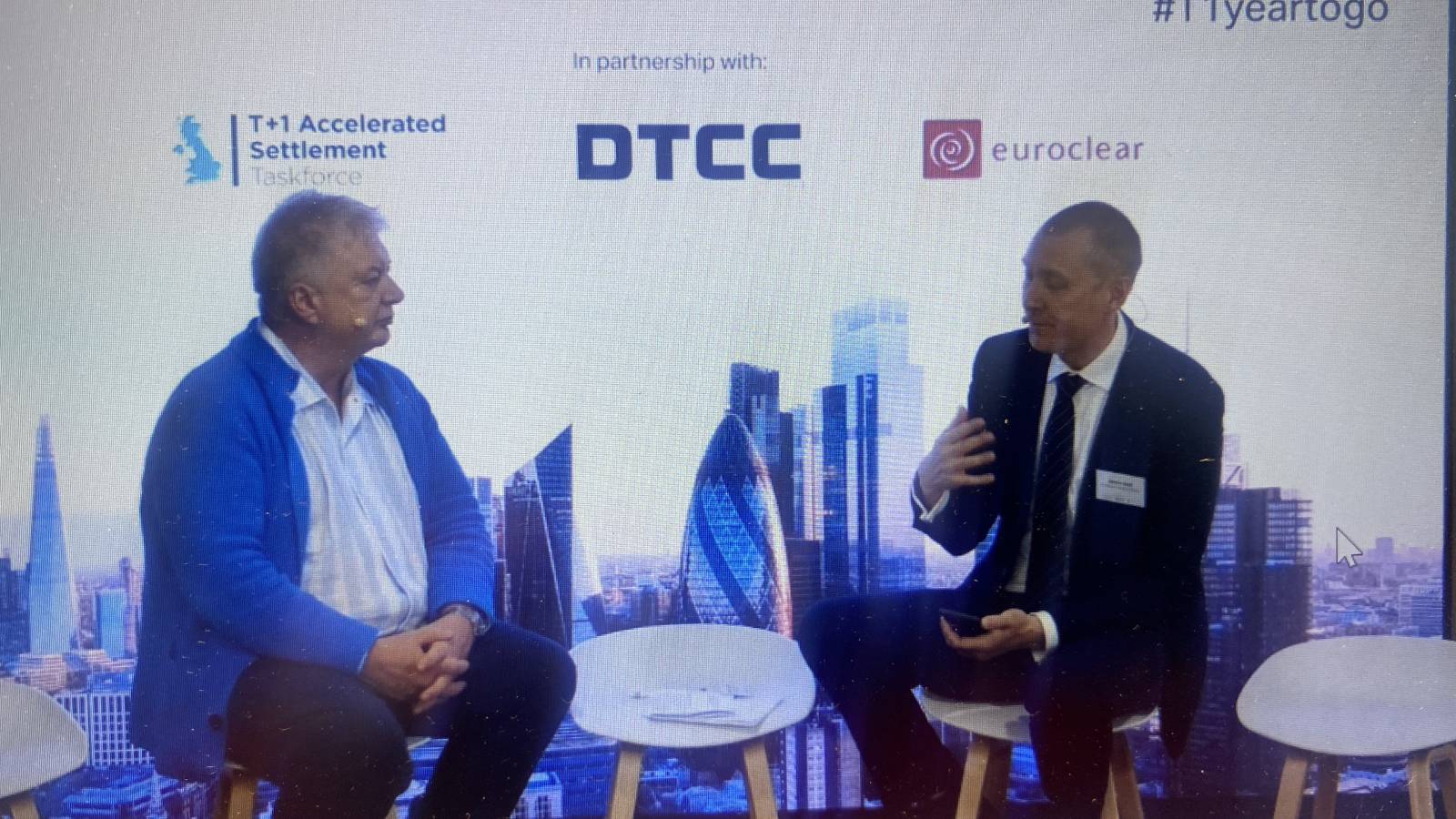


INTERVIEW | At PostTrade 360’s conference on 2-3 September, Euroclear’s Bernard Ferran will explain why the industry’s next milestone isn’t 24/7—it’s rebuilding the plumbing to get there.
As financial markets grow more digital, global and interconnected, being “always on” is becoming the long-term destination for the industry.
But that’s not simply a matter of extending operating hours to run 24/7, or even 24/5, says Euroclear’s chief commercial officer Bernard Ferran. It requires a more strategic lens—what he calls “rethinking the entire post-trade ecosystem, from clearing and settlement to funding, collateral mobility, and data sharing.” Critical post-trade services, he argues—settlement, collateral management, liquidity and funding—need to become more automated, resilient and data-driven.

A session looking at the implications for CSDs and their clients will give firms practical insight into how they can improve operational resilience, increase efficiency, and prepare their business for the next generation of capital markets—while preserving the safety and stability that CSDs, as the institutions that make settlement final in the value chain, exist to underpin.
It’s not something to put off. The transition to T+1 securities settlement across the UK and Europe on 11 October 2027 is a case in point—a significant milestone adding impetus to the always-on agenda. It will place greater emphasis on automation, operational efficiency and seamless coordination across market participants.
At the same time, the emergence of digital assets—tokenisation, stablecoins, central bank digital currencies—is creating an expectation for markets to operate continuously, rather than just during traditional market hours. AI and cloud technology are transforming how financial market infrastructure operates alongside this shift. Euroclear itself is investing in predictive AI, agentic AI, and an open digital data platform through a strategic partnership with Microsoft. Together, Ferran says, these developments are laying the foundation for a more connected, more digital, more data-enabled financial ecosystem.
Even so, he’s cautious about timing. For wholesale activity—where most of Europe’s post-trade infrastructure sits—full 24/7 remains, in his words, “wishful thinking” for now. 24/5 is likely to be the first milestone, not least because many banks still operate in batches; today’s 24/7 platforms are mostly serving retail activity rather than wholesale.
• For more information about the PostTrade 360° conference happening on 2-3 September 2026 and to register, click here