



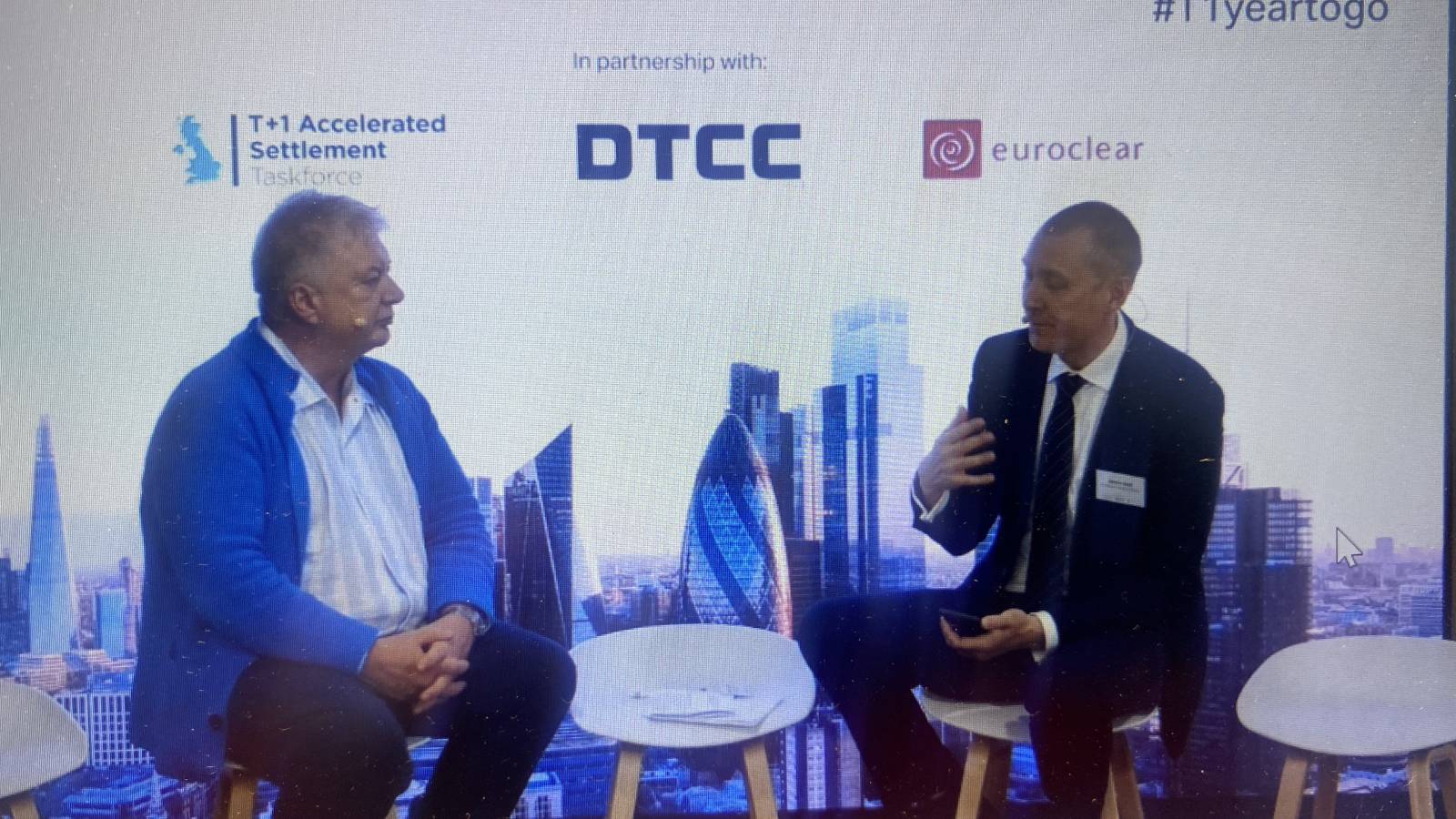







Europe’s competitive landscape, the race to implement T+1, and the future of custody platforms were the three genres shaping this year’s playlist. Based on the 10 most‑viewed stories, the industry’s biggest hits fall neatly into these categories. To understand what will truly shift in 2026, PostTrade 360’s editorial team gave the mic to the experts to assess expected behavioural changes.
The winner takes it all
Ranking Europe’s 17 CCPs
Central counterparties (CCPs) got a lot of attention this year as regulators tightened resilience requirements and market participants pushed for greater efficiency. CCPs are being asked to innovate without compromising systemic safety — all while competition among Europe’s clearing houses intensifies.
The tension is clear: clearing members must post collateral to access netting benefits for themselves and their clients, yet they have limited visibility into how initial margin is calculated. Our ranking of Europe’s 17 CCPs — the year’s most‑read story — highlighted how difficult it is to compare clearing activity across CCPs. With no standardised comparison measure, initial margin has become the de facto proxy. But because CCPs use different risk models, identical activity can produce wildly different margin requirements. Users are left guessing whether they’re paying for resilience or revenue.

What will be different in 2026?
With transparency reforms bedding down in 2026, users are preparing for a world where margin becomes a daily optimisation exercise. With T+1 compressing liquidity windows, some clearing desks are already modelling intraday liquidity needs more aggressively and running simulations before routing trades.
Operationally, users should expect more frequent intraday calls, tighter collateral windows, and greater scrutiny of CCP model changes. Once margin simulation tools become standardised, clearing heads will be better able to compare apples with applies.
Interoperability will continue to dominate conversation. AFME argues that mandating CCP interoperability, where risks can be managed, would allow users to consolidate clearing activity, reduce duplicated memberships, and optimise collateral. Pete Tomlinson, AFME’s head of post‑trade, told us: “Enhanced netting and more predictable settlement outcomes are particularly beneficial for asset managers and pension funds, especially in a T+1 environment.” His point is echoed across the market — firms want efficiency, but they want it without sacrificing resilience or transparency.
The transparency agenda will likely mean CCPs need to justify overrides in real time, and explain model behaviour in more standardised language.
Enhanced netting and more predictable settlement outcomes are particularly beneficial for asset managers and pension funds, especially in a T+1 environment
Pete Tomlinson
The heat is on
Costs, competition and consolidation — the 3Cs — defined Europe’s CSD landscape this year. The EU’s Savings and Investments Union (SIU) proposals aim to deepen liquidity pools and create a more competitive Europe, even as the continent’s 40 CSDs remain fragmented. Euronext is building a pan‑European issuance model to give issuers a single access point to European markets, with issuing agents supporting the full lifecycle.
Our interview with Pierre Davoust, head of Euronext Securities, was the second most‑read story. He argued that fragmentation in Europe’s post‑trade landscape is a barrier to competition. A later study commissioned by Euronext Securities reinforced this view, concluding that Europe’s efficiency problem won’t be solved by creating a single CSD. Instead, effective competition between CSDs — supported by existing infrastructure — could deliver lower costs and better outcomes for investors.
What will be different in 2026?
2026 is shaping up to be a dynamic year for settlement choice. Whether regulators force Euronext to allow alternative CSDs or not, users may consider near term impacts such as dual‑track settlement flows and new onboarding processes.
Modelling new account structures, re‑routing settlement instructions, and recalculating fee grids could become the norm for operational teams as they prepare for more optionality.
With T+1 implementation year coming expect more conversations between front‑office and post‑trade teams about settlement risk.
Fight song
“Protect your choice to use Euroclear for settlement of trades on Euronext Paris, Brussels and Amsterdam.” That was the rallying cry in Euroclear’s client email sent just two days after Euronext announced its plan to take over settlement volumes at its France, Belgium and Netherlands exchanges by autumn 2026. This call to arms became the third most‑read story.
Today, these markets are served by Euroclear’s national CSDs — collectively known as Euroclear ESES. Euroclear argues that competition is the cornerstone of Europe’s Savings and Investments Union and that clients must retain the freedom to choose any settlement venue across asset classes.
What will be different in 2026?
The open‑access question is triggering head-scratching long before regulators make their decision. Firms are already mulling a world where settlement becomes more siloed — or remains open and competitive. Trading desks are preparing for revised cut‑off times, collateral teams are increasing buffers, and operations teams are mapping out asset‑transfer scenarios.
As the alternative settlement venue issue spills into next year, operations leads are looking at more than one scenario for settlement in this dynamic environment.
The result could be a more cautious, more diversified approach to settlement routing, and a renewed focus on settlement risk at the front‑office level.
Come together
Consolidation was another major theme. Before Euronext unveiled its pan‑European CSD ambitions, CEO Stéphane Boujnah told Reuters he had considered merging with Euroclear — making this the fourth most‑read story. He described a potential combination as “synergetic” but emphasised that Euroclear’s board and management had no intention of entering such discussions. He did not confirm whether Euronext had made an approach. Euronext is currently Euroclear’s 10th‑largest shareholder with a 3.53% stake.
What will be different in 2026?
Even without a merger, the expectation of consolidation is already shaping behaviour. Firms are preparing for a world where FMIs look more aligned — in processes, in collateral policies, and in technology.
Corporate action processing, collateral schedules, and onboarding workflows are quietly converging. The operational message is clear: interoperability readiness is no longer optional.
A change is gonna come (in repo clearing)
Regulatory incentives continue to push both buy‑ and sell‑side firms toward more central clearing. ICMA estimates Europe’s repo market at €11 trillion outstanding, with only around 30% centrally cleared. When ABN Amro Clearing launched an entry point to repo clearing for mid‑size players, readers paid attention. The bank believes more firms would use central clearing if operational hurdles were reduced.
Repo markets allow participants to balance temporary cash surpluses and deficits by exchanging securities and cash in a low‑risk, low‑cost way. But for smaller banks and asset managers, the threshold to become a CCP or CSD member is high — costs, staffing, operational requirements and long onboarding timelines all act as barriers.
Alexander Jacobs at ABN Amro Clearing told us: “We thought, why couldn’t we create a model where we are the single clearing member, and they use us while we organise everything. And instead of needing a year for onboarding, it is done in three months.”
What will be different in 2026?
2026 will be the year mid‑size banks and buy‑side firms operationalise shifts such as these. Firms are redesigning collateral and cash workflows, shortening cash cycles, and automating margin processes as more repo flows move into CCPs. Access models like ABN Amro’s are accelerating onboarding and standardising repo operations.
For mid-tear banks wanting to clear more repo, the operational lift is now within reach.
We thought, why couldn’t we create a model where we are the single clearing member, and they use us while we organise everything. And instead of needing a year for onboarding, it is done in three months
Alexander Jacobs
T+1 – The final countdown
The date is set and the plans have been drawn out. On 11 October 2027, the EU, UK, and Switzerland will transition to a shorter settlement cycle. To quote Europe (the Swedish rock band), we are leaving together, but still it’s farewell – to T+2.
In his interview with PostTrade 360° published in June – ranked ninth most-read on the site for 2025 – Giovanni Sabatini, head of the EU’s T+1 Industry Committee cautioned that the industry should view the October 2027 deadline as if it were tomorrow morning. Speaking to us for this feature, he once again reiterated the importance of a sense of urgency. By now, firms that are keeping good time with T+1 preparation should no longer be in the assessment or planning phrases. The above-mentioned rock band would say we are leaving ground; in industry speak, it’s high time for implementation.
Emma Johnson, head of Industry Advocacy and Insight at market research firm The ValueExchange, observed that market participants in the EU might have been more cautious at the beginning of the year. The UK’s Accelerated Settlement Taskforce (AST) published its T+1 Code of Conduct (UK-TCC) in February 2025. EU’s equivalent, the High-Level Roadmap by the EU T+1 Industry Committee, was published only on 30 June, with the committee formally established only in January.
“There were folk who sat back and waited for the publication of those recommendations,” Johnson says, pointing out that those market participants “basically missed half of 2025”. This meant that they “had to really play catch-up in the second half of the year translating those recommendations into targeted actions internally in their institutions”.
Sabatini shares a checklist, “By now, all market participants should have done the following: assessed the impact of the transition to T+1; set up a robust project governance with reporting and monitoring; allocated sufficient financial and human resources; begun active discussions with IT providers about necessary system upgrades; and engaged clients about behavioural changes required by the move to T+1.”
Time is running out
Johnson cited two key concerns with current T+1 preparations: allocations and confirmations. The EU’s High-Level Roadmap has drawn out an operational timetable with implementation deadlines for various processes in the trade lifecycle. End of December 2026 has been set as the target date for allocations and confirmations to be completed by 23:00 CET on T+0. Yet, in the recent EU and UK T+1 Pulse survey by The ValueExchange, 46% and 43% of EU respondents predicted that they will miss this deadline for allocations and confirmations respectively. In the UK, the figures were 37% and 39% respectively.
“You must consider that allocations and confirmations are what trigger many downstream actions such as funding cash accounts, arranging FX, and getting settlement instructions sent to the CSD ahead of 23:59 CET. They are critical – so these are two of the key activities I want to see the industry focus on in 2026 to hit the December implementation deadline in both jurisdictions,” says Johnson.
But more than just a regulatory overhaul, T+1 is also often described as an automation challenge. Virginie O’Shea, founder of consultancy firm Firebrand Research observes, “There is a fair amount of concern in many firms about the amount of budget allocated to T+1 because of the scale and broad scope of the changes required, particularly in areas where manual processes and older technologies dominate.”
Johnson, O’Shea, and Sabatini all agreed that corporate actions is an area that deserves more priority in automation than it is currently receiving. “It doesn’t ever get any air time at all,” says Johnson. “I think it’s because when we talk about T+1, the focus is on settlement and the middle office processes.” Things are looking up, however. She once again cited numbers from the EU T+1 Pulse survey: 53% of firms have planned projects to automate corporate actions processing.
There is a fair amount of concern in many firms about the amount of budget allocated to T+1 because of the scale and broad scope of the changes required, particularly in areas where manual processes and older technologies dominate
Virginie O’Shea
Bridge over troubled water
Market participants should be assured that they can always lean on their industry committees or taskforces for support. Sabatini says, “The EU T+1 Industry Committee will stand ready to assist and monitor the implementation phase, to provide further guidance, to communicate with non-EU investors to help them understand the complexities and changes in the EU post-trade environment, and to cooperate with EU public authorities to ensure a smooth transition to T+1.”
The committee has plans to release additional guidance to address three areas of the High-Level Roadmap that require further explanation. These additions will focus on promoting standardisation in the pre-settlement process in trade-level matching; encouraging the use of partial settlement and partial release; and exploring technical solutions to mitigate intraday liquidity impacts from the expected shift of repo and securities financing transaction settlement to T+0.
Further, the EU T+1 Industry Committee has set up a Testing Task Force to determine how testing can be performed efficiently and effectively. Sabatini reveals, “The EU T+1 Industry Committee, the UK AST and the SwissSPTC (Swiss Securities Post-Trade Council) will work on a plan on what community testing should look like in practice, determining testing scenarios, methodologies, and timelines for the industry plan in conjunction with key industry participants, FMIs (financial market infrastructures), and third parties.”
What will be different in 2026?
Taken together, these perspectives point to a decisive year ahead for the EU’s T+1 journey. “With less than 250 working days to the testing phase, firms should accelerate internal automation and review their organisation and engage IT providers and counterparties as soon as possible. Asset managers should particularly focus on cash and inventory management,” Sabatini urges.
Johnson predicts that 2026 will be about teamwork – and simply, more work. “What I’m expecting to see is the industry coming together to draft market standards and market practice, which will help shape firms’ own implementation. I’m expecting the CSDR (Central Securities Depository Regulation) SDR (Settlement Discipline Regime) regulatory technical standards to get rubber-stamped, which will bring regulatory intensity to the EU implementation.”
Above all, the transition is about an industry coming together for something bigger than itself. “Communicate, communicate, communicate,” Johnson stresses. She is co-leading an upcoming risk and compliance workstream in the UK AST with the Depository Trust and Clearing Corporation (DTCC) that will strive to answer an important question in T+1 preparation: what does good look like? “We should be very clear about what good looks like – for 11 October, not after,” she emphasises.
What I’m expecting to see is the industry coming together to draft market standards and market practice, which will help shape firms’ own implementation
Emma Johnson
Changes (in custody’s platform dynamics)
From safe keepers to gatekeepers, custodians have evolved into platforms of post-trade services operating along a spectrum from closed, curated environments to semi-open ecosystems, each with distinct approaches to fintech integration and pricing.
We asked if the future’s custody offer is a platform for change or more of the same. The 10th most read article of 2025 explored how custodians and emerging platform-driven models are approaching post-trade workflows.It revealed how, after more than a decade of modernising data platforms, the industry has not converged on a single approach.
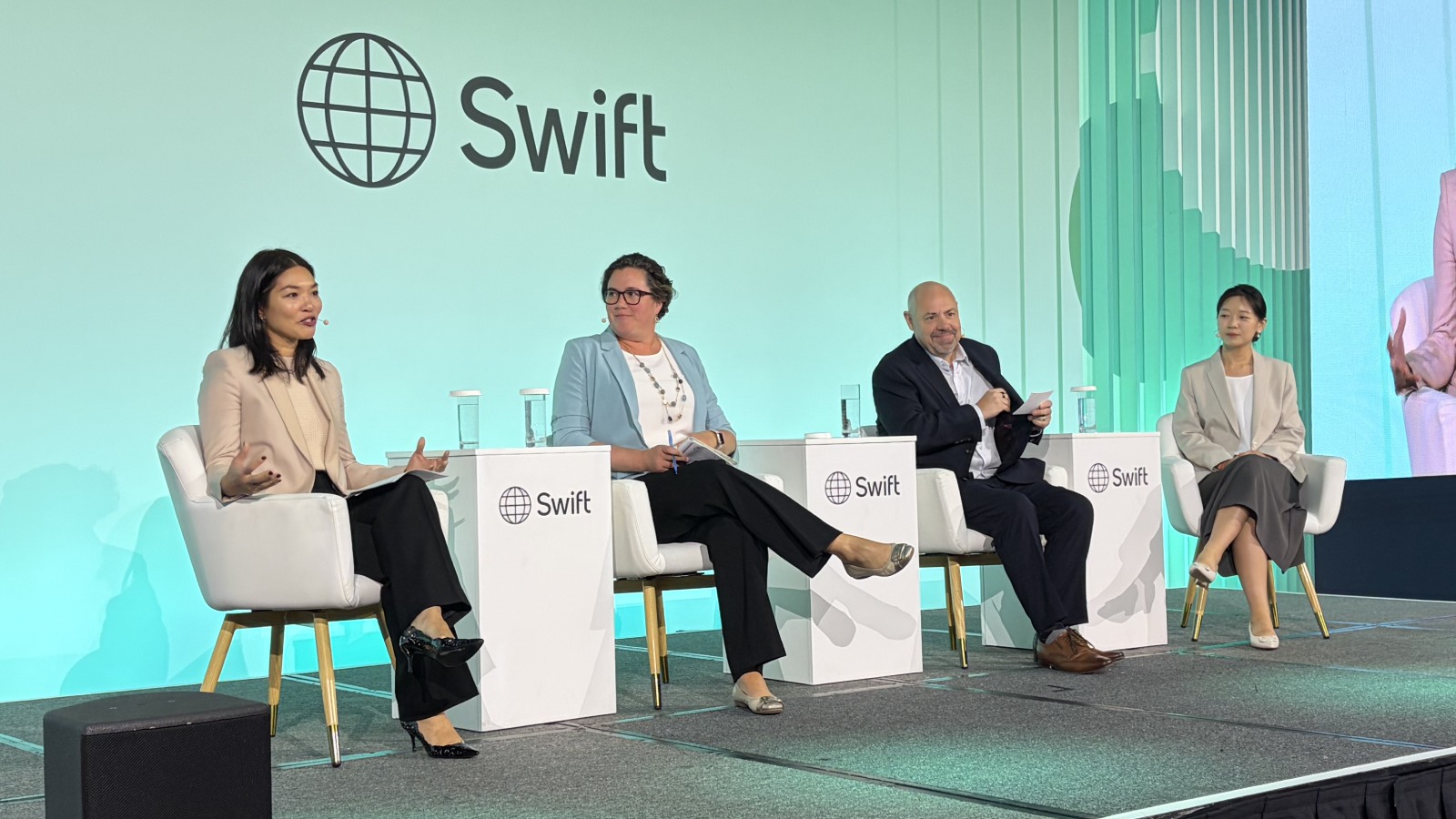
Custodians on a panel at the PostTrade 360 2025 conference reflected on their capabilities. Being all things to all clients through a single platform seems increasingly unrealistic. Instead, custodians may focus on specialised gatekeeping, managing specific post-trade processes such as exception management or corporate actions, while coexisting with investment-platform-led and network-based services.
What will be different in 2026?
Pardeep Cassells, chief client officer at AccessFintech, observes a shift away from users adapting to custodian platforms. “We are seeing a trend towards users of custodial services being met in their preferred systems,” she says, with those systems supported by innovative data providers rather than clients navigating “multiple disparate platforms per custodian.” Cassells also highlights growing momentum behind service-bureau style models that allow firms to benefit from more modern data services instead of being constrained by “overly structured data limitations.”
The recently announced partnership BlackRock–AccessFintech, is one example illustrating that platform influence can also reside outside traditional custody infrastructure.
The BlackRock–AccessFintech partnership also illustrates how post-trade intelligence is moving closer to the investment layer. Cassells explains that it supports custodians with insights that help customers resolve exceptions much faster—“particularly important in a T+1 settlement world.” The network effect, she adds, “aggregates a new level of transparency through the lifecycle of the transaction.”
We are seeing a trend towards users of custodial services being met in their preferred systems
Pardeep Cassells
However, rather than signalling competition, Cassells sees these partnerships as complementary. “These partnerships are completely complimentary,” she says, noting that custodians remain instruction-led while insights “assist the asset managers in ensuring their instructions are optimised first time or remediated real-time.”
Looking ahead, Cassells expects “real-time data ingestion and transmission management” to become essential, while batch processing continues to inhibit post-trade processes. At the same time, “operational resiliency in a T+1 environment will become a competitive advantage as opposed to a regulatory requirement.”