





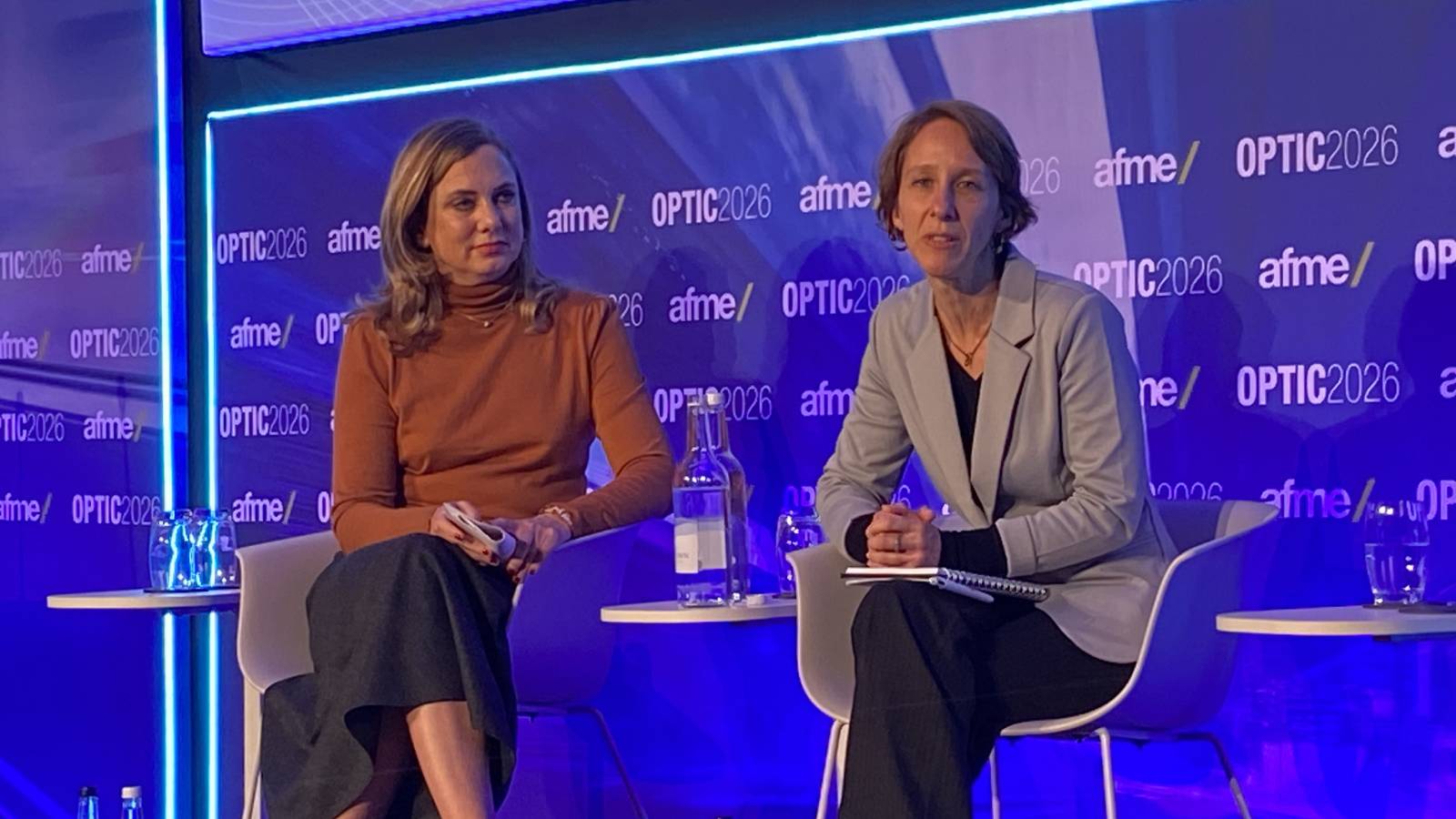


INTERVIEW | For years, conversations about Africa in post-trade circles have centred on risk and friction. At PostTrade 360°’s upcoming conference, that narrative gets a rewrite—and a first: this marks the very first dedicated Africa session in the event’s history, a sign of just how global and broad-reaching PostTrade 360° has become.
Hari Chaitanya, executive head, Investor Services and Cash Clearing, Africa at Standard Bank, joins two of the region’s CSDs to chart how far the region’s post-trade industry has come — and to make the case for its relevance on the global stage.
Leading the discussion is a panel that brings together one of Africa’s major banking networks with two of its most influential market infrastructures — the CEOs of the Central Securities Depositories of Nigeria and Kenya join the session, offering a rare combined view from both the custodian and the CSD side of the market, in a discussion chaired by Barnaby Nelson, CEO of The Value Exchange.

Where the changes are happening
The panel’s host bank has spent recent years running the “World to Africa” survey in partnership with The Value Exchange, tracking global investor sentiment toward the continent and feeding that insight back to regulators and market infrastructures to demystify Africa from a post-trade and regulatory perspective. The latest edition found that half of institutional investors plan to grow their Africa allocations over the next two years, led by mid-sized asset managers and asset owners — a shift that builds on a longer trend: the same research series found that 63% of allocators had already invested in Africa by 2024, up from 57% in 2021.
Part of the story is simply scale: Africa is 54 countries, roughly 30 stock exchanges and around 1,100 listed companies — a far broader and more differentiated market than the “single geography” perception many investors still carry, and one that recorded roughly $1.2 trillion in total trade in the latest available data (World Trade Flows). Post-trade modernisation, payment innovation and digital asset initiatives are advancing at both the national and sub-regional level, reshaping what “investable” looks like across the continent.
Why investors are paying attention
The session is aimed squarely at the audience shaping those flows — investors, asset managers, and the global and regional custodians building out their African networks. The message for them: Africa is no longer just a problem story, it’s an innovation story.
“The story about Africa is not just about this being an emerging opportunity,” Chaitanya says. “It is also becoming more of an innovation laboratory” — a lot of innovation happening across different countries that should be of interest to investors far beyond those simply chasing returns.
That story is increasingly written in digital assets. Sub-Saharan Africa took in more than $205 billion in on-chain crypto value between July 2024 and June 2025, up 52% year-on-year — making it the third fastest-growing crypto region in the world, behind only Asia-Pacific and Latin America (according to Chainalysis’s 2025 Geography of Cryptocurrency Report.). Nigeria dominates that activity, receiving over $92 billion of it — nearly triple the amount that went to South Africa, with Ethiopia, Kenya and Ghana rounding out the region’s top five.
Local news service Mariblock’s write up of the report singles out stablecoins, which now account for an estimated 43% of the region’s total crypto transaction volume — much of it driven by currency depreciation and scarce dollar access in markets like Nigeria, where a dollar-pegged stablecoin has become, in effect, a more stable store of value than the naira. In South Africa, roughly 10% of the population now holds some form of digital asset, one of the highest penetration rates on the continent.
Regulation is catching up with the activity: South Africa, Nigeria, Kenya and Mauritius now operate under formal digital asset frameworks, with Nigeria’s Investments and Securities Act 2025 formally classifying digital assets as securities and Kenya’s Virtual Asset Service Providers Bill signed into law in October 2025.
Much of this stems from necessity rather than experimentation. “In Africa, this adoption is being driven by the need for real solutions to real problems,” Chaitanya explains, “rather than people experimenting with technology to find an alternate way of doing something that’s already in place — because in Africa, there’s no legacy.” Without legacy banking infrastructure, many African markets leapfrogged straight from no banking to mobile and digital banking, and the same pattern is now playing out in capital markets, where investors sit closer to a shift toward tokenised assets and stablecoins than to traditional infrastructure.
On the post-trade agenda itself, Nigeria moved from T+3 to T+2 in November 2025 and then to T+1 from 1 June 2026 — two settlement-cycle compressions inside seven months, and the first T+1 go-live anywhere in the region, executed with a formal “convergence day” to settle overlapping trades cleanly. “It’s been a pretty smooth transition, without any major issues or disruption,” Chaitanya says of the move. “And they were the first one in the region.”
A story that’s going global
Africa’s trade is also being redrawn. The World Trade Organization expects African export volumes to grow 5.3% in 2025 — tied with Asia for the fastest of any region — and import volumes to grow 11.8%, the fastest globally. China remains embedded in the region’s trade, redirecting exports toward Africa as US and EU tariffs bite, while Global Finance Magazine reports Gulf states have deployed more than $100 billion into the continent and, together with Africa, now represent a combined market of roughly 2 billion consumers and over $5 trillion in GDP. Meanwhile, Afreximbank’s latest African Trade Report shows Europe — historically Africa’s largest trading partner — seeing its relative share gradually give ground to Asia and the Middle East.
“China-Africa is a well-known trade corridor, but in the last few years the Africa-Middle East corridor has been growing in a big way, and so has Africa-India,” Chaitanya says. “As these new trade corridors come in, they will also drive momentum towards portfolio investment — that’s normally the logical sequence in any frontier or emerging market.”
As these corridors deepen, portfolio investment flows tend to follow trade flows — pulling African capital markets into closer alignment with global standards, technology and capital.
* For more information about the PostTrade 360° conference 2-3 September 2026 and to register, click here