








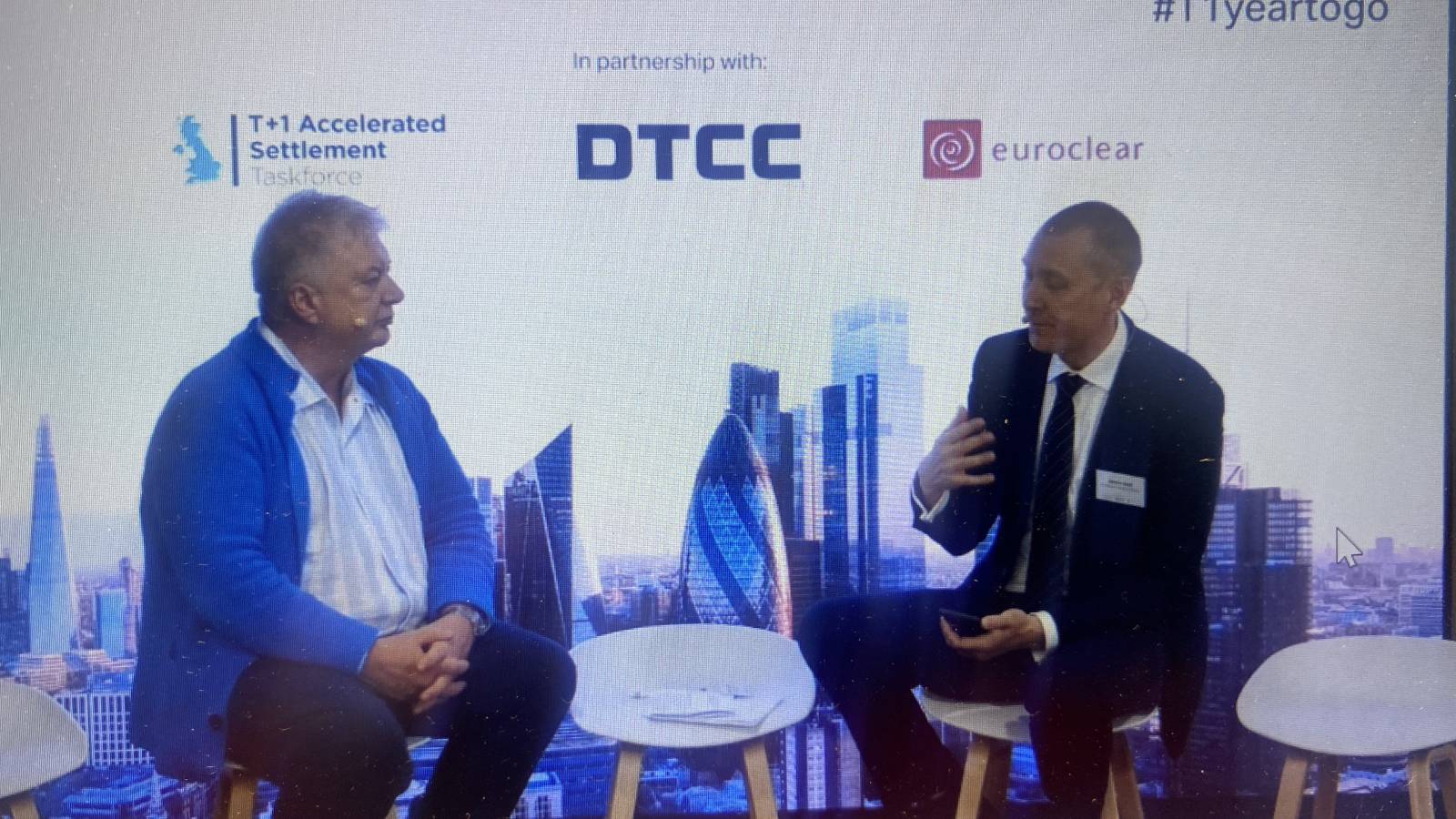


Following a Financial Times report about the EU regulator’s plans for central supervision of financial market infrastructures, we asked Karel Lannoo, head of Brussels-based think tank Centre for European Policy Studies (CEPS) what this could mean for settlement.
He’s cautiously optimistic about how it could solve Europe’s CSD puzzle, which is made up of national regulators and national post trade monopolies creating what he describes as “an inertia of interests” and raises settlement costs for cross-border trades. He believes that central supervision and tearing down the barriers to efficient cross border settlement could be next steps to eliminate fragmentation and boost EU’s competitiveness. However, the puzzle has more complex phases than just competition, and it’s only in tackling this phase do greater complexities emerge.
Lannoo has been tuned to financial markets and their infrastructures as leader of CEPS for 25 years. He’s been studying settlement costs for more than two decades, first in a 2001 survey of costs, and his independent think tank formed part of the intelligence going into the effort of removing the barriers to efficient cross border settlement.

Puzzle phase 1: Sorting the monopolies
“We have monopoly concerns with CSDs and CCPs. You can accept a monopoly if it’s natural, but you still need fair competition,” he states. He’s convinced sharper policies could bring down settlement fees, referencing AFME’s latest report about Europe’s high cost of cross-border settlement and Euronext’s report asserting that competition could fix it by allowing scale efficiencies to emerge naturally.
On national monopolies, Lannoo says that “if they (policy makers) say that there are criteria which a CSD imposes, which are anti competitive or discriminatory, they should act,” he states. “But of course, they can only act on concrete evidence such as price data, for example, that shows membership criteria are discriminatory for foreign providers or foreign entities.”
Last year, when Lannoo spoke to us about the importance of going after the clearing and settlement monopolies, he asserted that “something like a Big Bang” – centralising supervision and tearing down obstacles to cross-border competition – could be the right step forward in the regulation of the EU’s settlement scene.
Puzzle phase 2: Centrally supervised building
With the European Securities and Markets Authority (ESMA) reportedly drawing up plans for central supervision, is this the “Big Bang” he had in mind?
Yes, at a base level, but less so in volume terms.
“Consolidation is advancing a bit but markets remain fragmented. There’s still 43 barriers standing in the way of efficient cross border settlement and clearing in Europe, compared to 15 first identified more than 20 years ago,” he says referencing Alberto Giovannini’s initial 2021 report to remove the barriers and the ECB’s latest report, which annexes many more.
“The biggest change we’ve seen is that the Draghi Report on European competitiveness has said this cannot go on. The important thing is that with the desire for a better functioning capital market, we need to tackle this panoply of settlements engines, which are very expensive. Without well functioning and integrated settlement, due to the diversity of players and legal systems, you cannot exploit scale economies or a single capital market that we’re striving for.”
While competition is necessary, he says, less of it could help bring down high settlement costs which investors ultimately bear. “For example, investment funds will be too expensive if settlement costs are high. Given cross border investments carry higher costs than local investment, it hampers integration of capital markets.”
Lannoo believes central supervision will require a lot of political will to make it happen, adding “it’s certainly very inefficient that we have so many different supervisors for CSDs.”
Puzzle phase 3: Tackling the trust issue
But there’s an even bigger debate about collateral and where that sits, states Lannoo. He references blocked assets held in Euroclear’s Belgian CSD since Russia’s invasion of Ukraine. “Collateral holders need to know where that collateral is, heightened by the Russian asset freeze,” he explains. “They could be frozen or used for other purposes by another member state which may refuse to return the collateral on the grounds that another does not respect EU law. This raises a wider question: do states trust each other sufficiently to have centralised supervision and centralised collateral management?”
Lannoo says the issue of collateral should not be underestimated, suggesting the degree of trust between member states is not yet ready for centralisation. “There is cross border use of collateral, but the collateral of the member states is mostly sitting in the national CSDs, and that’s why governments want control of these entities.” He doesn’t dismiss the idea of central supervision and decentralised collateral management ever happening, however. A situation similar to the ECB’s supervision of banks in EU member states is plausible.
But it does raise further questions about member states’ collateral, where government bonds are used as collateral and placed in another jurisdiction. Here he maintains the lack of a fully integrated, or federal structure at a European level could be an obstacle.
“Countries need state banks to invest in their debt. But if you have a debt of trillions, you need to have a market.”
“So there’s a vested interest at a national level and this national debt situation will not change rapidly. That’s why they want a lever over the banks and over the collateral so that the situation doesn’t run out of control.”
Where does this leave settlement efficiency?
Thankfully, says Lannoo, the barriers to efficient cross border settlement are reducing, but it will be a slow process rather than a big bang. “Don’t forget that company laws, security law and tax law have their own lives at member state level. This is not just an EU thing, it’s very complex internationally too.”