








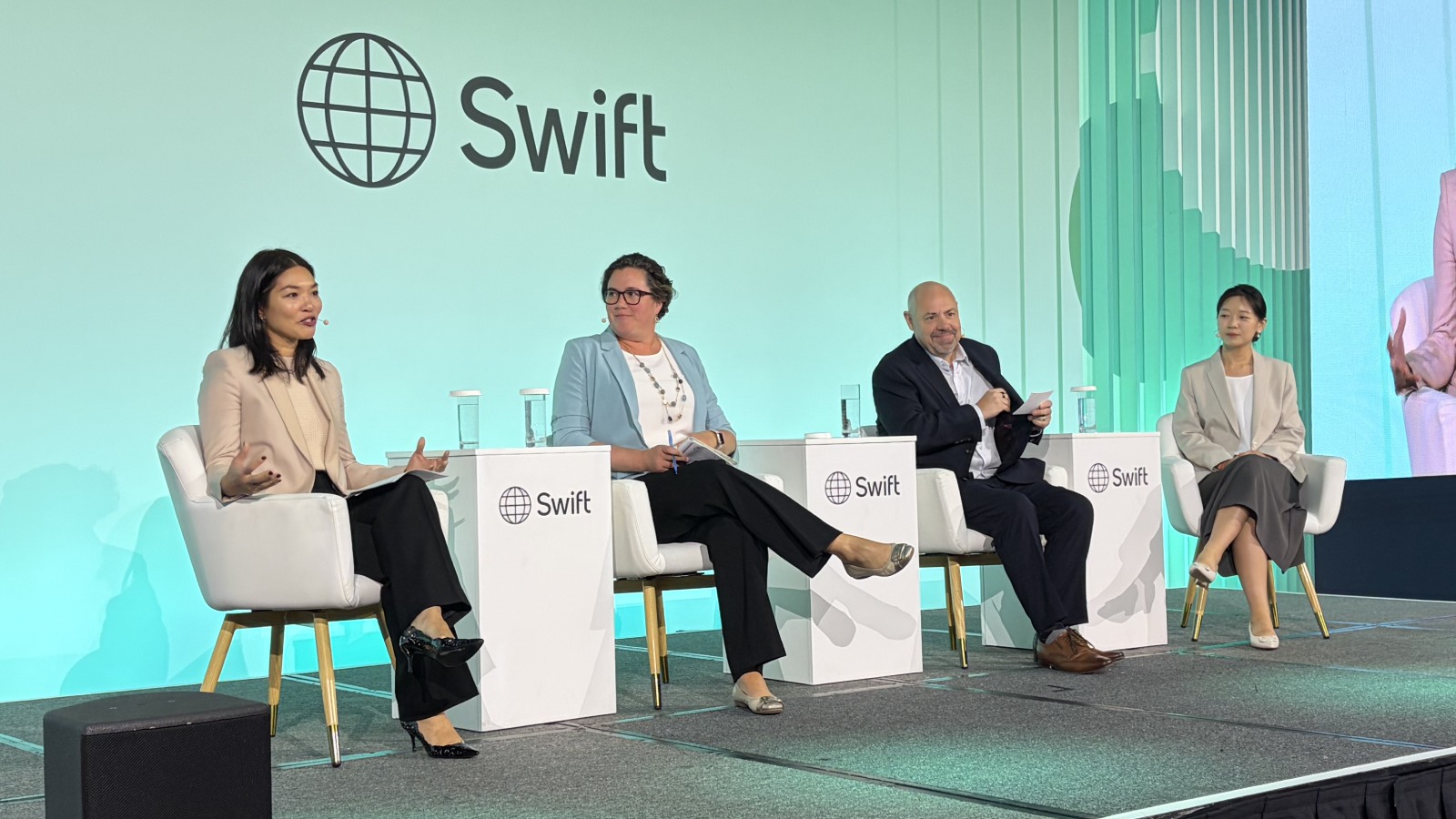



DEEP LOOK | From managing time-zone and FX liquidity hurdles for foreign investors, to redesigning custodian confirmations, India’s T+1 transition is a masterclass in phased delivery. Rana Usman, chief operating officer at NSE Clearing, took the podium at WFEClear to share the solutions India found—and the lessons she believes are most relevant to clearing houses now facing Europe’s 27 October 2027 deadline.
When the winds of change blow, some build walls and some build windmills. For Rana Usman, head of operations at NSE Clearing, India’s migration to a T+1 settlement cycle is firmly in the windmill category. “It has not only been a milestone in itself,” she told the WFEClear audience, “but has served as a catalyst for many further changes within India’s capital markets infrastructure.”
The scale of what India was taking on is easy to underestimate. At the point the idea first crystallised, in 2021, the country had run on a T+2 settlement cycle for over two decades. Transforming that meant touching three interoperable central counterparties, three stock exchanges, two central securities depositories (CSDs), 15 commercial clearing banks, roughly 1,000 clearing members ranging from small regional brokers to large institutions, and more than 250 million registered investors. The formal decision to go ahead came in September 2021. Implementation began in February 2022. The window: six months.

What India had going for it
The transition did not happen in a vacuum. Several features of India’s existing infrastructure gave the project a running start. On the payments side, the Unified Payments Interface (UPI) already facilitated instant interbank fund transfers for retail-scale transactions, while the Real-Time Gross Settlement (RTGS) system handled large-value flows. A 24/7 FX market was in place — an important consideration given the volume of foreign portfolio investor (FPI) activity in Indian equities.
Perhaps less obvious from the outside was India’s pre-delivery mechanism. Even while operating under T+2, the clearing ecosystem had worked with the CSDs to enable delivery of securities by T+1 in most cases. Members had a financial incentive to do so — earlier delivery translated into margin benefits. When T+1 settlement was formally introduced, the market was not starting from scratch.
The hard part: foreign investors and the FX problem
The thorniest challenge was the one that always accompanies a compressed settlement cycle in a market with significant cross-border participation: time zones and FX liquidity. A 24/7 FX market sounds like the answer, but Usman was candid about its limits. The sharpness of quotes available during Indian business hours simply did not carry into the night or the early morning. For FPIs needing to hedge currency exposure on settlement day, that was a real operational risk, not a theoretical one.
“Why should we let the tail wag the dog? If custodian rejections run at less than 1%, the 99% should not be held hostage to that edge case.”
Rana Usman
The question was how to give foreign investors enough time to adapt without stalling the transition for the rest of the market. The answer lay in the implementation design.
A phased approach — and why it worked
Rather than a single cutover, India sorted its approximately 6,000 listed securities by market capitalisation and migrated them in tranches of around 500 per month, starting with the smallest and least liquid. The logic was deliberate on several levels.
The earliest movers were thinly traded stocks, which meant any operational friction during the initial months had limited market impact. Back-office systems could be tested and refined incrementally. And because T+1 and T+2 coexisted for a period, the clearing corporation was able to run a natural experiment — measuring trading volumes in a security just before and just after it migrated to T+1, and observing the uplift in activity that followed.
Most importantly for the FPI community, the securities in which foreign investors were most active were deliberately placed at the back of the queue, scheduled for December 2022 and January 2023. That gave foreign investors eight to nine months to engage with the clearing corporation, raise concerns with SEBI, and adapt their own systems — at a pace that reflected the complexity of their position, not just the ambition of the timeline.
Rethinking custodian confirmation
One of the more technically elegant aspects of the transition was the solution to custodian confirmation. Under T+2, custodians had until 1:00 PM to confirm trades. Compressing to T+1 theoretically required removing 24 hours from the cycle — but the clearing corporation chose not to impose that in full on custodians. In practice, their window shrank by just five hours.
The mechanism that made this possible is what Usman calls the provisional obligation model. Rather than waiting for custodian confirmation before issuing clearing obligations, the clearing corporation treats all trades as confirmed and calculates obligations on that basis. The following morning at 7:30 AM, any rejections — which historically run at below 1% — are communicated as a delta to the relevant clearing member’s obligation.
The principle, as Usman put it: why let the tail wag the dog? If custodian rejections run at less than 1%, the 99% should not be held hostage to that edge case. By centralising the complexity — the clearing corporation absorbs the reconciliation work rather than distributing it across a thousand members — the transition became far more manageable for the market as a whole.
Even the 7:30 AM cut-off was not fixed from the start. The original proposal was a 10:00 PM deadline the night before. Feedback from custodians and FPIs led to the adjustment. That iterative refinement, Usman suggested, was as important to the outcome as the original design.
The results
The benefits proved measurable and significant. Margin requirements fell from two days to one, directly easing the capital burden on retail investors — a group for whom margin blocking had been a persistent financial strain. Earlier fund realisation increased the propensity to trade. Liquidity in previously illiquid securities improved upon migration. The direct saving from reduced margin days was estimated at approximately one billion Indian Rupees. An internal research paper subsequently documented the empirical impact on market liquidity.
India completed its full migration to T+1 in February 2023. The following month, derivatives were brought into the T+1 framework, with netting introduced across derivatives and cash segments. Client direct payout — securities going straight to end-investor accounts on T+1 day, rather than passing through member accounts — followed. FPIs gained the option of same-day repatriation. And in a further step, T+0 settlement was introduced as an optional mechanism with a separate order book, closing for trading at 1:30 PM against T+1’s 3:30 PM, with settlement completing by 4:30 PM the same day.
“T+1 is not just about operational efficiency — it is about capital efficiency and de-risking the system. The longer the exposure, the greater the risk.”
Rana Usman
Questions from the floor
After the presentation, Usman took questions from the WFEClear audience.
Is T+0 the logical next step for India? Has it been implemented?
Yes — T+0 is live as an optional mechanism. It is not expected to drive high volumes immediately, but the infrastructure is in place and runs alongside T+1 as an opt-in facility. Notably, over 90% of securities already settle effectively on a T+0 basis through the early payout facility available to members and clients.
Was there resistance from market participants, and how was it managed?
The primary concern of clearing members was the systems changes they would be required to make. The response was to concentrate operational changes within the clearing corporation rather than distribute them across thousands of members. One entity absorbing the complexity rather than thousands doing so in parallel proved far more manageable. Concerns from FPIs were addressed through close engagement between SEBI, the clearing corporation, custodians and the FPI community, including member working groups. The fact that custodial rejections have remained well below 1% throughout T+1 is considered a strong validation of the approach.
Was the move driven by regulation or market demand?
Both. There was genuine regulatory intent and simultaneous market demand—particularly from retail investors, for whom the reduction in margin requirements was a direct financial benefit. The interests of different stakeholder groups ultimately converged. It was a win for all parties.
Is atomic settlement the next frontier?
Atomic settlement was examined carefully alongside T+0. Its primary disadvantage is the elimination of netting, which increases gross settlement volumes and cost—particularly for intraday traders. T+0 occupies a more practical middle ground: same-day settlement with netting preserved. That said, atomic may suit a segment of investors not engaged in intraday trading, and coexistence of atomic, T+0 and T+1 is feasible provided the right structural and order-book arrangements are in place.
What lessons would you share with European CCPs ahead of the October 2027 deadline?
The most critical area is payments infrastructure. Ensuring systems are as accommodating as possible for members is equally important. From India’s experience, three things stand out:
- Pre-delivery and early payment mechanisms should be treated as enabling infrastructure to be put in place well in advance, not left to the final months.
- A phased or staggered implementation worked very well. The stagger need not be by security—it could be by investor type, or any other dimension that reflects the specific challenges of the market.
- Centralising operational complexity within infrastructure institutions, rather than distributing it to members, significantly eased the transition.