






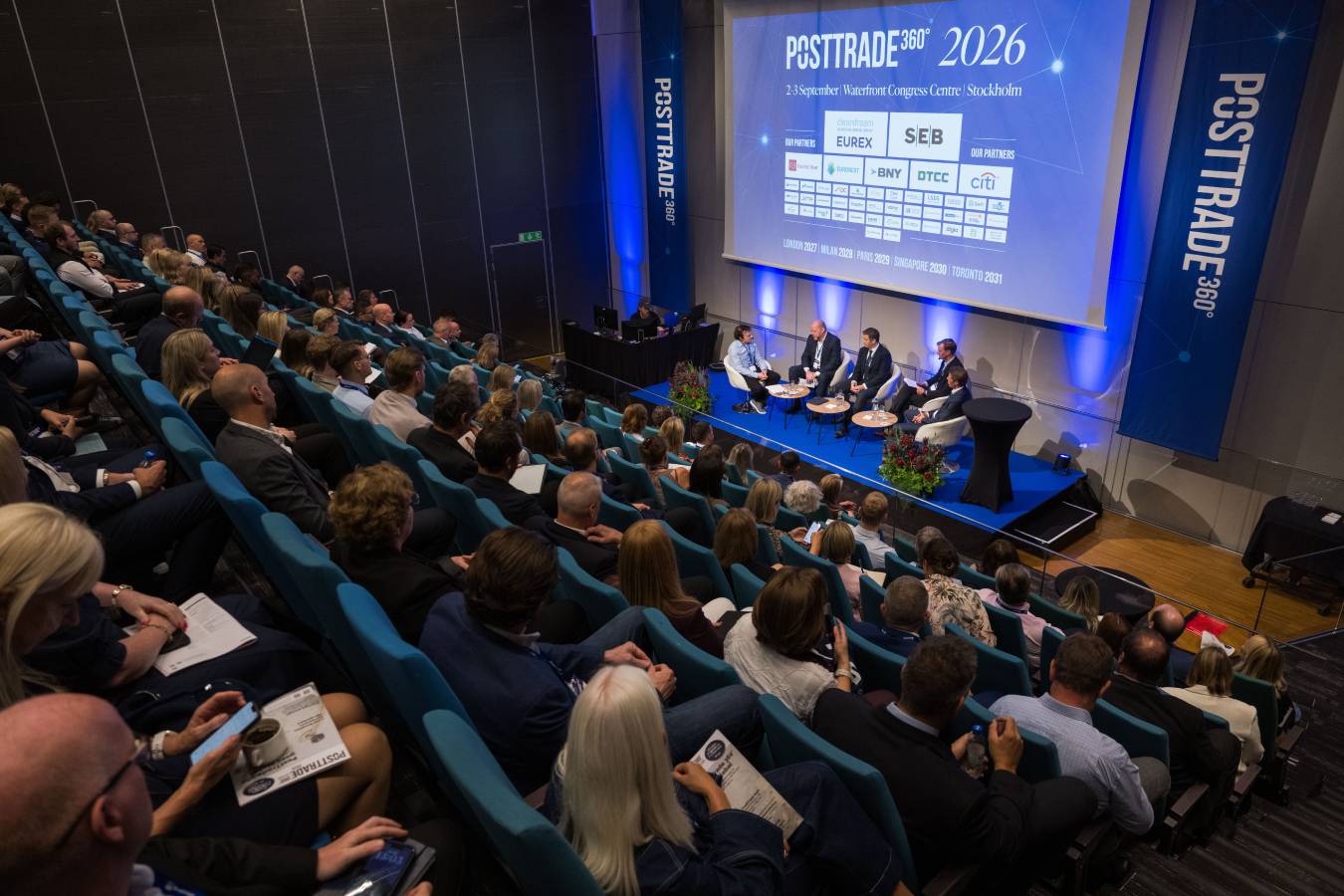




The accelerating growth of tokenised assets is testing how close the industry is to true scalability. At AFME Optic 2025, in the session titled “Tokenisation 2.0 – Are we finally advancing towards widespread adoption?”, representatives from Santander, BNY, and De Nederlandsche Bank joined AFME’s Coco Chen to assess market readiness across asset classes and the infrastructure required to support a functioning token economy.
Chen, Associate Director for Technology and Operations at AFME, opened by underlining “outstanding challenges and the barriers we have and the way forward.” She noted AFME’s finding of a 300 percent increase in tokenised value between 2024 and 2025, signalling that momentum is building.
Fragmentation
Juan Jiménez Zaballos, Global Head of Retail and Digital Public Policy at Santander, emphasised that genuine adoption depends on solving the right problems. “The real one, in my view, is the on-chain cash settlement. That is the one that is going to move the needle,” he said. While Santander began tokenising fixed income securities in 2019, Zaballos noted that legal and technological fragmentation continue to slow progress.

From BNY, James Cunningham pointed out that market enthusiasm must be matched by tangible benefits. “There is a lot of interest, a lot of activity,” he said, “but digital assets will only become widespread if they can actually deliver real benefits.” He argued that tokenisation can be particularly valuable in collateral and private markets, where efficiencies can be more directly realised. “We need standards to enable interoperability, to enable connections,” he added, underscoring that “intermediaries are absolutely key. This allows underlying clients to access DLT markets.”
Collaboration is key
Representing the central bank view, Sarah Liebing of De Nederlandsche Bank described how the Eurosystem is building the foundations for a token economy, including the two systems: Pontes and Appia. “Pontes is a bridge solution that will enable eligible parties to use central bank money for settlement of tokenised assets,” she said. “Appia is a blueprint for future-proof financial market infrastructure.” Her message was clear: “Collaboration is really key.”
As Chen concluded, the move toward tokenisation 2.0 depends on industry alignment. “We should continue advancing towards widespread adoption and doing together things we found in the room.”
The yearly Optic conference, in Amsterdam on 7–8 October 2025, is hosted by the Association for Financial Markets in Europe (AFME). Optic stands for the “Operations, post trade, technology and innovation conference”. PostTrade 360° is there, with our coverage collected here.