








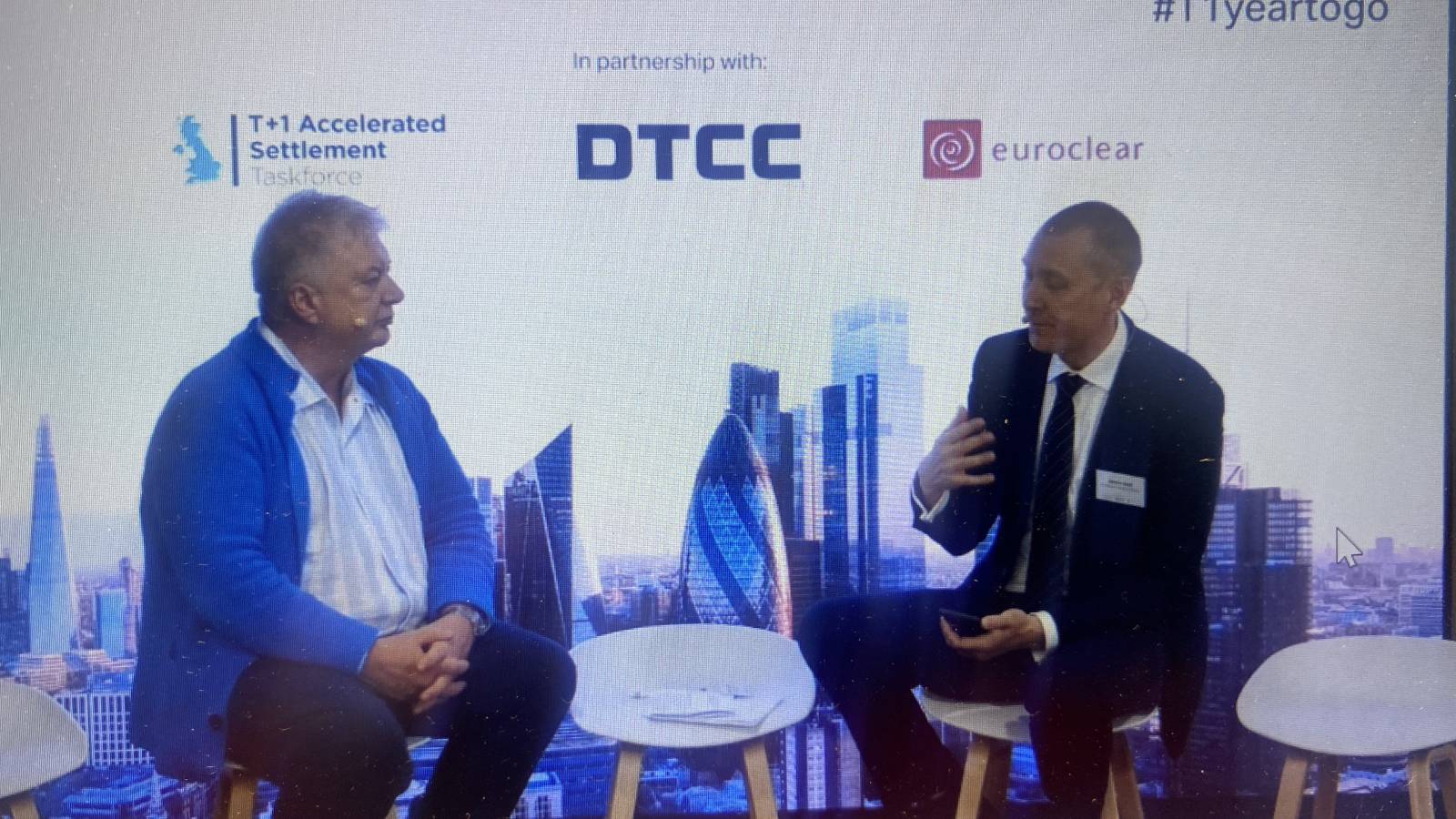



At AFME Optic 2025 the mood was urgent: asset servicing in Europe is under pressure, and not just from regulation. With T+1 on the horizon, the industry is being forced to confront the “post-trade plumbing” that has long lurked in the background. Moderated by Michael Collier of JP Morgan Chase, the panel “Modernising Asset Servicing: Challenges and Opportunities” brought together voices from BNP Paribas, ABN Amro, and the Dutch Advisory Committee Securities Industry to lay bare where today’s systems creak and how much work remains to make them fit for speed and scale.
Ben van der Velpen, Managing Director at the Dutch Advisory Committee Securities Industry, underlined that automation is no longer optional. “We need at least automation of post-trade processes because of the shortening of the settlement cycle, system upgrades, but also workload redesign,” he said. The Committee has identified around 64 issues connected to T+1, none of which are purely domestic, showing that the challenge is European in scope. Harmonisation, he suggested, is the missing link.
Impact
On the issuer side, Head of Corporate Broking & Issuer Services at ABN Amro, Richard van Etten, highlighted that shorter settlement cycles will make existing inefficiencies impossible to ignore. “T+1 has an impact for an issue when it comes to direct ex-dividends,” he said. Elective events and relief-at-source processes still depend too heavily on manual handling. What’s needed, he added, is earlier passing on of elections and faster disclosure of underlying holders in complex corporate actions.

Mariangela Fumagalli, Head of Asset Servicing Product and Custody Regulatory Solutions at BNP Paribas, brought the standards perspective, explaining how the Securities Market Practice Group (SMPG) is developing new ISO 20022 messages for transaction management, with plans to align them back into ISO 15022 by 2026. But she cautioned against assuming that technology alone will solve everything: “ISO 20022 is not a panacea to all our problems. What is important is a good quality of data and good processes.”
Standardisation
Moderator Michael Collier concluded that Europe still lacks a single rulebook, and that fragmentation remains a barrier to real progress. “We need to standardise our processes,” he said, a reminder that faster settlement cycles will only succeed if the foundations of asset servicing are rebuilt for consistency, not just speed.
The yearly Optic conference, in Amsterdam on 7–8 October 2025, is hosted by the Association for Financial Markets in Europe (AFME). Optic stands for the “Operations, post trade, technology and innovation conference”. PostTrade 360° is there, with our coverage collected here.