









COLUMN | Tokenisation and all things new and digital are (literally) top of the page but they won’t replace the old in a big bang moment. Olaf Ransome, aka the Bankers Plumber, reveals why.
Popular opinion holds that the new will inevitably replace the old. My own view is that financial services is largely effective yet largely inefficient. I can see the potential in new technology. But as a pragmatist, I believe what we actually need is co-existence and convergence, not replacement.
The state of the tokenisation debate is neatly captured by a Rolling Stones lyric: “You can’t always get what you want, but if you try some time, you might just get what you need.”

To balance this perspective, I spoke with another pragmatist who sits at the intersection of the old and the new – Ville Sointu, chief strategist, Transaction Banking at Nordea.
Two different worlds
For this article, let’s treat banking as broadly divided into two worlds: retail and wholesale. There is a natural overlap in B2C, where a private individual transacts with a merchant, but the dynamics in each are distinct.
Things Retail
Let’s start with the retail world. Sointu explores whether the digital money era represents transformation or natural evolution. Two takeaways stand out. First, in payments — at least in Europe — we are already well served: instant payments are available to anyone who wants them. A shiny new digital layer that simply replaces retail payments on a one-for-one basis would struggle to justify its existence. Second, Sointu likened tokenised deposits to casino chips: useless outside the casino. He also noted that stablecoins work well until the holder needs to exchange them for local currency. I’m with him on both counts.
However, there are some use cases beyond the capabilities of our current system. These are in the areas of programmability and interoperability. Let’s allow that “agentic payments” will be a thing. New processes, where AI programmes make decisions to do something which involves a payment. That might be as simple as me ordering an agentic AI to buy a flight ticket from Switzerland to Liverpool on either September 14th or 15th as soon as the price is below CHF 150. Let’s imagine I have a bank account and credit card with Nordea. I asked Sointu to help me understand what of the old might be re-usable and what new elements we would need to integrate:
“Your AI agent doesn’t need a crypto wallet filled with stablecoins to make that happen,” he states. “All it really needs is a very specific set of permissions to tap into the Nordea account and credit card you already have.”
This can be achieved by Nordea giving my AI a limited-use digital key. I set the rules on the bank’s side with a prompt: “Authorise up to CHF 150, only for a flight to Liverpool, and only for these specific dates.” When the AI finds the right price, it hands over that digital key to instantly approve the payment.
As Sointu explains: “The ‘new’ part here is simply that programmable permission layer – the ability for software to talk to the bank with strict boundaries set by the customer. The ‘old’ part is the actual movement of the money. We use our existing instant payment rails or card networks to clear and settle the transaction exactly like we do today. There is no need to push this through a public blockchain, pay conversion spreads, or use stablecoins just to automate a plane ticket. By simply adding smart, agent-compatible APIs on top of our existing plumbing, we get all the automation you need without reinventing the means of payment.”
Things wholesale
This is where my observation about effectiveness and efficiency bites hardest. The daily diet of wholesale operations is settling trades, making payments and reconciling positions. The ability to do the first two depends on liquidity management: having enough money in the right currency, at the right place and time. In today’s legacy world, that is complex and costly. Banks must hold liquidity buffers to meet their commitments. These are not transactional costs but fixed ones — an annual regulatory premium based on historical data.
One of the key drivers of these costs is a systemic dependency on credit; correspondent banks and custodians support their clients with intra-day credit which enables trades to settle and payments to be made. I’ve written on really why intraday liquidity management matters.
What we see so far, in tokenised deposits and stablecoins, is all about private money solutions. None of them are as universal in their usefulness as any of the financial market infrastructure (FMI) we have today. Essentially, they require us to do what we do today “and” to do all those new things too.
In wholesale operations, the word “AND” is like kryptonite; dangerous and to be avoided. The more places we need to have and hold money (aka the means of payment), the more complexity we have to manage. That will almost certainly a priori drive costs up; “Looks like I am net flat, but I need a float to get things rolling” or “I need a net 100 but will move 150 to make sure that big trade settles.”
We are missing a strategic solution for the means of payment
Sointu agreed that the complexity risk is very real, and it comes down to a fundamental flaw in blockchain architecture. “Going back to my casino chip analogy, public blockchains operate entirely on a pre-funded model,” he says. “If a wholesale bank wants to settle a large-scale trade on-chain using stablecoins, that capital has to be fully locked up in a digital vault beforehand. In the real world of high-volume transaction banking, that is an extraordinarily inefficient use of liquidity. Our current legacy systems are built around intraday credit and fluid settlement pools for a reason. Forcing banks to tie up huge amounts of idle capital just to execute transactions is a significant step backward.”
Then there is the regulatory reality. “You cannot simply bypass AML and sanctions screening because an AI agent or a smart contract is executing the payment. To make public blockchain rails legally compliant for enterprise grade wholesale banking, you would need to add on the very necessary layers of digital identity verification, transaction monitoring, and cryptographic guardrails. You end up building a mountain of brand-new, potentially fragile infrastructure just to make the new technology behave like the old technology.”
In wholesale banking and tokenised assets, we are missing a strategic solution for the means of payment. That is the missing enabler — the key that would unlock what tokenisation actually promises.
Sointu continues: “Instead of forcing a public blockchain solution that is clearly a poor fit for wholesale banking, we need to go back to the fundamentals. We should be focusing our energy on upgrading the access rules and messaging capabilities of our existing central bank and commercial bank clearing systems. The solution never was to pile complexity on top of complexity but rather to make our functional legacy plumbing smarter.”
There are efforts underway to solve for this. The BIS’ Project Agora is looking at ways to combine tokenised deposits and CBDC. Fnality is an alternative approach; a private sector payment system initiative which is built on 100% reserves held in central bank money, an sCBDC or synthetic central bank digital currency. Both of those would lead to the availability of a payment asset on chain.
Potentially very useful.
Today, securities and FX trades settle in different FMIs, with payments handled elsewhere. Switzerland is an exception: the same account settles both securities and payments. Elsewhere, access to payment systems is typically restricted to locally regulated entities, which entrenches reliance on correspondent banks and intraday credit — and drives up complexity and cost.
What are the possible alternatives?
My reductive Bankers’ Plumber’s answer is the SPooL: a single pool of liquidity in each currency, available intraday to any regulated institution. Both elements matter. We need a payment asset that does all things P — Payments, DvP settlement of securities, and PvP settlement of FX. And we need to break the dependency on correspondent banks and intraday credit, partly because correspondents are increasingly selective about who they serve, and partly because that credit dependency is itself a cost driver.
To be clear, I am not advocating unrestricted overnight access to central bank reserves. I am saying that if, for example, Switzerland’s ZKB could hold GBP and USD intraday — subject to end-of-day balance rules — our entire infrastructure would become more efficient, without any loss of regulatory control.
I put this to Sointu directly: in wholesale banking, broad direct access to a SPooL would make the industry more efficient. Correspondent banks would lose transaction fees, yes — but they would gain the ability to make a market in liquidity instead. It would require a genuine rethink from central bankers.
“Olaf, while I can’t say I’m completely on board with banks losing some of our transaction revenue, I’m still thinking your SPooL idea hits right at the heart of what transaction bankers actually care about: liquidity optimisation,” Sointu says. “If a regulated institution could seamlessly hold and deploy different currencies intraday within a unified framework, it would have the possibility to streamline securities and FX settlement without the heavy reliance on fragile correspondent networks and costly intraday credit buffers.”
He shares what he most likes about the SPooL concept is that it addresses an actual structural problem, i.e. the plumbing of cross-border liquidity, without relying on unnecessary complexity and baggage of public blockchains. Central banks and commercial banks don’t need tokenised private money or volatile stablecoins to achieve this; they need better interoperability, modernised access rules, and smarter messaging between existing, trusted clearing networks.
“If we as an industry focus our efforts, we can deliver the speed and efficiency the tokeniwation crowd promises, but with the institutional safety and regulatory control that global finance demands, he concludes. “It’s about making the old plumbing do new tricks, rather than replacing the pipes with something that leaks.”
On a personal note
This is year five of my partnership with the really wonderful team at PostTrade 360 – five interesting years and ones I thank the team there for enabling. Getting better every year.
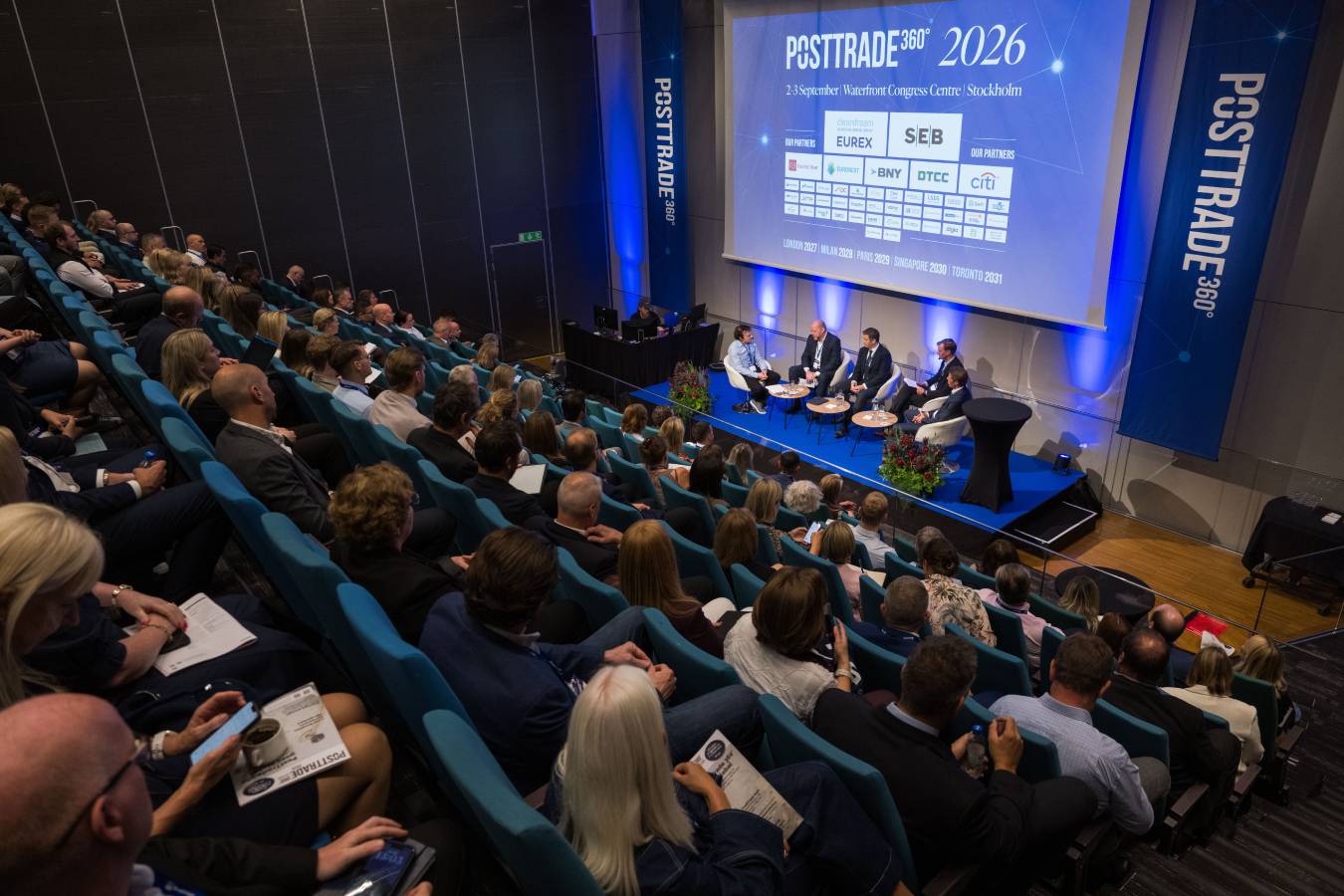
Why not join me and the PostTrade360 Team in Stockholm in September for their annual post-trade event. I’ll be hosting a series of discussion forums, with a range of guests to help me dig into important topics. To register, click here.
Referring to himself as The Bankers’ Plumber, Olaf Ransome is founder of 3C Advisory LLC – drawing on decades of senior operational experience from large banks. To connect, find his LinkedIn page here.