
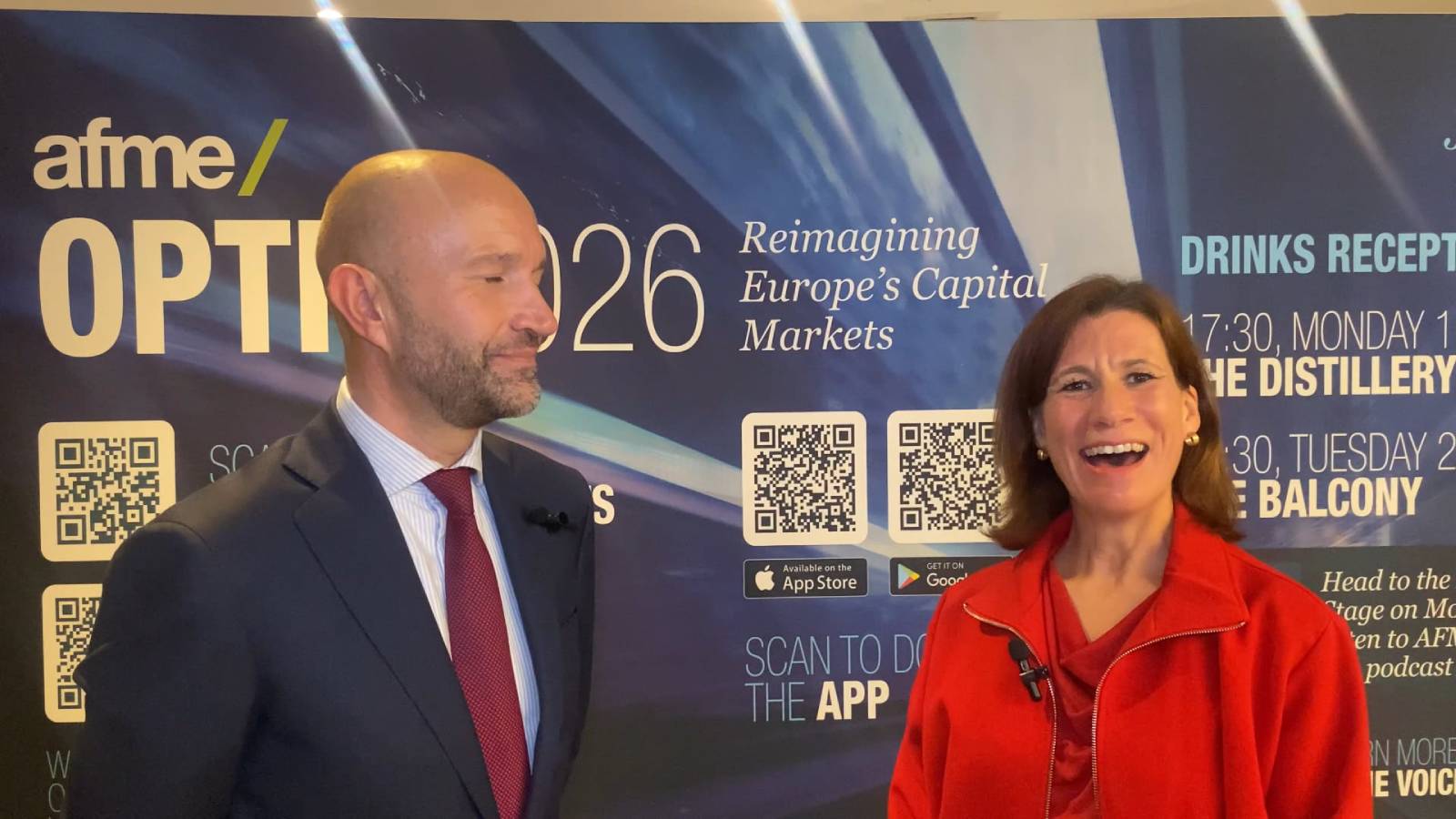
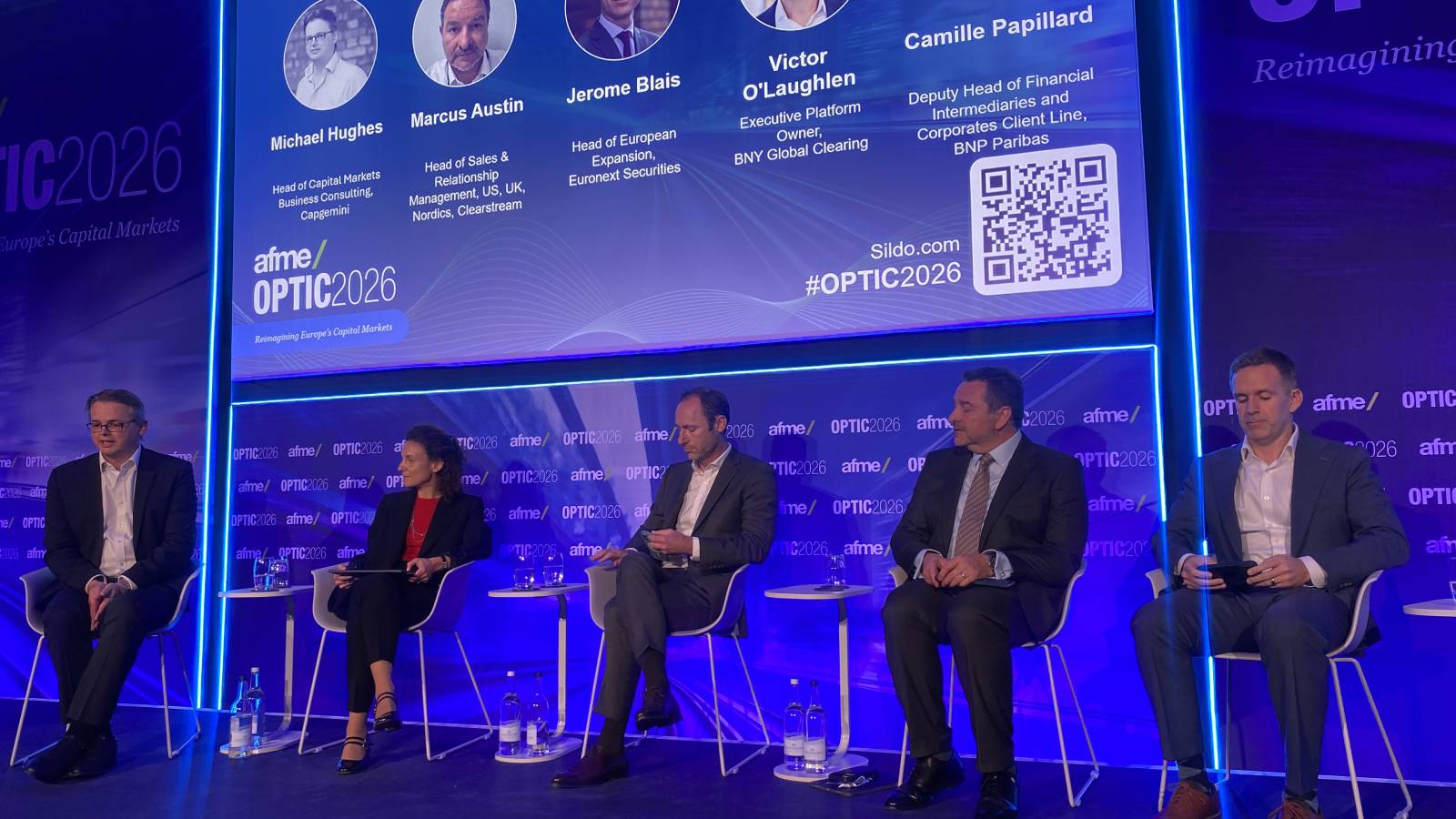


INTERVIEW | With Europe accelerating towards T+1 and renewed momentum behind market integration, firms face a more complex set of decisions around CSD access and settlement strategy. We spoke with BNP Paribas Securities Services’ Camille Papillard, deputy head of Financial Intermediaries & Corporates Client Line, and Sonal Meghani, Financial Intermediaries Segment and Regional Strategist, to understand how these changes are influencing behaviour across banks, broker‑dealers and corporate treasurers.
Europe’s post‑trade landscape is entering a rare moment of simultaneous structural change. Euronext has now set 21 September 2026 as the go‑live date for its alternative CSD framework – a direct challenge to Euroclear’s long‑established position in France, Belgium, and the Netherlands. The model introduces competition in the domestic CSD space, particularly for equities.
These developments landed almost six months after AFME’s report on the rising cost of CSD fees in Europe, which highlighted fragmentation, duplicated processes, and uneven competition as structural cost drivers. Meanwhile, the Single Market Initiative (SIU) – and specifically the Market Integration and Supervision Package (MISP) – has returned to the European agenda, with policymakers once again examining how to deepen cross‑border integration and reduce friction in the post‑trade chain. Euroclear has released a position paper on the EU package, reiterating its offering of a single point of access to all Member States across all financial asset classes for post trading activities.

Against this backdrop, what should end-users of CSDs – banks, brokers, and asset managers – expect in 2026?
Q: What stands out most in the current CSD landscape?
Camille: “What we’re seeing in Europe is a multiplication of clients holding foreign securities in multiple different CSDs. We see an overall complexity of client holdings. Retail investors are opportunistic and very attentive to cost, and they don’t really look at the post‑trade chain behind the trading platform.”
She notes that this diversification is reshaping asset servicing:
Camille: “You see a diversification of different securities, which makes asset servicing more complex. French assets used to be held in France and Italian assets in Italy – now you can see French assets being held in Germany or in Italy.”
Competition is also shifting:
Camille: “The level of competition between CSDs has not really been there. What’s new is the move from Euronext Securities Milan to go a bit more on Euroclear’s historical legacy activity, trying to gain market share in French, Belgian and Dutch equities.”
And the impact is already visible:
Camille: “We can see the immediate benefit – Euroclear reacted by announcing a revised settlement price for French, Belgian and Dutch equities from next summer.”
Q: For banks and asset managers, what changes should they expect in settlement choice in 2026?
Camille: “Although the Euronext expansion is a very interesting move and participants recognise the benefits it brings by adding more competition, it’s very likely that not much is going to change in 2026. The Euronext initiative is not going to be live until September, so it’s already quite far down 2026.”
The optionality will be real and welcome:
Camille: “As from 2026, trading members of Euronext Paris, Amsterdam and Brussels will be able to settle their exchange equity and ETF trades in Euronext rather than in ESES. There is definitely more optionality for those participants.”
But for OTC flows and the buy side:
Camille: “With the exceptions of Italian participants maybe, we expect that the buy side and OTC flows will mainly move to ESM when French, Dutch and Belgian issuers move to ESM.”
And T+1 is a major brake on early movement:
Camille: “I fear that not many participants will want to change anything before T+1 happens.”
Q: Beyond settlement choice, what behavioural changes should firms prepare for?
Sonal: “These developments are all happening at once – consolidation, retail participation, CMU objectives, and now T+1. Individually they’re hard to measure, but collectively they’re reshaping how the European markets function.”
The biggest behavioural shift is discipline across the chain:
Sonal: “Most firms should already have begun analysing their full trade lifecycle last year. The focus now is automation, removing manual intervention, and reducing delays and errors – especially when navigating different time zones.”
Coordination becomes essential:
Sonal: “T+1 requires holistic collaboration across divisions. Market participants need to coordinate closely with providers and counterparties so that everyone is moving in the same direction.”
And firms should already be behaving as if T+1 is live:
Sonal: “Ideally, teams should already be operating as though T+1 is the norm – prioritising accuracy, same‑day issue resolution, and proactive risk reduction.”
Q: How are operational teams balancing T+1 with new settlement optionality?
Sonal: “T+1 is the focus. It’s very impactful, and firms don’t necessarily want to complicate things by changing settlement locations before such a major transition.”
Closing view
Between Euronext’s new CSD model, Nasdaq’s tokenised‑settlement ambitions, regulatory momentum under SIU/MISP, and the operational overhaul of T+1, Europe’s post‑trade ecosystem is entering a period of accelerated – but uneven – change.
For most users, 2026 will not bring dramatic shifts in where they settle. Instead, the year will be defined by tightening processes, reducing friction, and building the operational muscle memory required for a shorter settlement cycle, while keeping an eye on the structural competition that is finally beginning to take shape in the CSD space.