









When choosing partners in traditional finance, crypto exchanges say experience counts. At the Eurex Derivatives Forum, Kraken and Eurex outlined what makes the relationship work – and why both sides think the timing for institutional crypto adoption is finally shifting.
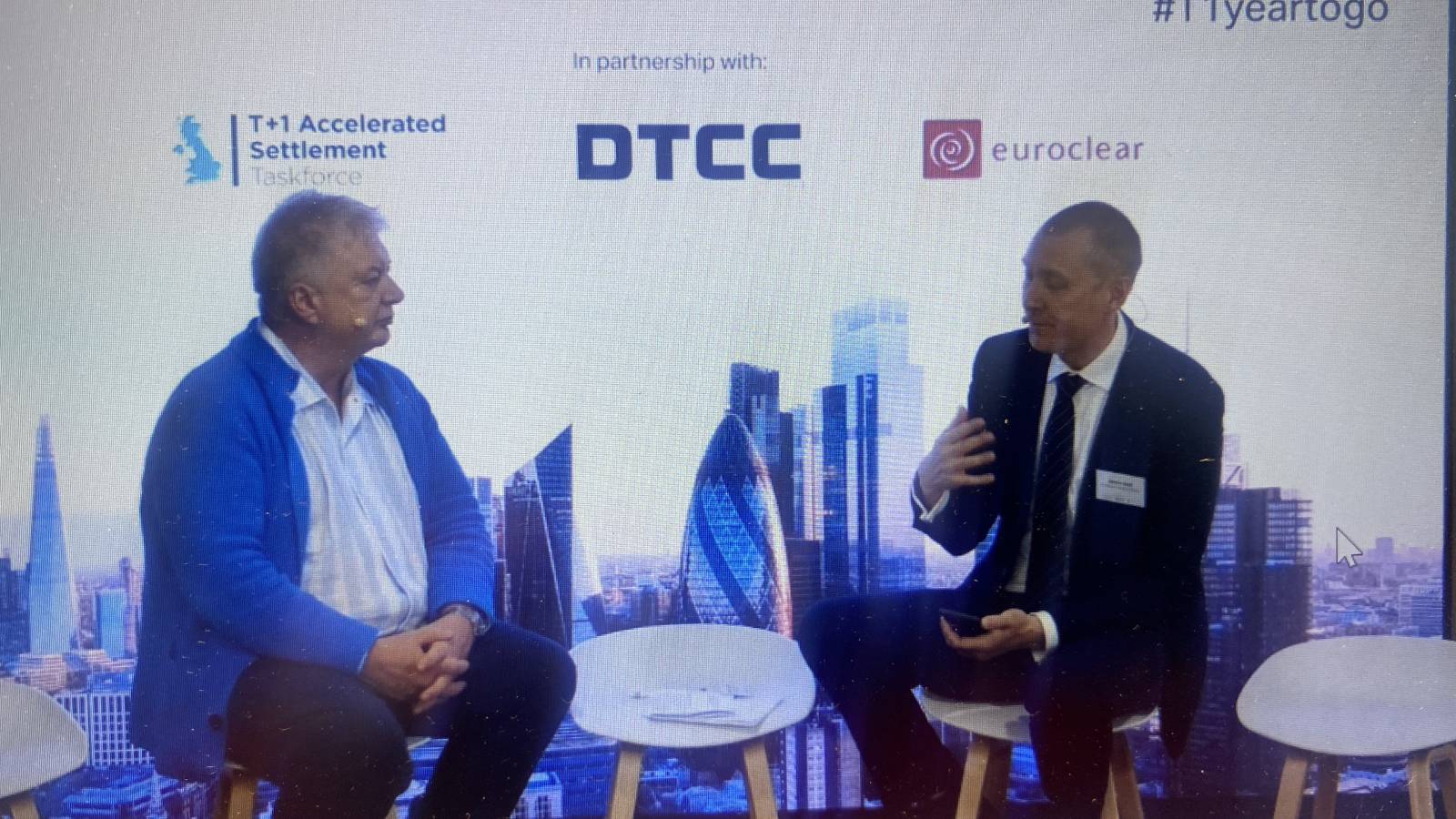
At the Eurex Derivatives Forum, the fireside chat between Deutsche Börse Group and cryptocurrency exchange Kraken offered a rare, candid look at how a crypto‑native firm and a centuries‑old market infrastructure provider are learning to operate side by side – and why both believe the institutional phase of digital assets is approaching.
Carlo Kölzer, head of digital assets at Deutsche Börse, opened with a reminder that institutional adoption has been slower than many expected. “We were all anticipating this to happen earlier or quicker,” he said, noting that while retail drove the early crypto wave, institutional clients “are not so active in that yet.” Still, Deutsche Börse has spent the past years preparing its full value chain – custody, clearing and trading venues – so that “when our institutional customers are ready… the offerings are in place.”

Kraken’s Pierre‑Yves Dittlot agreed that the biggest barriers have historically been regulatory clarity and institutional‑grade infrastructure. “A clear regulatory framework was the number one challenge,” he said, adding that the rise of qualified custodians and early clearing solutions has closed much of the gap. “These have been historically the two main challenges. Both of them have been partially overcome as of today.”
Two very different organisations – one aligned value compass
Kölzer described the partnership as a meeting of opposites: Deutsche Börse with “roots going back a couple hundred years” and Kraken as a fully distributed, crypto‑native organisation built on speed and engineering culture. Yet, he said, the collaboration works because “the value compass and the vision compass… come together,” praising Kraken’s “speed, tangibility, engagement level and precision.”
Kraken, for its part, brings a different client experience and distribution model. Dittlot highlighted Kraken’s FCA‑regulated MTF – the only one of its kind globally – and its ability to integrate with partners in as little as a month. “It’s a new way of going to market… frictionless, borderless, based on speed,” he said.
Why Kraken looks for “enlightened partners”
On the sidelines, Eurex CEO Robbert Booij framed the partnership through the lens of trust and predictability – qualities he argued are non‑negotiable for market infrastructure. “Clients trust you when you apply your business standards consistently,” he said. “We develop our products and services always together with our clients and we don’t surprise them with a strange new idea.” Eurex’s long‑established risk management standards and operational resilience, he added, make it “an enlightened partner to go to.”
Regulation, clearing and the road to 2026
Both sides agreed that regulatory momentum is finally shifting in their favour. MiCA in Europe and recent US developments — including the DTCC’s non‑action letter — are creating the clarity institutions have been waiting for. Kölzer suggested that once supervisory responsibilities and capital rules settle, “2026 might be the year the floodgates open.”
On clearing, he pushed back against the idea that DLT makes CCPs redundant. Clearing, he argued, is fundamentally about credit‑risk pooling and netting efficiency — “it becomes better through centralisation, not worse.”
A convergence of worlds – now accelerating
What emerged clearly is that crypto‑native and traditional finance are no longer operating in isolation. Kraken sees institutional clients increasingly exploring collateralised crypto trading, while Deutsche Börse is preparing for tokenised securities, stablecoins and digital custody to become mainstream.
Both firms view their partnership as a way to accelerate that convergence – combining Kraken’s speed and distribution with Eurex’s regulatory maturity and risk discipline.