








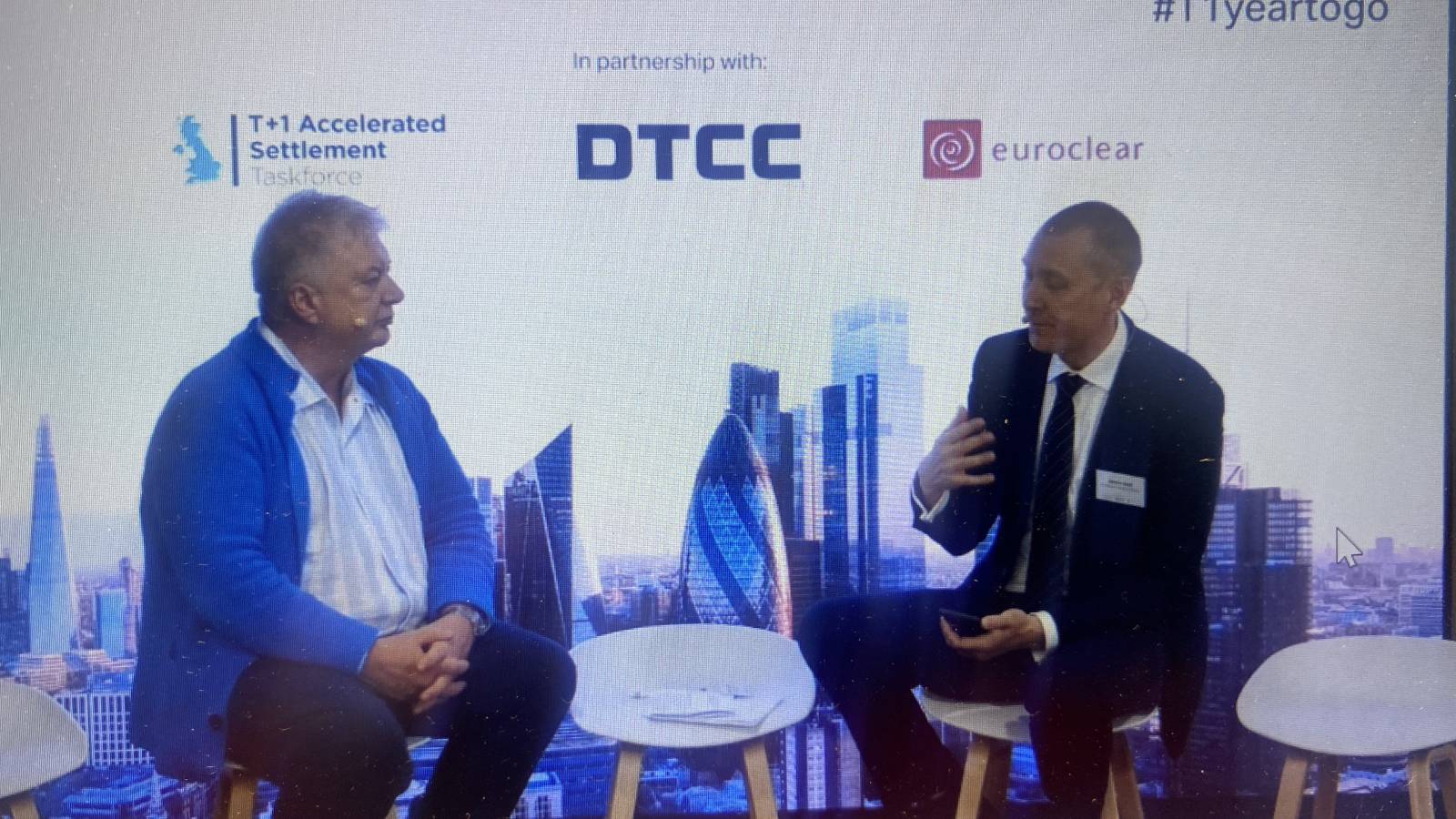


INTERVIEW | The buzz around DLT, tokenisation, and blockchain isn’t new; in this interview, we speak to Roland Chai, head of digital assets at Nasdaq, who points out, “We’ve been talking about DLT for at least 10 years.” What’s changed is that the buzz has become louder, more audible, and harder to ignore. Here, Chai discusses recent developments in the space that are turning up the volume on the buzz – as well as the challenges that are muting it.
“We are seeing a much bigger industry adoption (of DLT) across asset classes, both in the US and Europe. I think it’s a sign of maturity – scaled maturity. People are getting comfortable with the technology,” says Chai.
Don’t miss the potential
Despite this, the development of tokenisation in the EU has so far been middling – Chai describes the region as being neither ahead of nor behind the rest of the world. What the region has, however, is potential. The EU DLT pilot regime, being one of the first initiatives of its kind, could become a catalyst for the technology to take off.

“If regulators expand the usage of the regime, Europe can have a distinct advantage to move forward and transform the landscape,” he predicts. “There’s a real emphasis on simplifying Europe’s post-trade situation… There are some low-hanging fruits with benefits that can be delivered to the market quite easily.”
Trailblazer
While the European conversation continues, Nasdaq has been pursuing an ambitious strategy across the Atlantic. The firm made one of its biggest – and most controversial – move towards tokenisation in September last year when it filed with the US Securities and Exchange Commission (SEC) to allow for the trading of tokenised securities on its markets. The filing, which was approved in March this year, invited a slew of comments from the industry, including criticisms that it lacked transparency and would threaten fair market access.
In response to that, Chai pointed out that the move was very much in character for Nasdaq. “If you look at how Nasdaq started in the 70s, it was a very disruptive company because it was borne out of the move away from physical trading to electronic trading. It’s in our DNA to look at how financial markets will transform.”
“We see a natural convergence of the digital native networks with mainstream markets. From our point of view, these crossovers will come anyway. Out of the top 10 Nasdaq stocks in the US, there are already tokens created on digital networks that have not had issuer permission – there may be three or four versions of a single equity token being traded globally, created by a number of parties… You may end up with an environment with very fractured, fragmented capital markets if you don’t bring all the principles of transparency, liquidity, and integrity to those markets.”
He emphasised that the filing represents a “five to 10-year strategy” based on “the possibility that programmable blockchain technology can fundamentally change the way that financial and capital markets work”.
Coming together
A more recent development closer to home is Nasdaq’s partnership with Seturion, Börse Stuttgart Group’s pan-European settlement platform. The collaboration connects Nasdaq’s European trading venues to Seturion, facilitating the trading of tokenised securities settled through the platform.
“What we’re offering is a single European platform to issue structured products in a tokenised format that can be listed in seven different markets across Europe,” explains Chai. Before this partnership, structured product issuers had to issue individually in each local market. “This is a good example of a benefit (of tokenisation) that lowers cost and allows issuers to come into Europe in a common market and distribute products to investors at a better price point.”
Hurdles
Before tokenisation can truly take off, regulations will have to catch up. “There’s still a number of things we need to understand,” says Chai. “On the payments side, we’ve got the use of fiat and stablecoins – understanding what kind of stablecoin jurisdictions there will be in Europe and the US and what kind of commercial bank and central bank money policies there will be. For scaled institutional adoption, we need to get to a point where we can achieve settlement finality and utilise central bank money in the digital environment.”
“On the other side – the asset side – it’s about coming up with the securities laws in Europe to guide bankruptcy provisions, pledging, and the treatment of electronic securities on a distributed database. In some jurisdictions, they have updated laws to allow digital or e-securities, but I think those still need a bit of work, whether in Europe, the US, or any other territories.”
Adding to Europe’s challenge is an often-cited issue – the fragmented markets of the region. “In the US, there is one jurisdiction. In the EU, there are 27 – many more regulations and legislations – so the complexity is bigger,” Chai adds.
Yet, complexity represents hope. “It’s one of the natural challenges of the region, but I also see it as a unique opportunity for digital solutions to simplify that.”
Not long now
In Chai’s imagination, comprehensive digital architectures in the industry might be up and running in as little as five years’ time. He envisions a “24/7, always-on environment” where transactions and liquidity management are possible over weekends and where many of the operational risks that are currently in post-trade workflows would be removed. “We will be in a state where we have a number of working platforms transforming securities, listed products, OTC repos, and lending workflows.”