

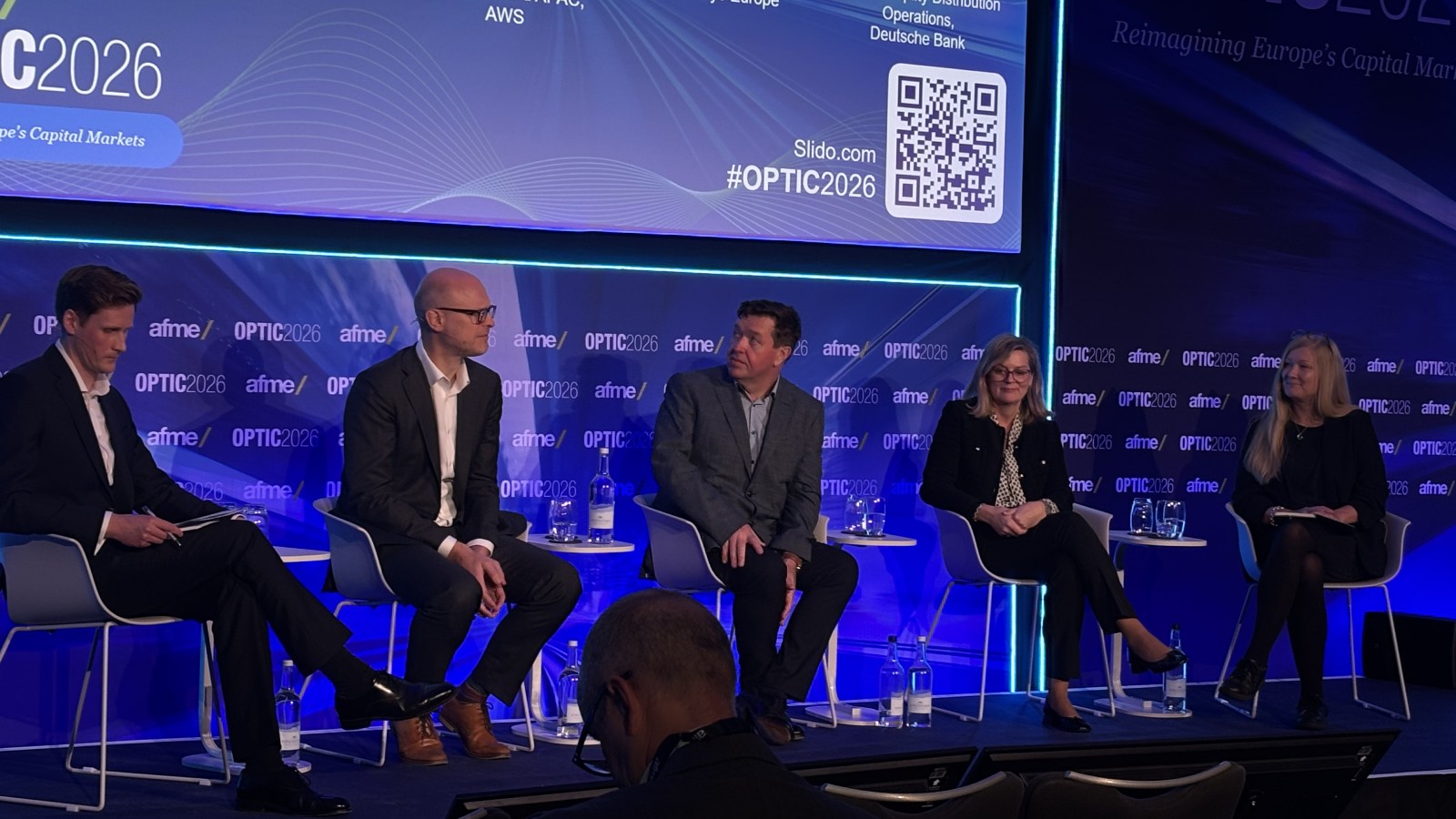
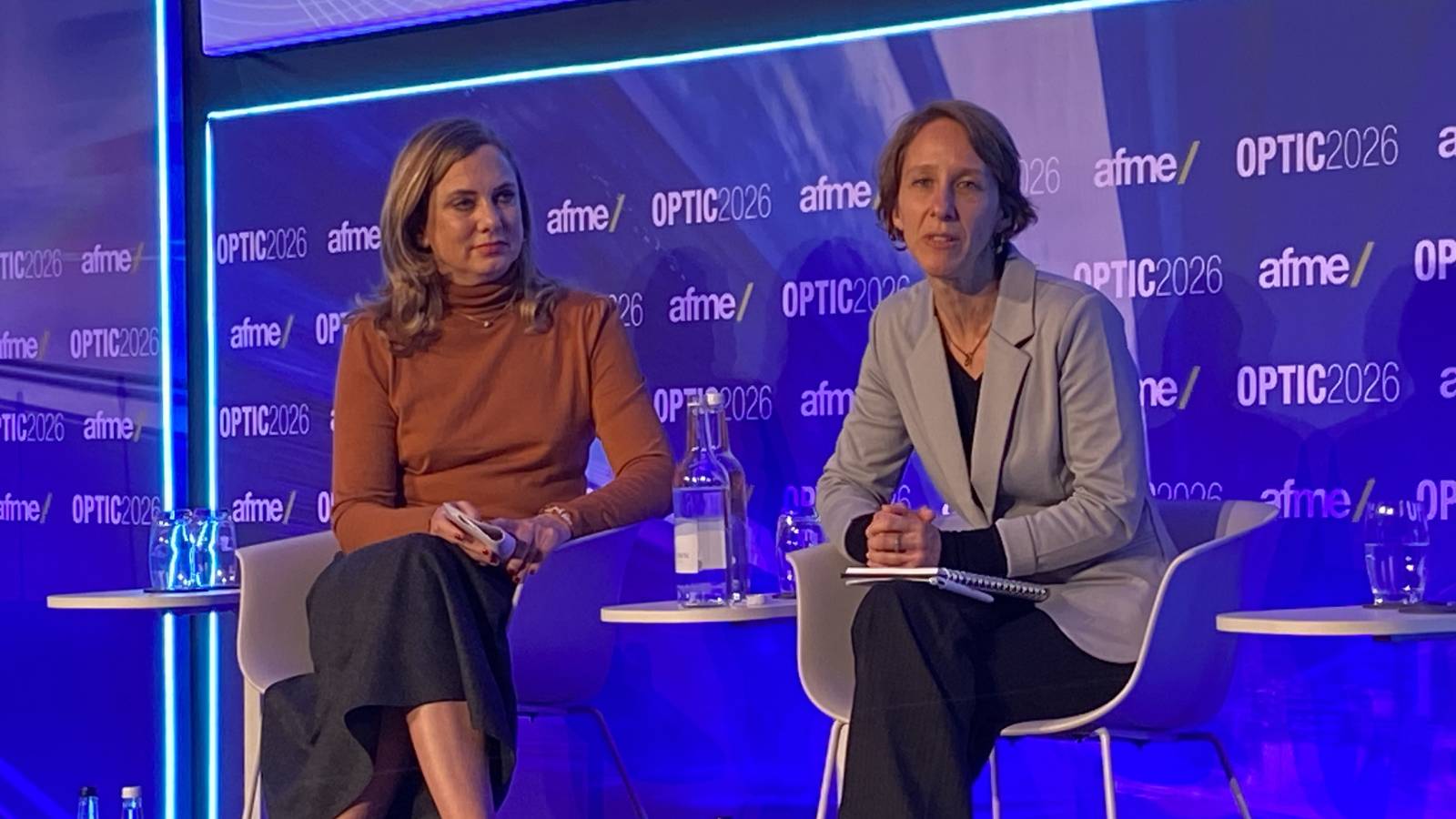
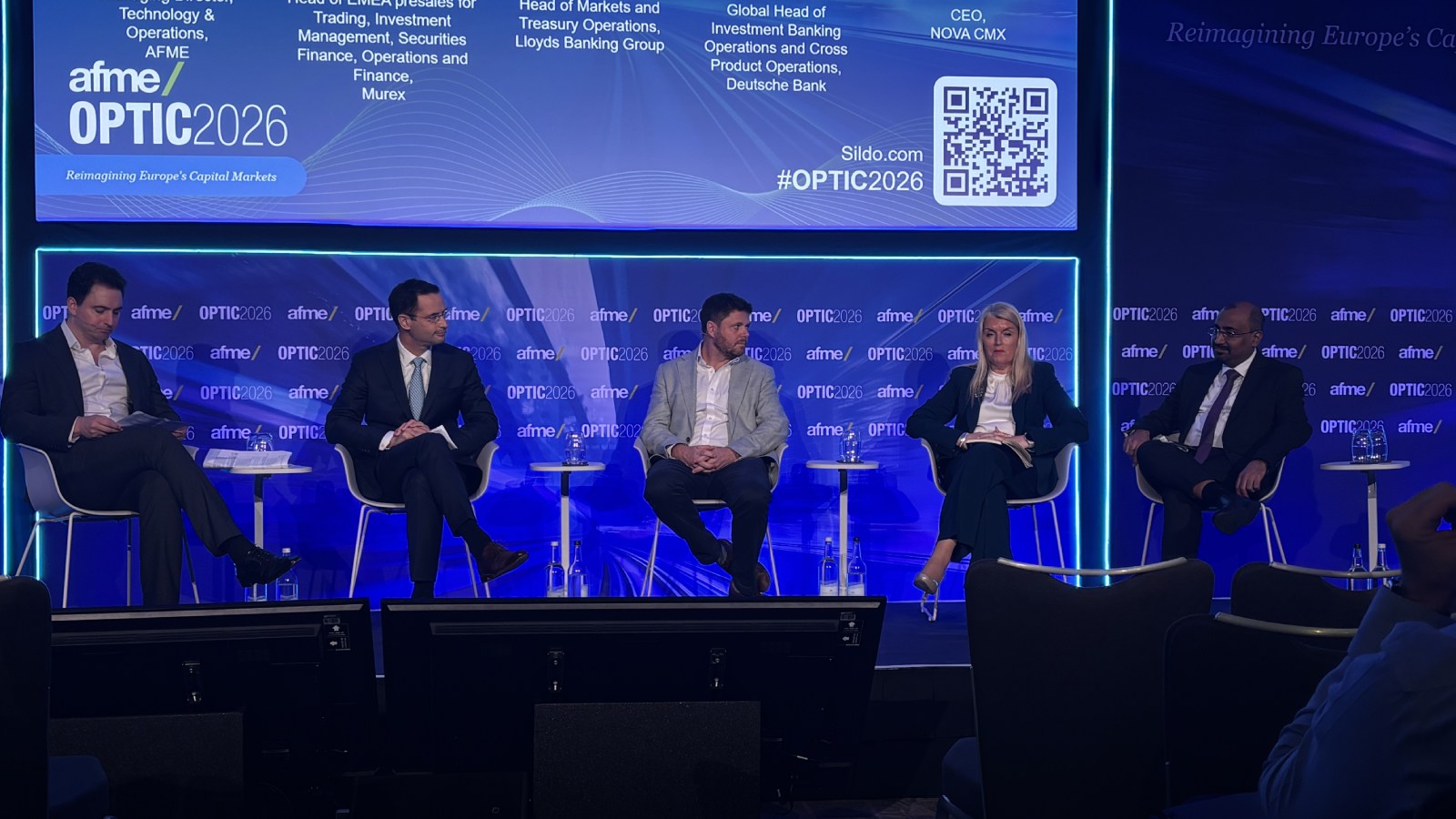
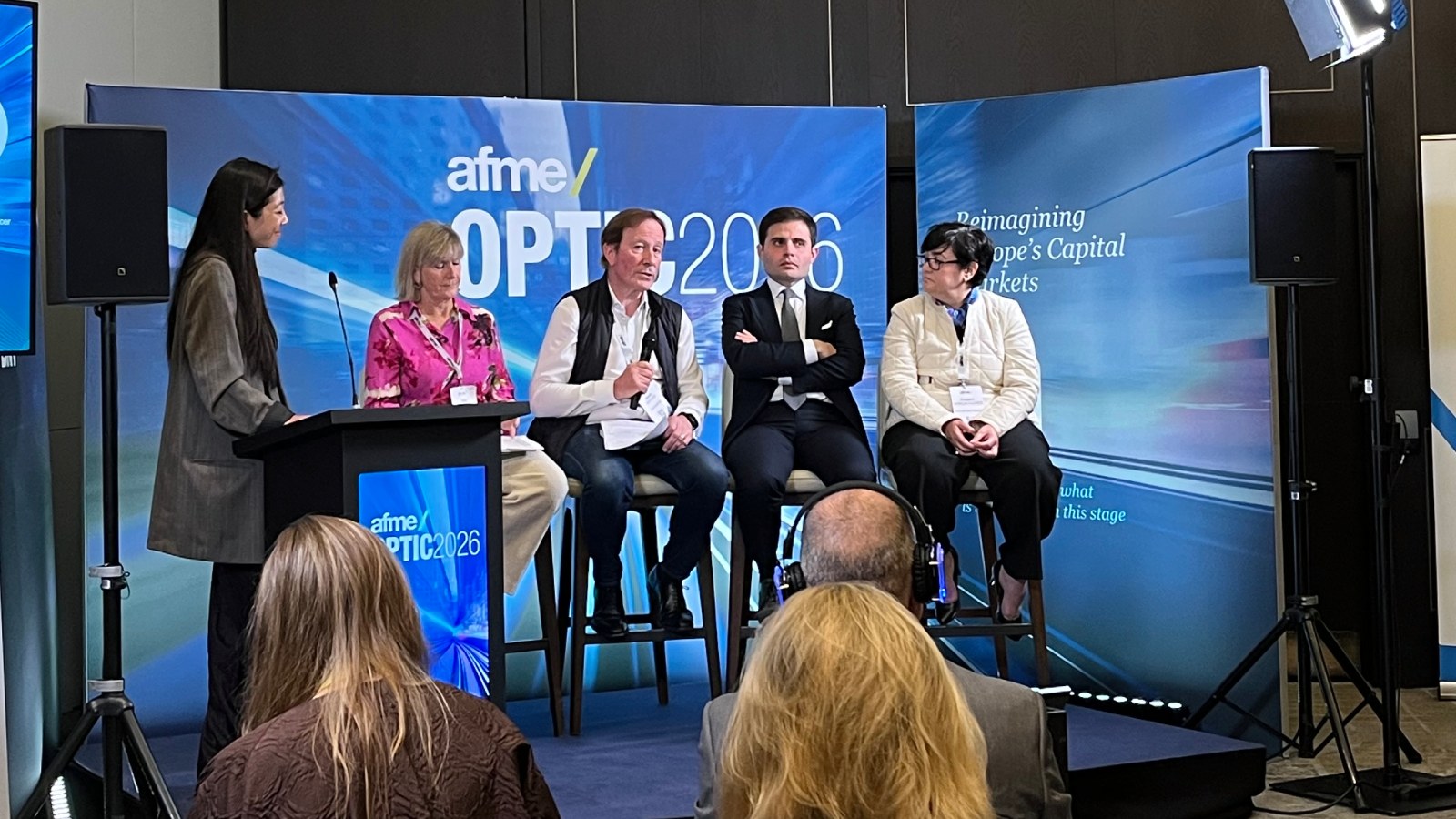


Tokenised deposits, central bank digital currency (CBDC), and stablecoins – options abound when it comes to new forms of money, but the key is to avoid decision fatigue. In the panel titled “Digital currencies in focus: pathways towards a DLT- based multi-money world” at Optic 2026, five experts discussed the potential, as well as challenges, of using digital money in the transformation of wholesale financial markets.
Etay Katz, head of Digital Assets and Financial Innovation and senior partner in Financial Regulation Practice at law firm Ashurst Perkins Coie opened the session with a well-placed reminder: “We are not creating new assets unknown to humankind; we are representing them differently, and we are bestowing features that might shorten settlement cycles and reduce systemic risk, if we do it correctly. There might be a brilliant outcome, but we are not departing from money being money.”
He adds, “Scaled financial markets, of the type that CLS and other participants on this distinguished panel are representing, rely on trusting money; they rely on the singularity of money.”

With that, he opened the floodgates to the overarching theme of the panel: how can the industry take on digital money without compromising the safety, reliability, and interoperability of the existing financial system, and which form of digital money is the best fit for this purpose?
A misnomer
According to Katz, the answer is definitely not stablecoins. Compared to commercial bank money and CBDC, it simply does not offer the same resilience. “We are not inventing new forms of money,” he reiterates. “The new, digital forms of money will have to meet the challenges faced by the traditional forms of money and money settlement. This includes legal settlement finality, operational resilience, and adoption such that people can interplay and exchange them freely and regularly. This is a call to remind ourselves that we are not departing from the notions that we have been developing for generations. We are just augmenting the operational features.”
Dirk Bullmann, managing director of Public Policy, Strategy and Innovation in the CEO Office at CLS, echoed Katz’s sentiment. “I wonder whether now in 2026, we are putting too much emphasis on stablecoins. I understand that one or two years ago, there was hype around them.”
“We see that in some jurisdictions, there’s more interest in exploring stablecoins and less interest in exploring tokenised reserves in central bank digital currencies – that’s the US. In Europe, it’s the opposite. The common denominator seems to be tokenised deposits.”
Blazing a trail
Indeed, tokenised deposits and central bank money are seeing a lot more enthusiasm from regulators and are central to pilot projects in both the UK and the EU. In the UK, there’s the Great British Tokenised Deposit (GBTD), set up to test live transactions using tokenised sterling commercial bank money. In the EU, Pontes, the European Central Bank’s (ECB) DLT wholesale settlement solution, just launched last month.
Austin Elwood, digital assets industry lead at NatWest shared his firsthand experience as a participant in the GBTD: “I sold a model boat to someone. We used tokenised deposits for that.” NatWest has also supported a remortgage transaction under the GBTD.
“We are testing the full spectrum of what is possible from tokenising commercial bank money and making sure that it is appropriately linked to where the central bank money is,” says Elwood. “The ambition is to do a wholesale transaction with issuance later on next year.”
In the EU, Pontes will operate alongside Appia, a longer-term project that is exploring a broader ecosystem for programmable payments and cross-border integration. Bullmann expounded on the two infrastructure models that may come out of the pilots – the convergence model, and the coexistence model.
The first describes either a single ledger, or a shared technical environment where several ledgers can exchange assets. The second, which is what Pontes is exploring, calls for an orchestration layer between infrastructures or different ledgers.
“Different models bring choice, which is great, but it also brings complexity, which could be a challenge. We need to focus on interoperability going forward to avoid a future that brings more challenges than we are facing today,” Bullmann cautions.
Share the glory
To conclude, Elwood summed up the discussion: “What’s critical here is that the public sector and the private sector are starting to work much more collaboratively together, and that’s the magic, really, of our capabilities as a whole.”
“We have central bank money as the industry-agreed risk-free settlement asset, commercial bank money making the deals happen and moving the money around, and Industry players providing the netting of settlement to make sure that we can stay within the overheads prescribed by regulations.”