

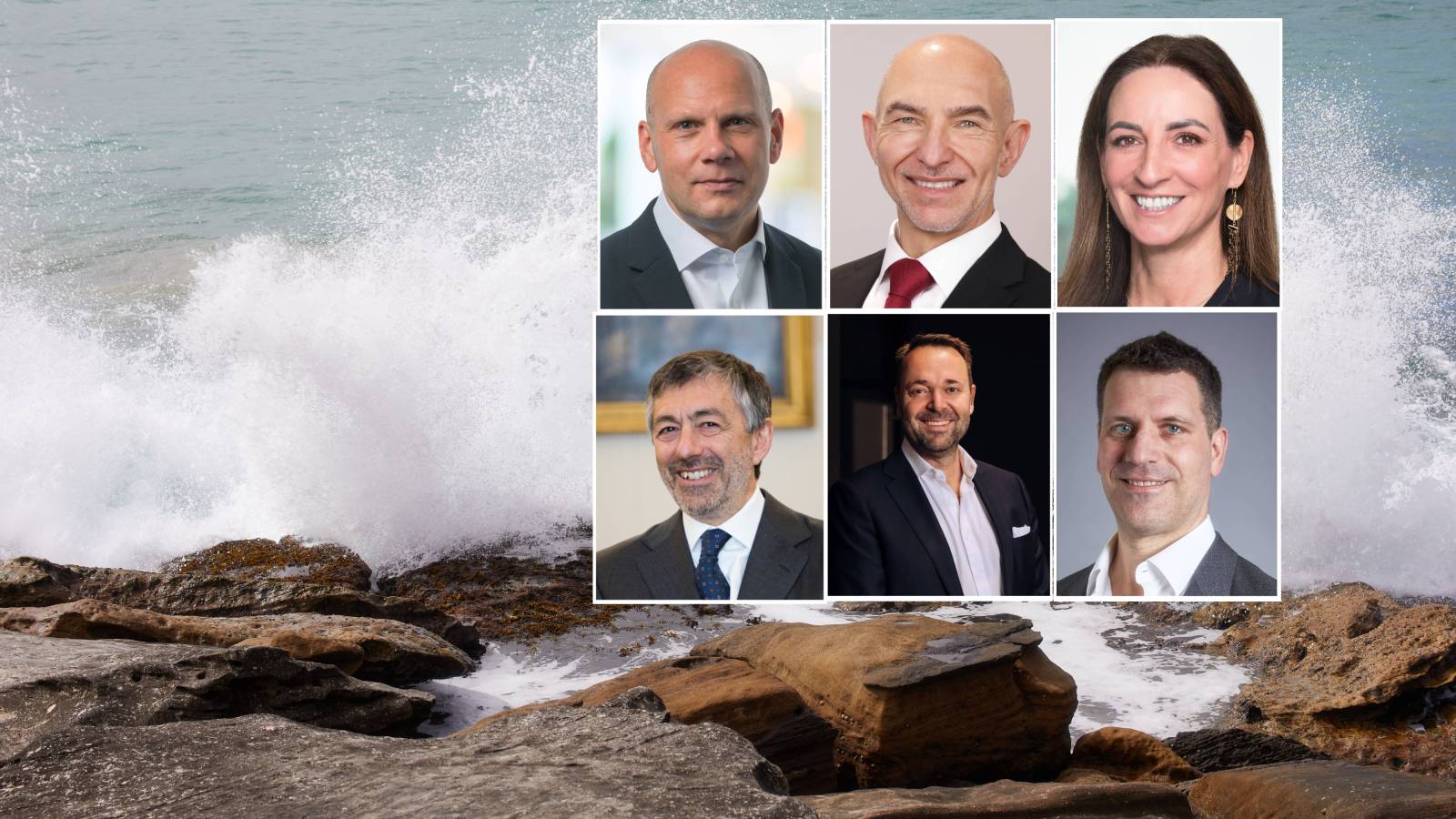









INTERVIEW | Any CFO or COO who has wandered over to the back-office processing shop floor would be forgiven for not being able to put a name to a few new faces. Overseeing a dozen other expense lines, they do not see the daily grind of processing a corporate action, or the manual intervention unstructured data requires.
Until there’s a cost line to the coexistence of two message formats for securities. But it’s not even about added headcount that requires, says Paul Fullam, chair of ISITC. It’s about the cost of running two securities message formats, and of missing out on the richer functionality of the newer one.
Yet this is the group ISITC is trying to reach: the C-levels, who “may not know the day-to-day misery people go through to process a corporate action, because they’re so far removed from it,” he says. “We need to start quantifying the risk reduction and cost reduction, so they actually see dollars and cents rather than just ‘ISO 15022’ and ‘ISO 20022’.”

With no end date for switching one off, he proposes the industry agree to stop updating 15022, rather than wait for a regulator to set a date and trigger a scramble. “You’d think we could with the likes of the SMPG, because all the major players and major countries are there.” (ISITC is the US arm of the global Securities Market Practice Group.)
How is ISO 20022 functionality limited and data left unstructured by coexisting with ISO 15022? What’s the problem?
Juliette Kennel opened the Sibos debate with a stat: 20022 accounts for only 23% of securities traffic on Swift. Fullam suspects much of that is US, as DTCC moved to ISO 20022 – but much of DTC’s traffic runs over its own network, so the real figure may be higher. The industry has a role to play.
On the coexistence of ISO 15022 with ISO 20022, Fullam is blunt: “For the good of the industry, it needs to end. Because of coexistence, the functionality available in 20022 is limited, because it has to live in harmony with 15022. A data field in 15022 is 16 characters; in 20022 it’s 35. So what’s the point? 20022 was created to give you flexibility.”
XML brings its own problem. “I can put in extensions, everybody can use their own extensions, and now I don’t have a standard. So we need something like Swift as the network. Or we need to say: if you’re putting something into an extension, it automatically goes into the data dictionary” – the central catalogue in the ISO 20022 repository.”
That’s further complicated by the annual round of change requests. “In the 2027 release, I’d say there were at least 20 approved – just for 15022, like for the MT564. Year after year we’re looking at these data elements, when it would be so much easier just to put them into 20022 and let them live in 20022.”
Cost of coexistence
What Fullam’s not saying is kill ISO 15022 by a certain date. “But don’t do any maintenance on it unless it’s regulatory – the ECB or the SEC says you have to have this data.”
He casts this in economic terms: “We can’t say we’re moving to 20022 because it looks different. But I can tell you: ‘We’re dropping 20 pieces of data, because I can’t pull it into a 15022 message,’ or it’s coming in as free text and I have to manually review every one.” That could mean two or three FTEs.
“So what we’re saying is: put a freeze on maintenance for 15022. Leave it out there for the next 40 years, it’s fine. But it’s frozen at that moment in time. We now have two standards. It may not cost double to support both, but there is a cost, and somebody’s paying that cost.”
In the Sibos session, 69% said yes to 20022. “It will take years. I’ll probably be long retired.”
Benefits of ISO 20022 for corporate actions
People are starting to see the benefits, he says. “Just in corporate action messages, there’s a lot that can be done in 20022 that cannot be done in 15022. There’s a message type that’s basically a statement message. I can send you one message and say, ‘Hey, you have these 10 voluntaries that you haven’t responded to yet.’ You can’t do that in 15022.”
“Yes, there’s going to be a learning curve. Today people can look at a 15022 message and regurgitate the user handbook: ‘That’s a 98A, that’s a 98B.’ So it is like learning another language.”
Wait for digital assets?
One argument in the session was to wait because of digital assets and tokenisation. “But we can’t just wait. 20022 is 25 years old. The foundation is the data dictionary we have today, and it’s easier to build on a steady foundation than on 15022.”
And again, because of coexistence: “An extension in 20022 isn’t validated by Swift in any way, shape or form. If in Europe you can only send out 15022, the only place you can put that extension is in free text. And because there’s text in it you’re stopping STP – somebody has to read it.”
Can’t AI just fix it?
“Unfortunately, AI doesn’t understand context. I personally wouldn’t trust AI right now to summarise a voluntary or complex event, because you could risk millions.”
Mandatory events are different: “the worst that can happen is you’re late with your payment and you might owe a bit of interest.” For voluntaries, “a human is always going to have to bless whatever goes out.” If AI moves the decimal point, “there are no withdrawal privileges… you’re on the hook for a million dollars because of the election you made.”
Where he can see AI is in spotting that a date is a bank holiday in Australia and flipping it to the next day. That information is publicly available, “and you can put rules around it.”