
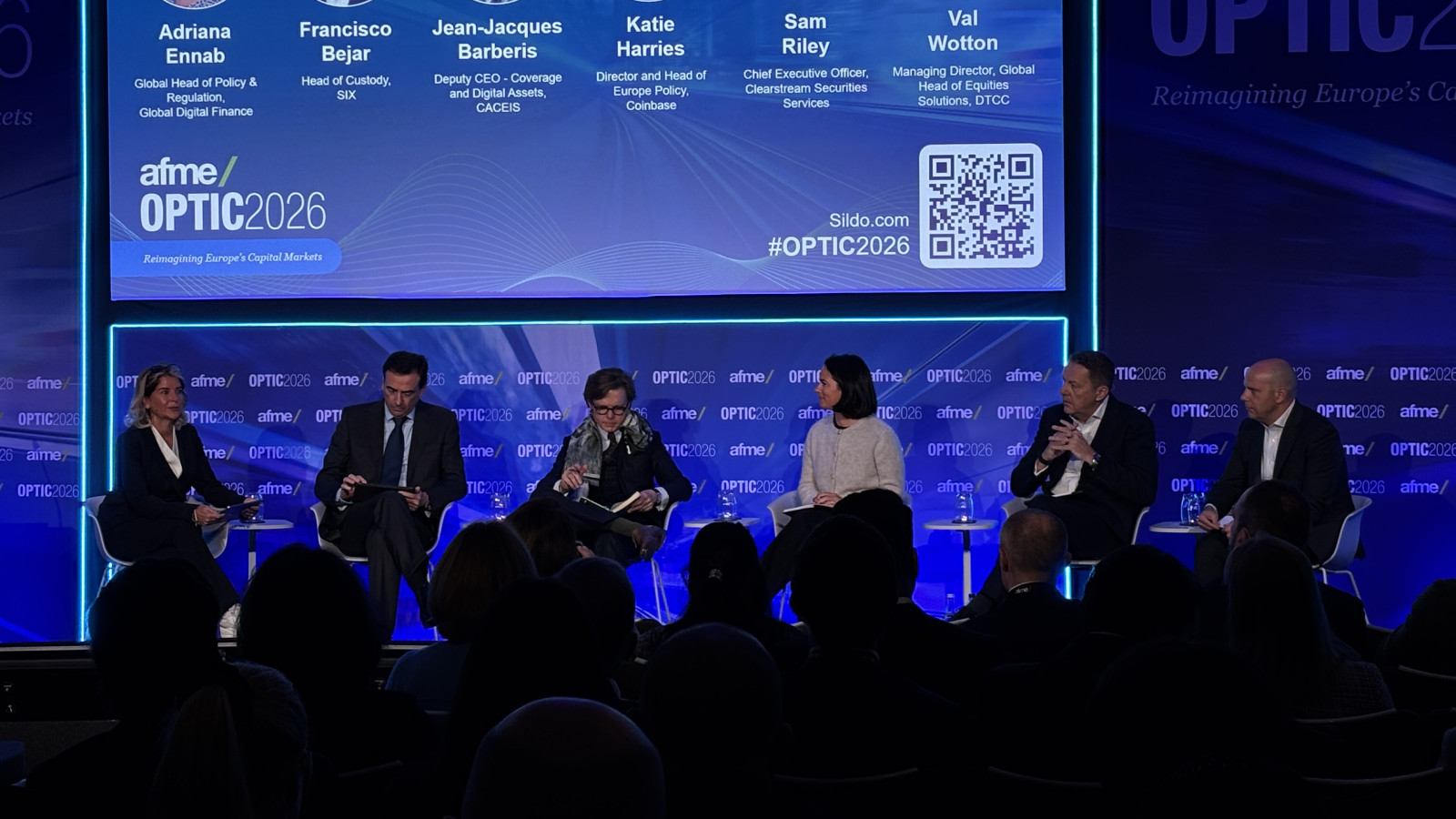






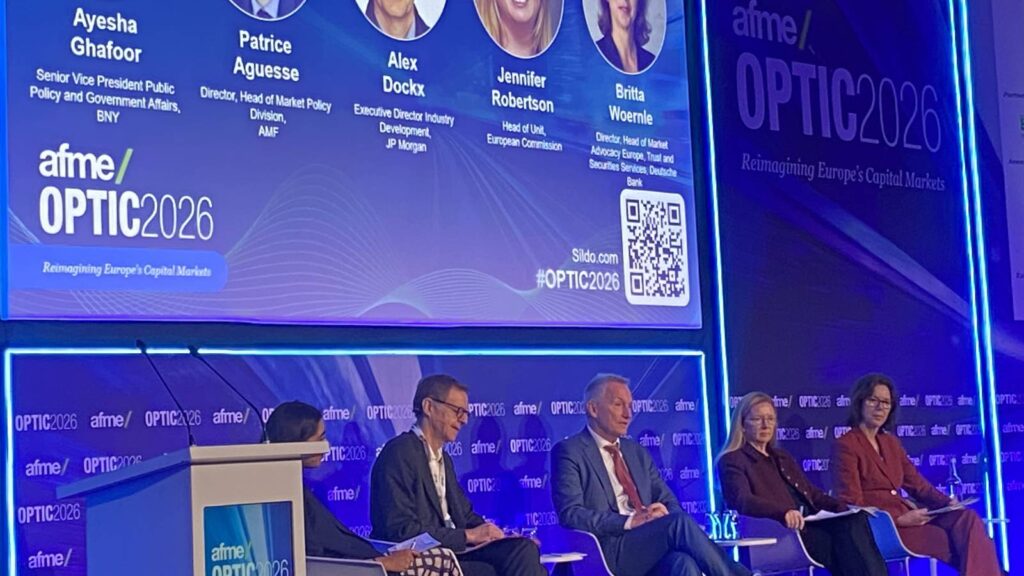
Enhanced CCP open access and interoperability, and clearer CSD fees topped an audience poll on which MISP measures will change European post-trade the most. At AFME’s OPTIC conference, the European Commission said the package grew out of what issuers told it, and that it is now up to firms to use it. Bank users set out where they still want more.
What does Europe’s post-trade overhaul, aka the Market Integration and Supervision Package (MISP), mean for the firms that actually use the infrastructure?
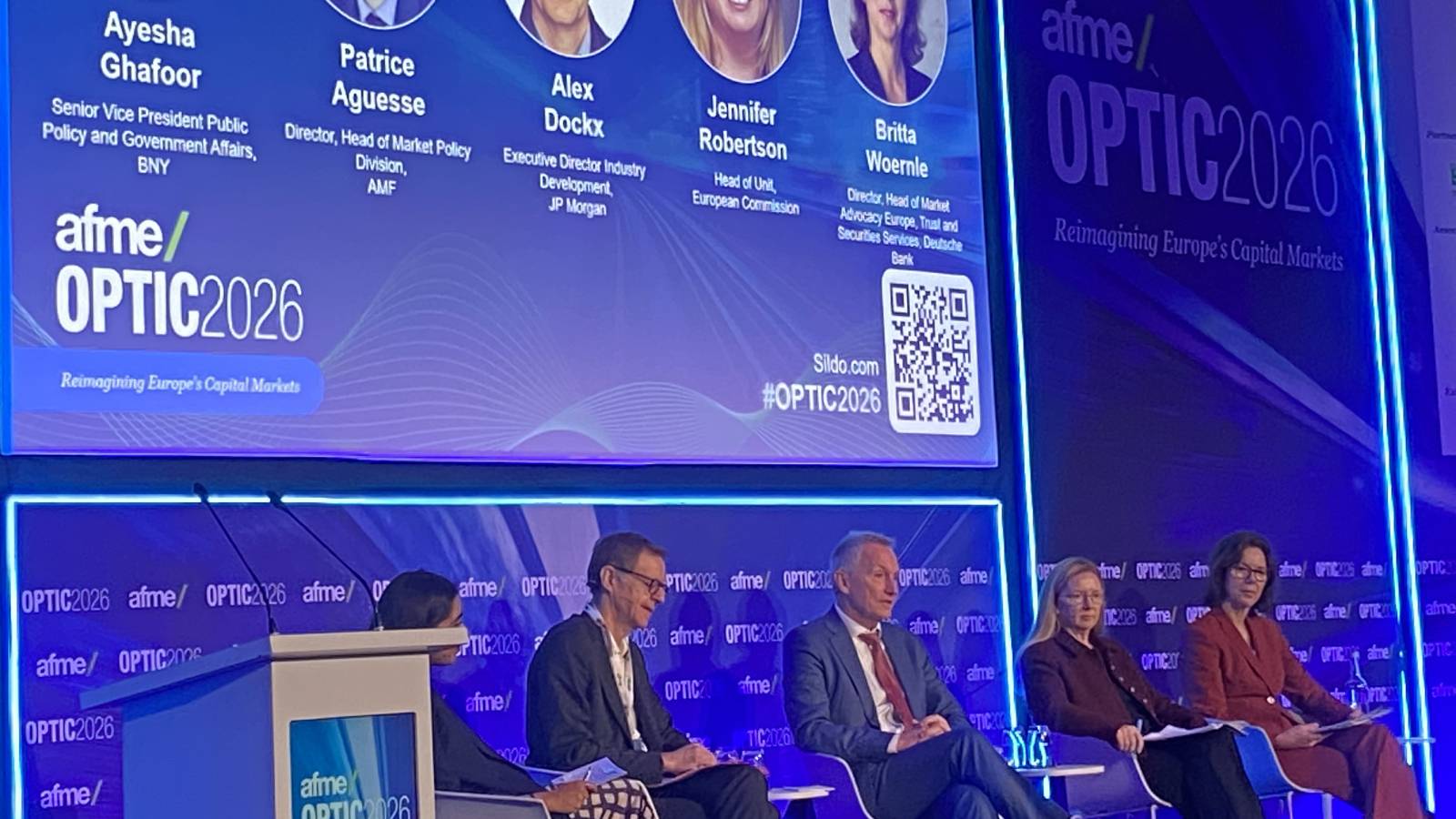
“This is not just about implementing a package and making it happen,” said Jennifer Robertson, head of unit at the European Commission, speaking on a panel at AFME’s OPTIC conference in London on 19 October. “It’s about companies taking advantage of the opportunities that are presented to them.”
As rules on outsourcing and open access change, firms should be asking: “What can I do that will make things better for my business?” The hub-and-spoke model for central securities depositories (CSDs), she added, came straight from issuers’ suggestions.
The users on the panel, from J.P. Morgan and Deutsche Bank, were ready to engage. But they were clear that the package could go further.

Nineteen acts, three aims
MISP touches 19 legislative acts in pursuit of the seamless single market for trading, clearing and settlement that Europe still lacks. Its three aims are integration, including a hub-and-spoke model so participants need to connect to only one EU CSD; convergent supervision, with ESMA directly supervising the most systemic CSDs and CCPs; and innovation, making CSDR compatible with distributed ledger technology.
Published in December 2025, the package now awaits trilogues. The Council agreed its negotiating position on 9 October 2026; the European Parliament is still working on its own.
Supervision: yes, with conditions
Patrice Aguesse, director and head of the market policy division at France’s AMF, backed centralised supervision “when it brings added value”, but said ESMA’s governance must change. The AMF wants an executive board with independent members alongside the Board of Supervisors, and funding that ensures “market participants are not going to pay twice”.
Britta Woernle, director and head of market advocacy Europe, Trust and Securities Services at Deutsche Bank, called it “a good first step” and would back ESMA supervision of all CSDs and CCPs in the medium term.
Alex Dockx, executive director, industry development at J.P. Morgan, said the priority is avoiding duplication. “Even if you have ESMA in Paris saying this is the way it should go, it all needs to be applied consistently across the different member states,” he said. Divergent national implementation is “a hidden cost”.
Where users want more
For Deutsche Bank, the starting point is cost, “very high compared to other jurisdictions,” said Woernle. She welcomed a standardised CSD fee template; a study last year showed CSD fees vary widely and cannot be compared. But she flagged gaps.
Freedom of issuance and the 28th regime. Removing the clause that lets the issuer’s national public law apply is welcome, but civil and corporate law still get in the way. The next step, Woernle said, is harmonising corporate and securities law, and the 28th regime may help. The Commission proposed its cornerstone, EU Inc, in March 2026: an optional company form set out in a regulation that would apply directly in every member state, alongside the 27 national regimes.
Settlement internalisers: Publishing individual fail rates could distort competition, and applying the CSD fee template misreads their role: “by definition, we are not a CSD.”
Hub-and-spoke: Banks including Deutsche Bank back the Parliament’s call for ESMA to assess market demand first, so that spokes are not forced into links with no business case.
T2S: The Council’s narrower version “would limit the benefits”.
In a live poll, 46% of the audience picked enhanced CCP open access and interoperability as the measure with the biggest impact. Dockx was not surprised: clearing members should be able to choose a CCP on service and price. “This is where you really get benefits.” Woernle still wants full mandatory interoperability for equities, while Aguesse noted that existing open-access rights have drawn few requests.
What success looks like
For Dockx, MISP is a means to an end: a deep, integrated market where issuers and investors do not “have to go to the States or somewhere else” for a return. “This is a gigantic market. [Removing] friction is a small difference [but it has] a huge impact on the end result.”
In April, J.P. Morgan extended its US$1.5 trillion, 10-year Security and Resiliency Initiative to Europe. “We’ll need massive investments,” he said. “We don’t have that much time in order to bring Europe to its rightful place. But there’s lots of savings.”
Robertson wants the package “adopted and implemented” on time and a single supervisor working “in a flexible manner”. Issuers are already looking across the European market, she said. “We also need European investors to realise what’s out there.”
Woernle wants the package “over the line” without “too many optionalities for member states”. Regulation alone is not enough, she said. Civil law needs harmonising too, “because otherwise we always end up in discrepancies”.
The next test
The Commission says it wrote MISP around what users told it. The users say they will use it, but the hardest barriers, in civil and corporate law, fund rules and national implementation, sit partly outside the package, in initiatives such as the 28th regime. As Robertson put it: “It’s not just a regulatory or a legislative project.”
I