
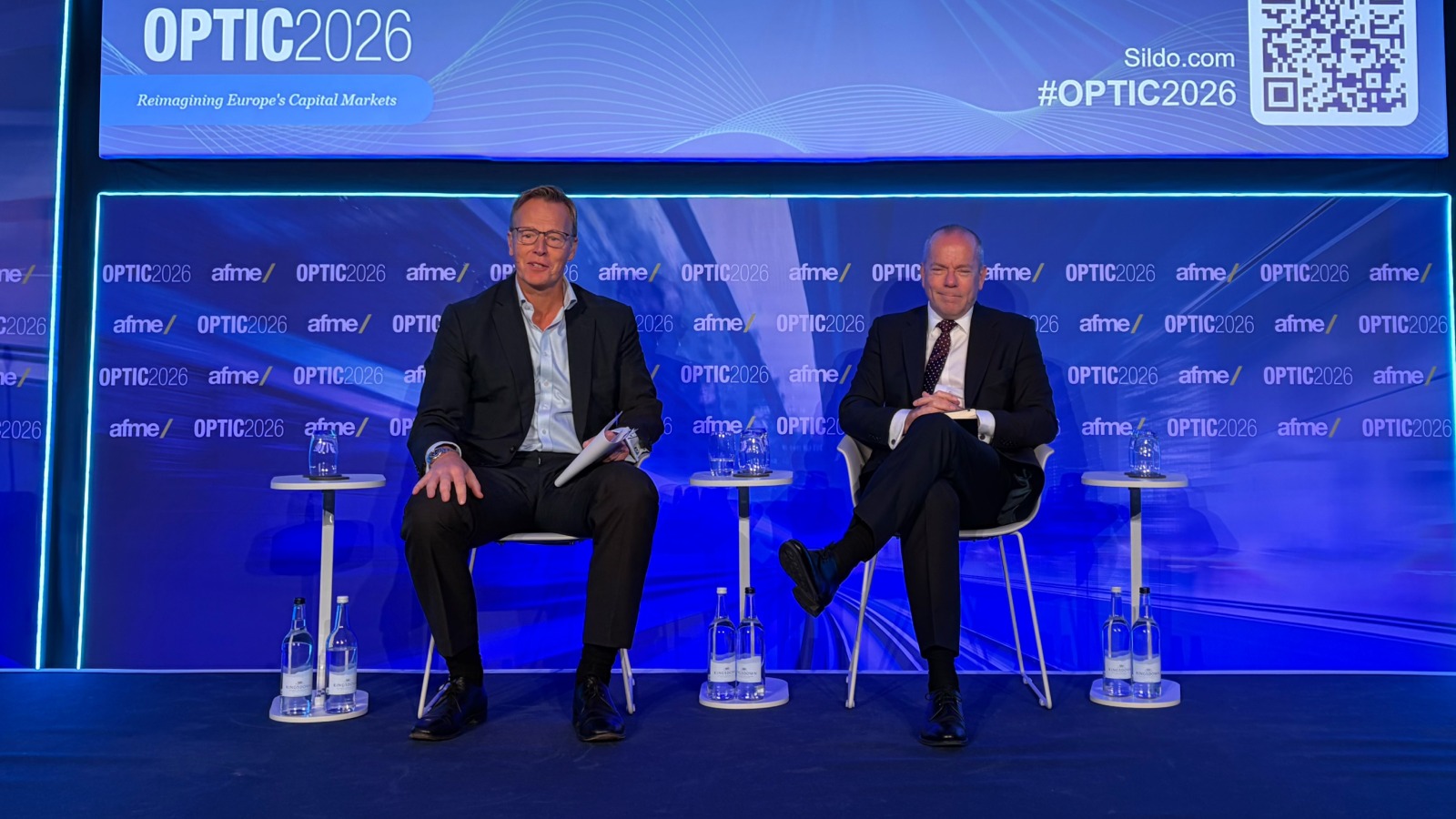

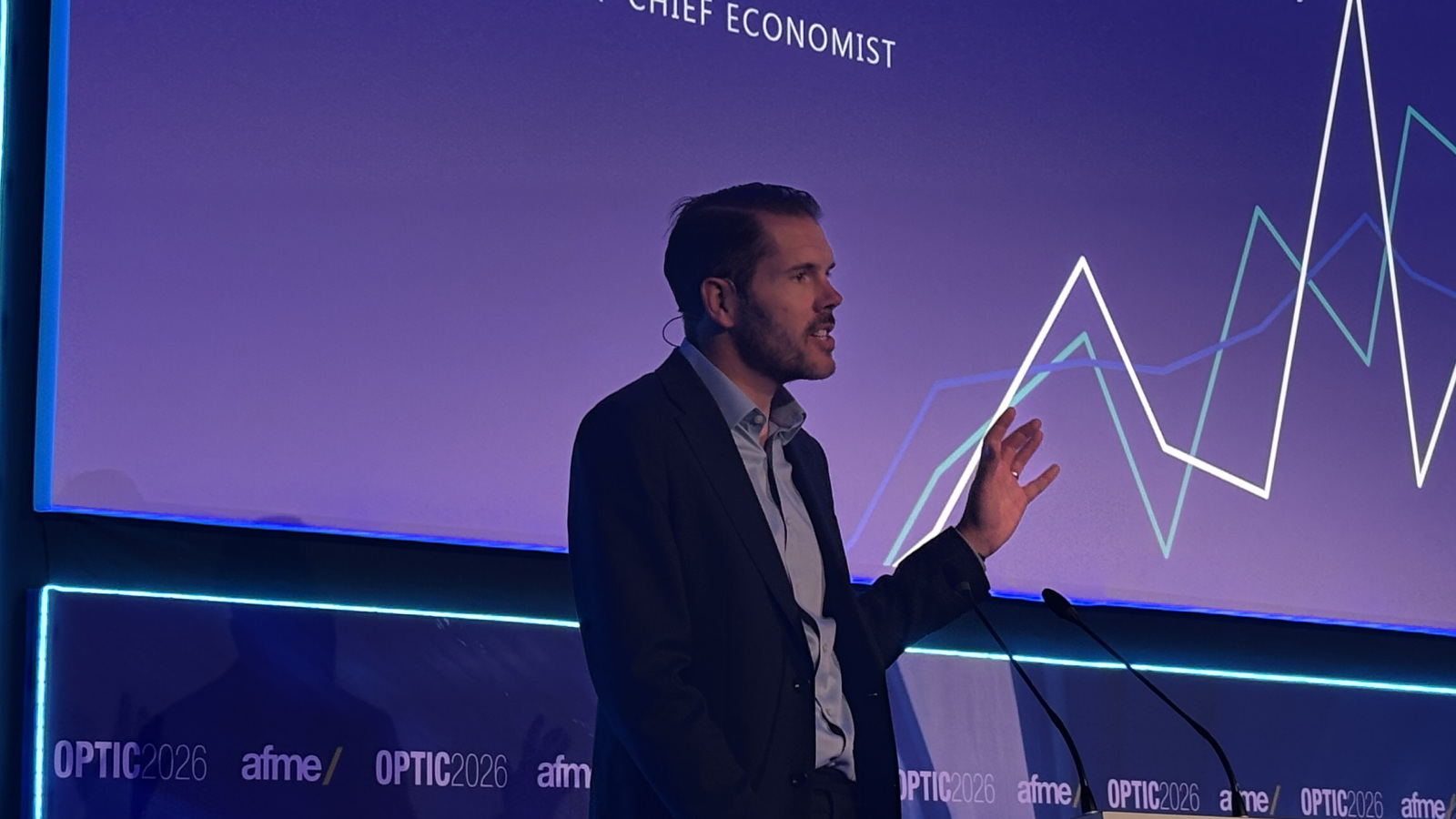
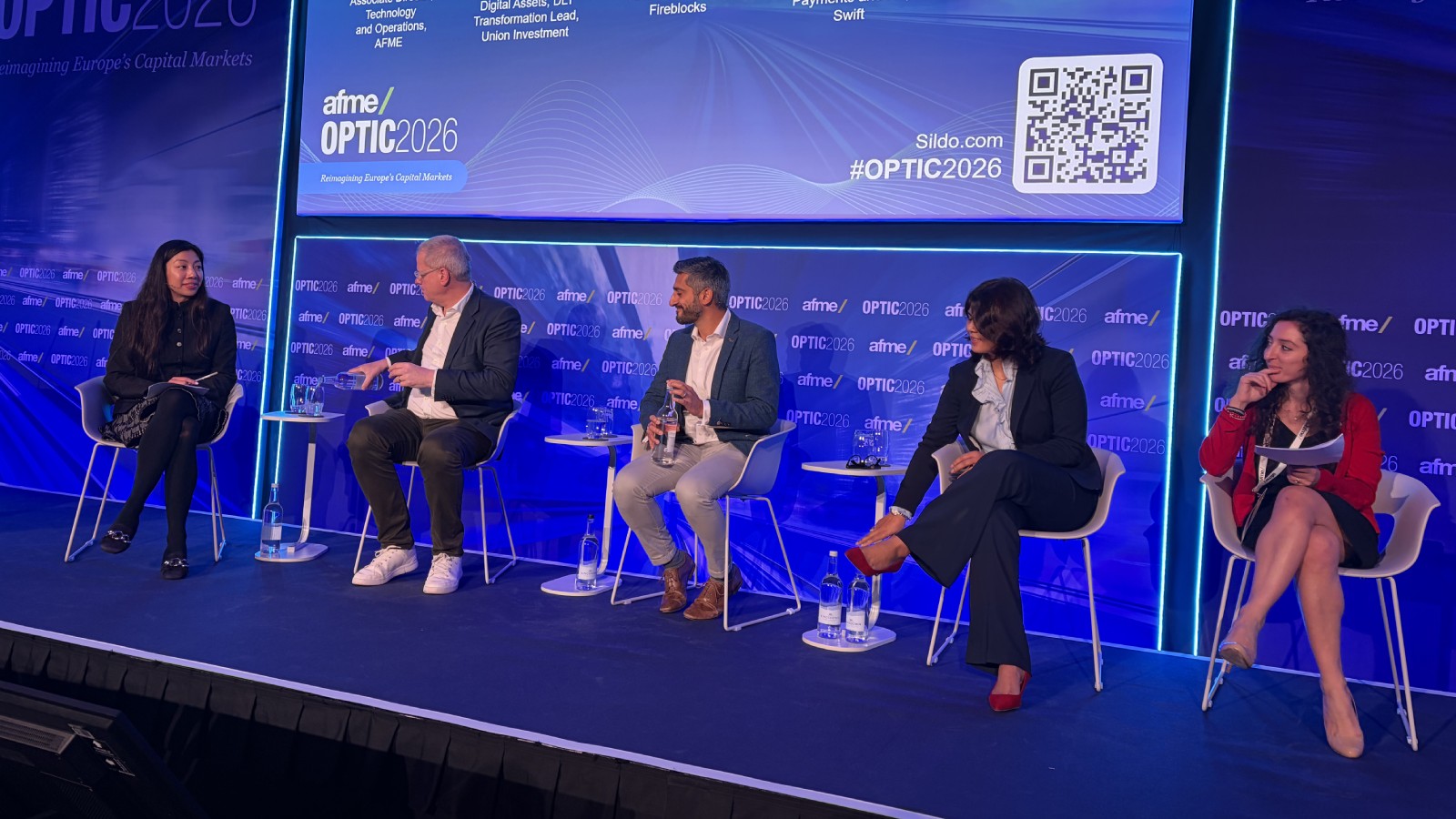
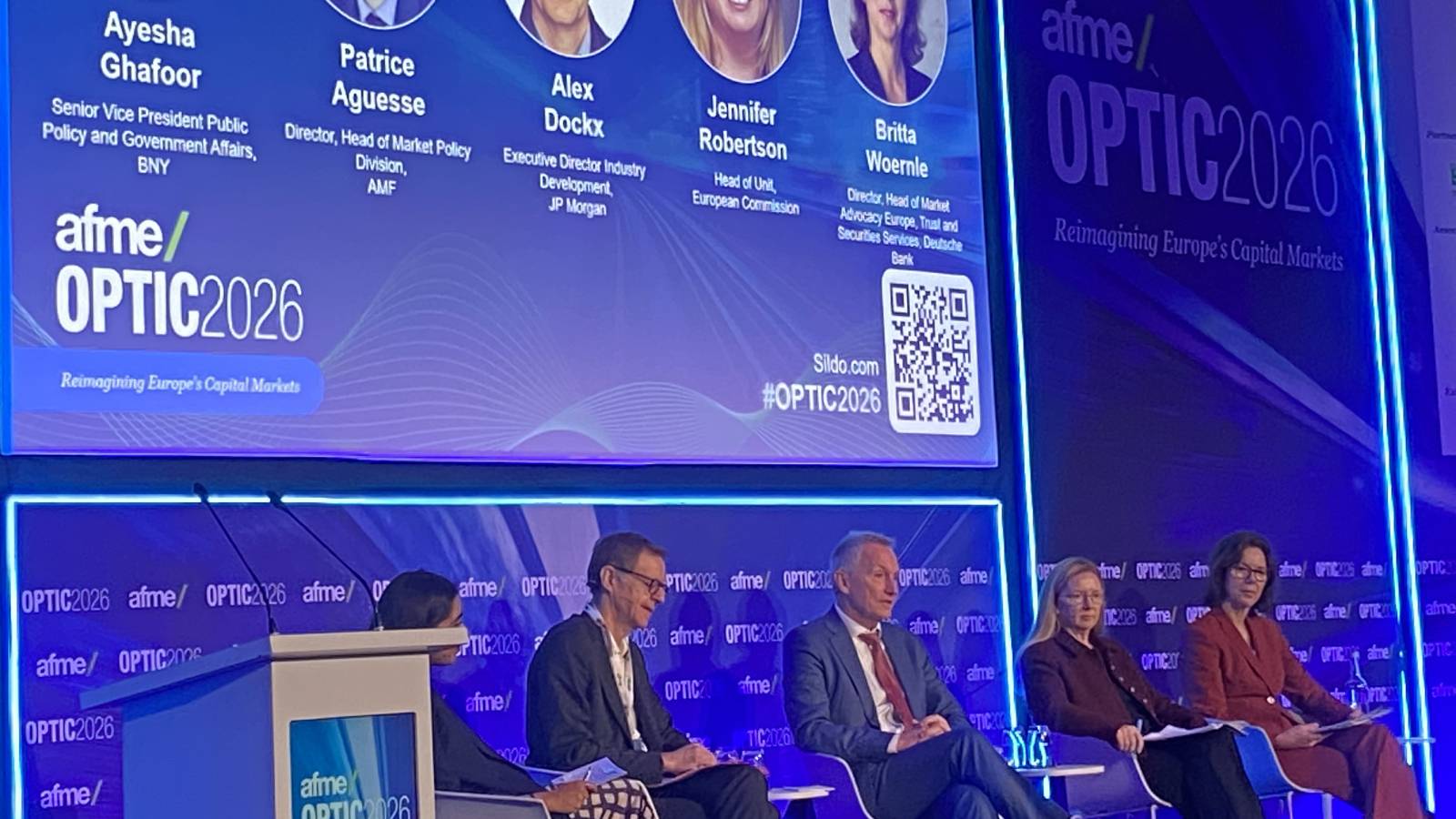
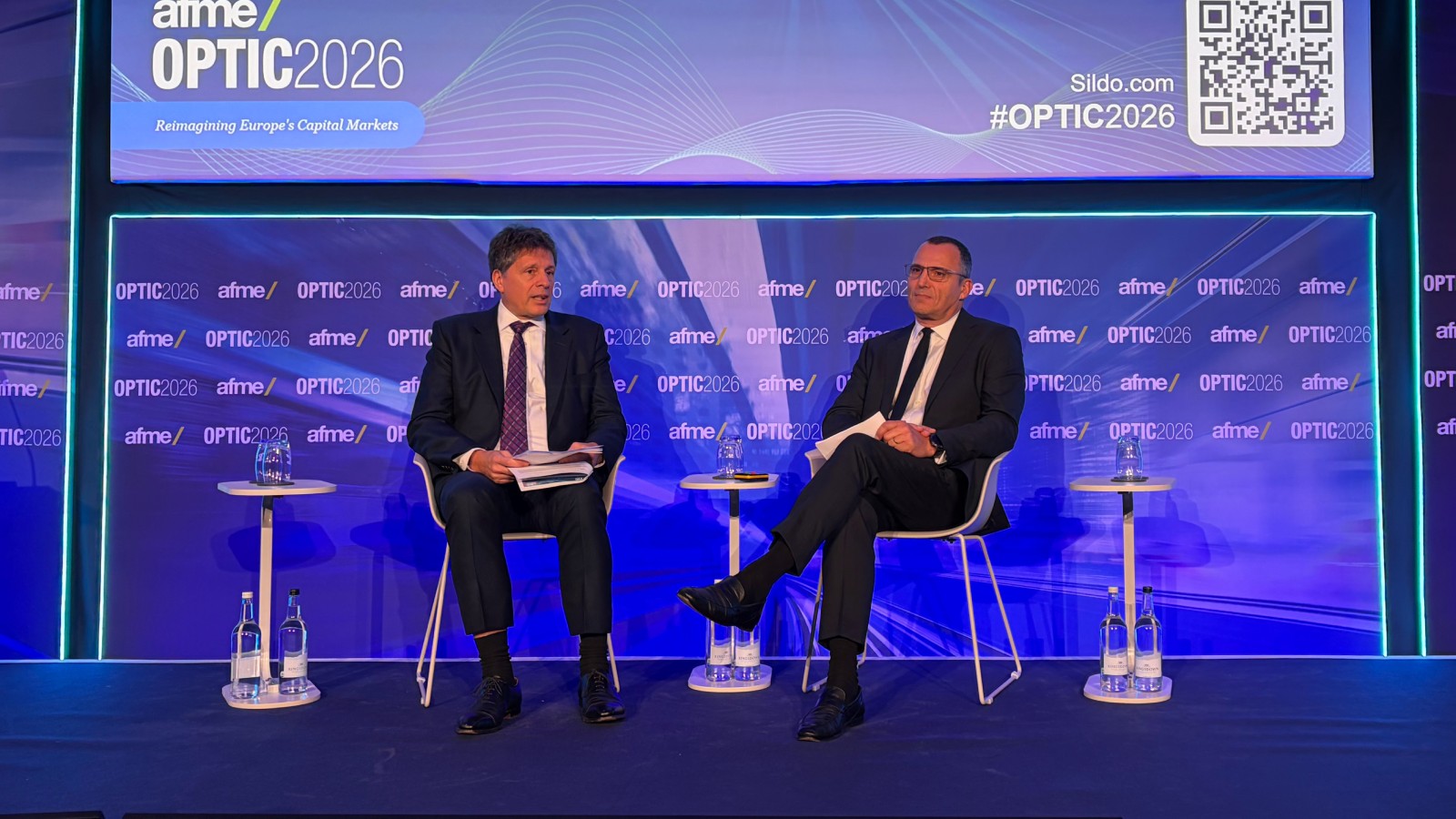
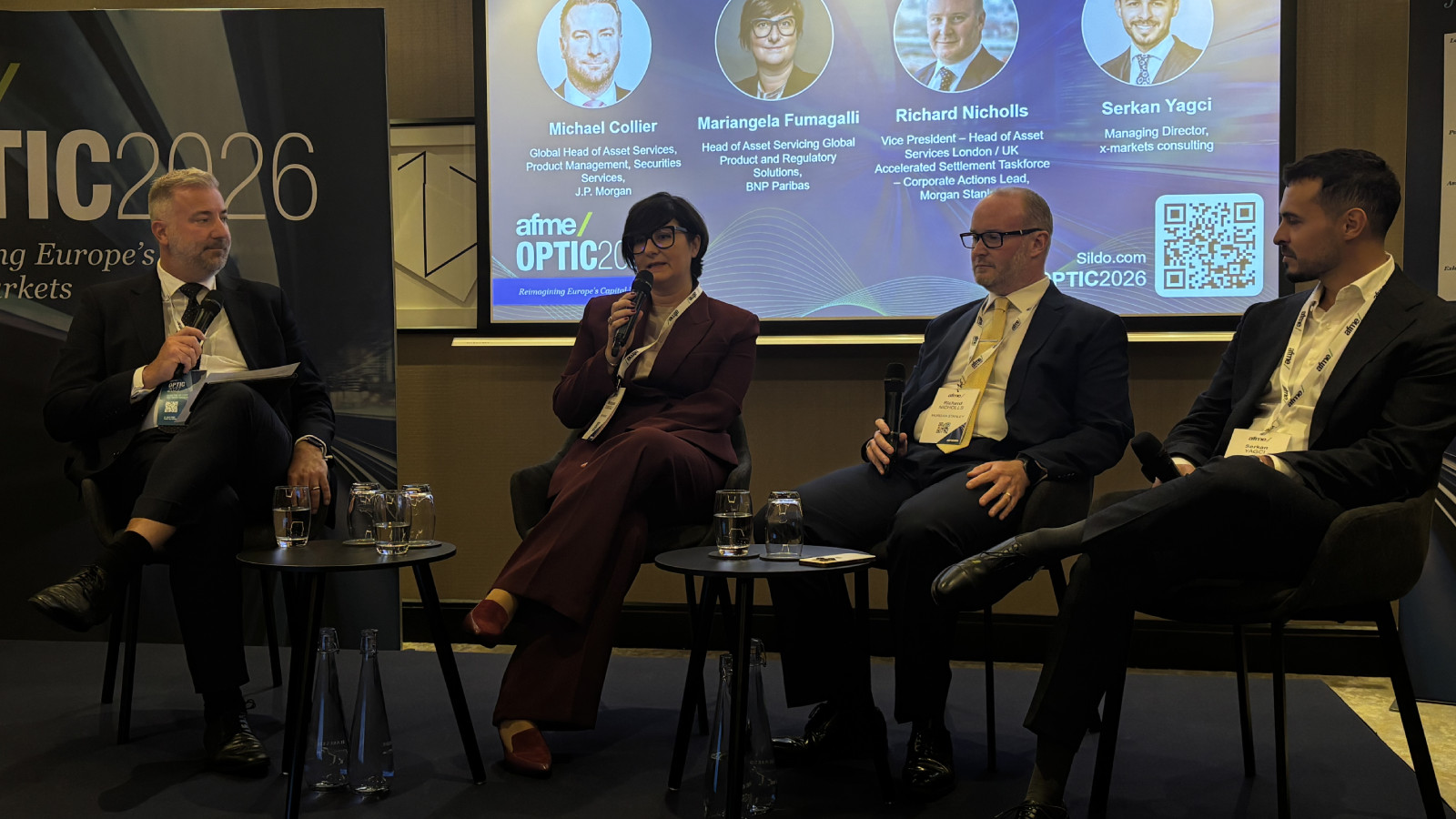


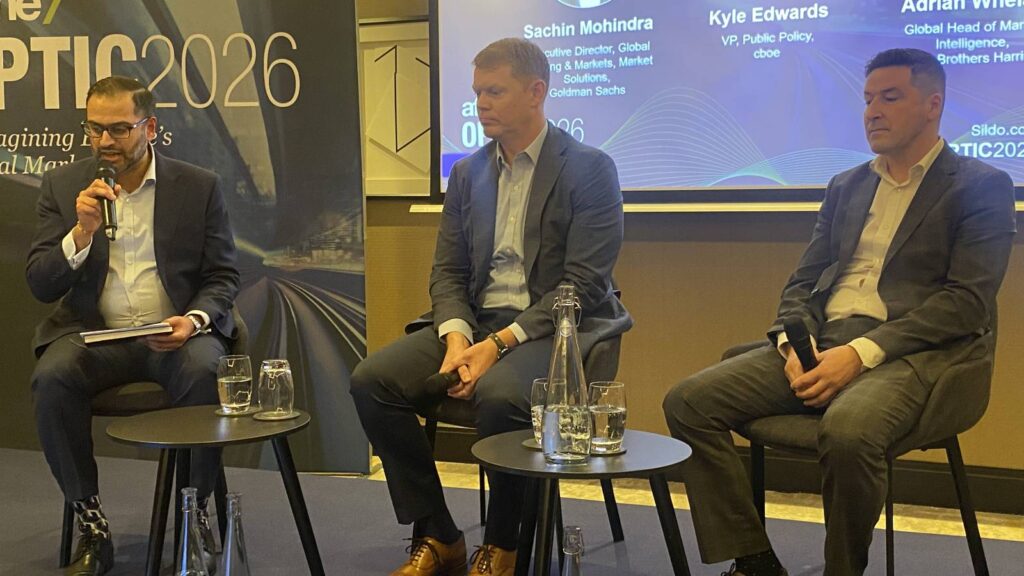
At AFME OPTIC in London, a panel on US market developments found plenty for Europe to admire, along with a warning not to dismantle the checks and balances that make its markets work.
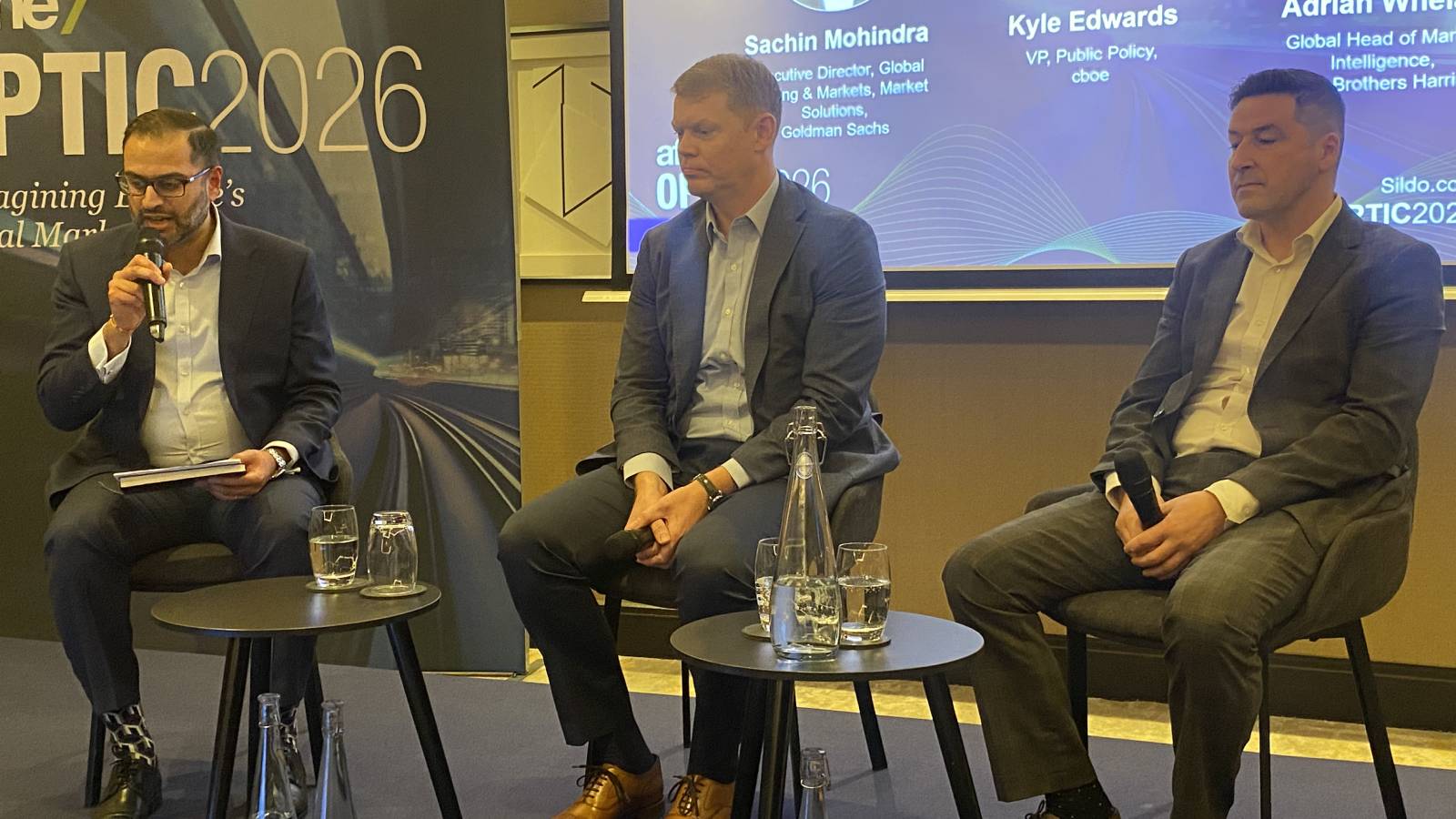
AFME OPTIC’s US focus panel had a fitting moderator. Sachin Mohindra, executive director in Goldman Sachs’ Global Banking & Markets Market Solutions team, is moving with the bank from London to New York. He’ll soon be, as Sting put it, an Englishman in New York, and he called the session “a bit of education for me”.
What will he notice? Speed, and what it costs. He ended by wishing the US would bring the same pace to its visa process.

A market woven into society
Adrian Whelan, global head of market intelligence at Brown Brothers Harriman, began with culture. In the US, capital markets are “part of their general society to a much greater degree than in Europe”. Americans discuss their 401(k)s at dinner, and politicians treat markets as a voting issue.
That gives US policymakers “political space and headroom to innovate, deregulate as required, that we don’t have”. Capital formation sits in the SEC’s mandate next to investor protection, and that, he said, is “not a red or blue issue”.
Europe, by contrast, is fragmented. Whelan cited the 19 rewrites of the Market Integration and Supervision Package as an “overly democratic process” pulled apart by local interests. “I don’t know if it has one single compelling reason to turn a European saver into an investor. And that’s what America has done successfully.”
Kyle Edwards, VP Public Policy at Cboe, set out how fast the US agenda is moving: a proposal to eliminate the Rule 611 order protection rule, booming prediction and event markets, and the SEC’s innovation exemption for tokenisation. Each, he said, would normally be a major development on its own.
Decisive and consequential
US policy, Whelan observed, has become “more decisive”. He described SEC Chair Paul Atkins writing consequential digital asset rules “with no dissenting voices” after the Clarity Act stalled in Congress. “You get one version of the truth, without any debates. That’s not ideal in any aspect of life.”
T+1 itself, he argued, came less from industry appetite to reduce risk than from a “populist reaction” to GameStop. It is a good thing overall, he said, but the global re-plumbing it set off is “disproportionate to the problem that it emanated from”.
Defending what works
23/5 US equity trading goes live in December, and many in the market are already talking about 24/7. Edwards called extended hours “still a choice”. Cboe is starting on one of its four equity exchanges, and overnight trading is around 1% of US equity volume.
Whelan was blunter. “The current system isn’t that broken.” Extended hours may globalise and democratise investing, but institutional allocators “have not, and will not be banging down our doors” for 24/7. Against the benefits he weighed what could be lost: netting, clear cut-offs, reliable closing prices and “processes that generally work”.
“Short-termism is driving a complete re-architecture of models,” he warned. “Trading is trading all the time. Investing is long-term.” He was clear he is not anti-innovation, but “not all innovations are great innovations”, and the industry needs an honest debate about innovation that covers both sides. “Sometimes we need to defend some of the traditional checks and balances, industry utilities and architecture that actually do make the system work quite well and de-risk the system.”
The pace worries him most. Change is often driven by one idiosyncratic event or one cohort of investors. “It takes time to change the tanker.”
Tokenisation: a long bridge
On digital assets, the US wants to plant its flag, backing dollar stablecoins rather than a digital dollar, which Whelan called a political choice about soft power. But without a cash leg, a tokenised “digital twin” is “not as efficient as the current process”. He expects old and new systems to coexist for “five, 10 years”. Tokenised money market funds used as collateral, though, are a “really compelling” use case that solved a real, very manual problem.
The lesson for Europe
The panel’s message cut both ways. Europe needs some of America’s nimbleness and its knack for turning savers into investors. Whelan believes it needs more risk, not less. But it should not give up the safeguards that make its markets resilient just to keep up.
Asked where the market is most complacent, Whelan pointed to settlement risk in Europe’s own T+1 migration. Many, he said, aren’t complacent so much as unaware: “They literally don’t know.”