









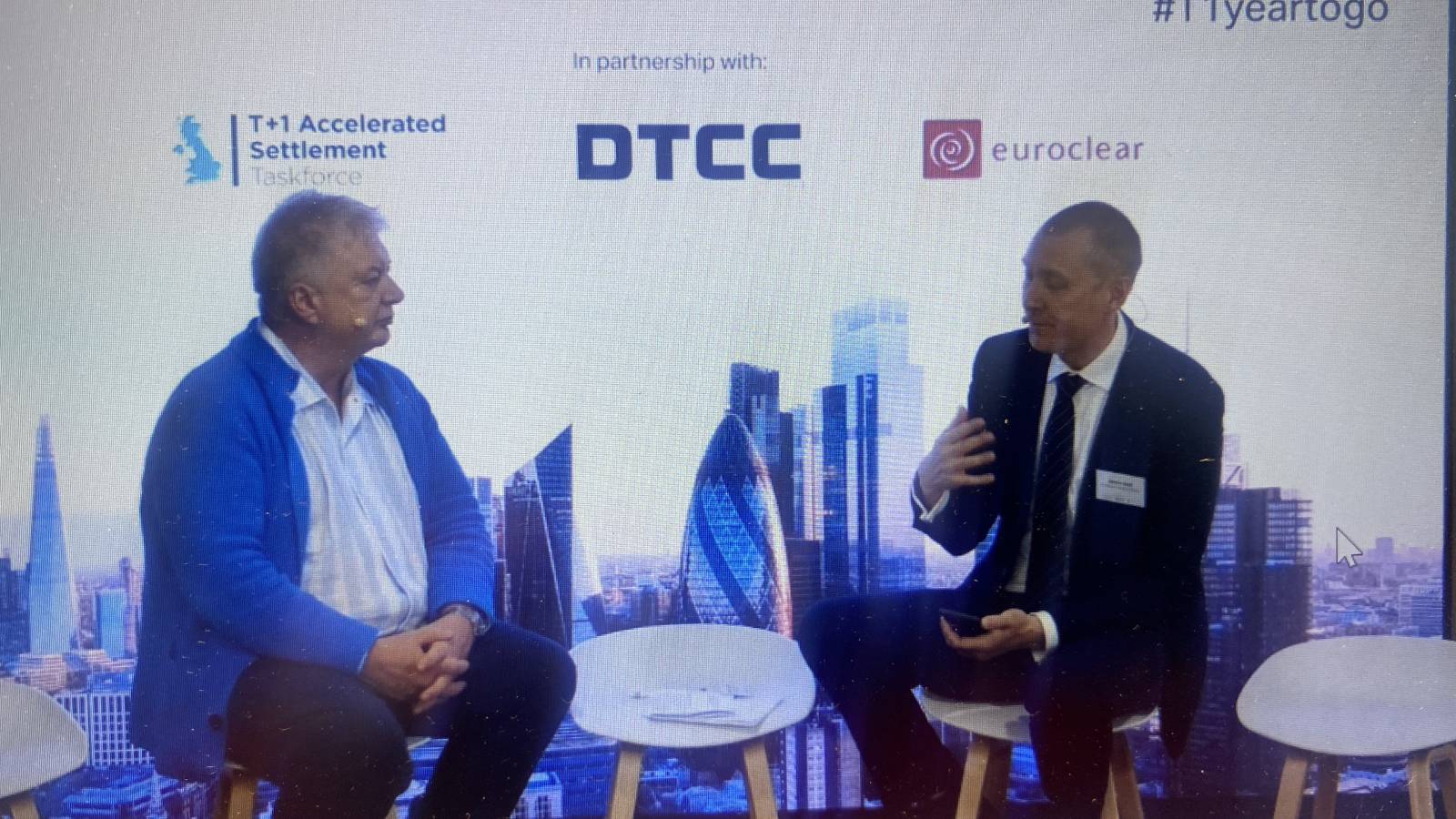

Tokenisation, not least, but also AI and other current fields of technology development make for a large chunk of the content at this year’s edition of the European wholesale banking industry’s operational conference Optic – kicking off in Amsterdam on Tuesday morning.
Living as you learn, in terms of building your own organisation on powerful digital capabilities, including artificial intelligence tools, was one suggestion, as Dutch Central Bank supervision chair Steven Maijoor shared his insights in the introductory session of Optic 2025. Current issues of particular interest include stablecoins, where central banks will need to assess, among other things, how easily internationalised holdings can influence reserve needs and stability. While that assessment is not new to central banks in principle, the dynamic is affected.
The Tuesday would segue into two parallel session tracks, but first host a plenary panel on “Delivering Europe’s competitiveness agenda: the role of technology and innovation”. Perhaps not surprisingly, with think tank leader Karel Lannoo as one of the panellists, non-tech imperfections to the enforcement of competition rules around central securities depositories were given attention, too. There are rules and reports and ‘commitment’, he noted. “But the rules are not enforced … We have harmonised more than enough. Let’s make it work.”

The session followed only a week after AFME released a report pointing to excess costs of possibly a billion euros in Europe’s settlement, due to lack both in harmonisation and competition.
ClearToken is a provider candidate for CCP and CSD functionality in the future’s possibly more tokenised securities market. Its chair Niki Beattie was one of the panellists, suggesting that established financial institutions have a lot to learn from crypto markets. “People want to invest 24/7. T+1 is not going to be good enough,” she said. “And markets need to be fractional,” she added, arguing that it should be normally possible to purchase single percentages of a security. She is critical of the regulatory approach to DLT taken so far in Europe’s financial markets. “This idea that we need to regulate the technology is what has been holding us back,” she said, preferring to have regulation instead focused on what financial players do with it. “We don’t regulate spreadsheets.”
On stage with the session were also …
Pablo Portugal, Senior Public Affairs Director, Euroclear,
Philippe Benoit, Head of Strategic Business Development & Transformation Securities Services, BNP Paribas,
and, as moderator, James Kemp, Managing Director, Global FX, Technology and Operations and Policy Divisions, GFMA and AFME.
The yearly Optic conference, in Amsterdam on 7–8 October 2025, is hosted by the Association for Financial Markets in Europe (AFME). Optic stands for the “Operations, post trade, technology and innovation conference”. PostTrade 360° is there, with our coverage collected here.