
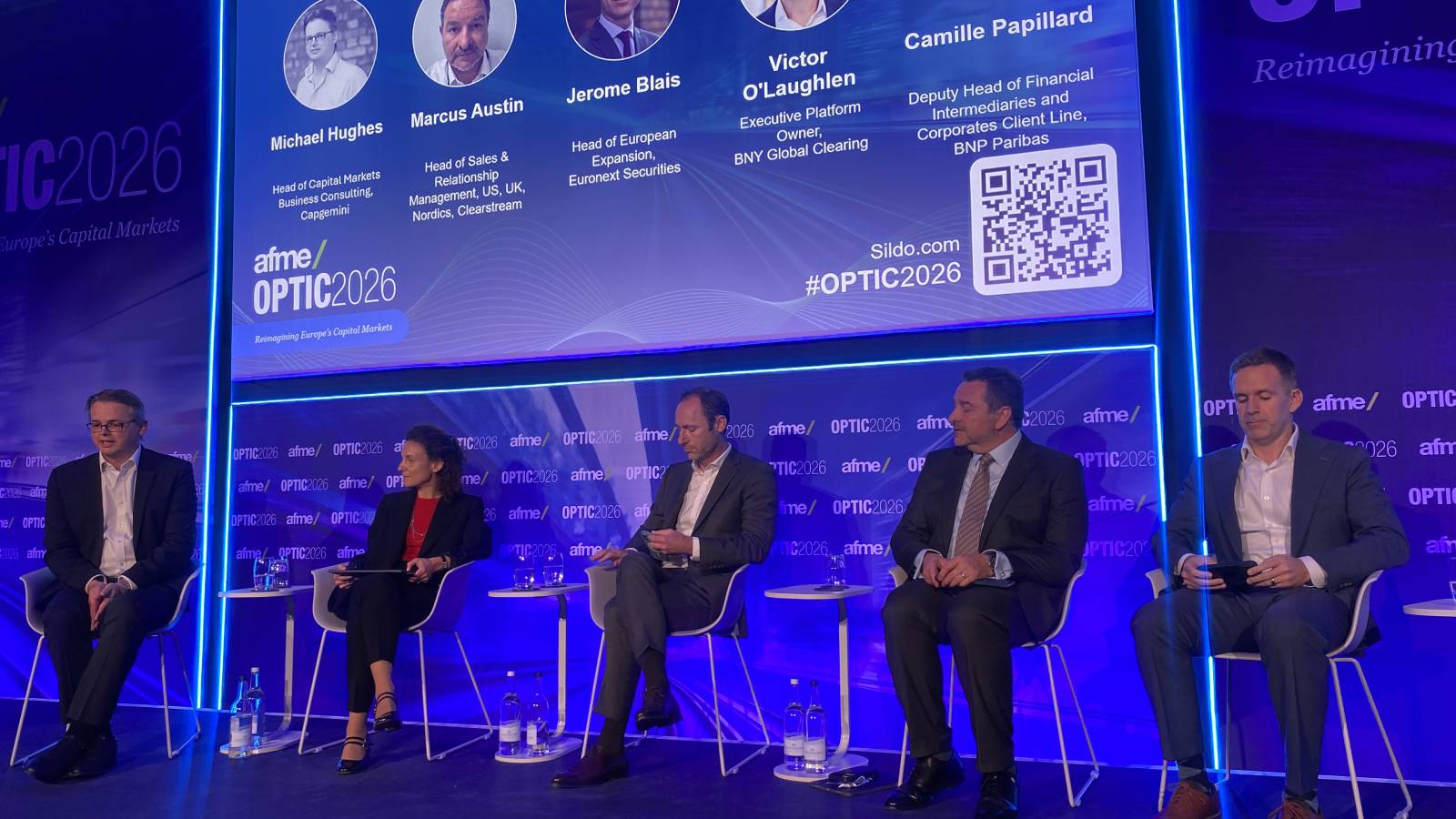
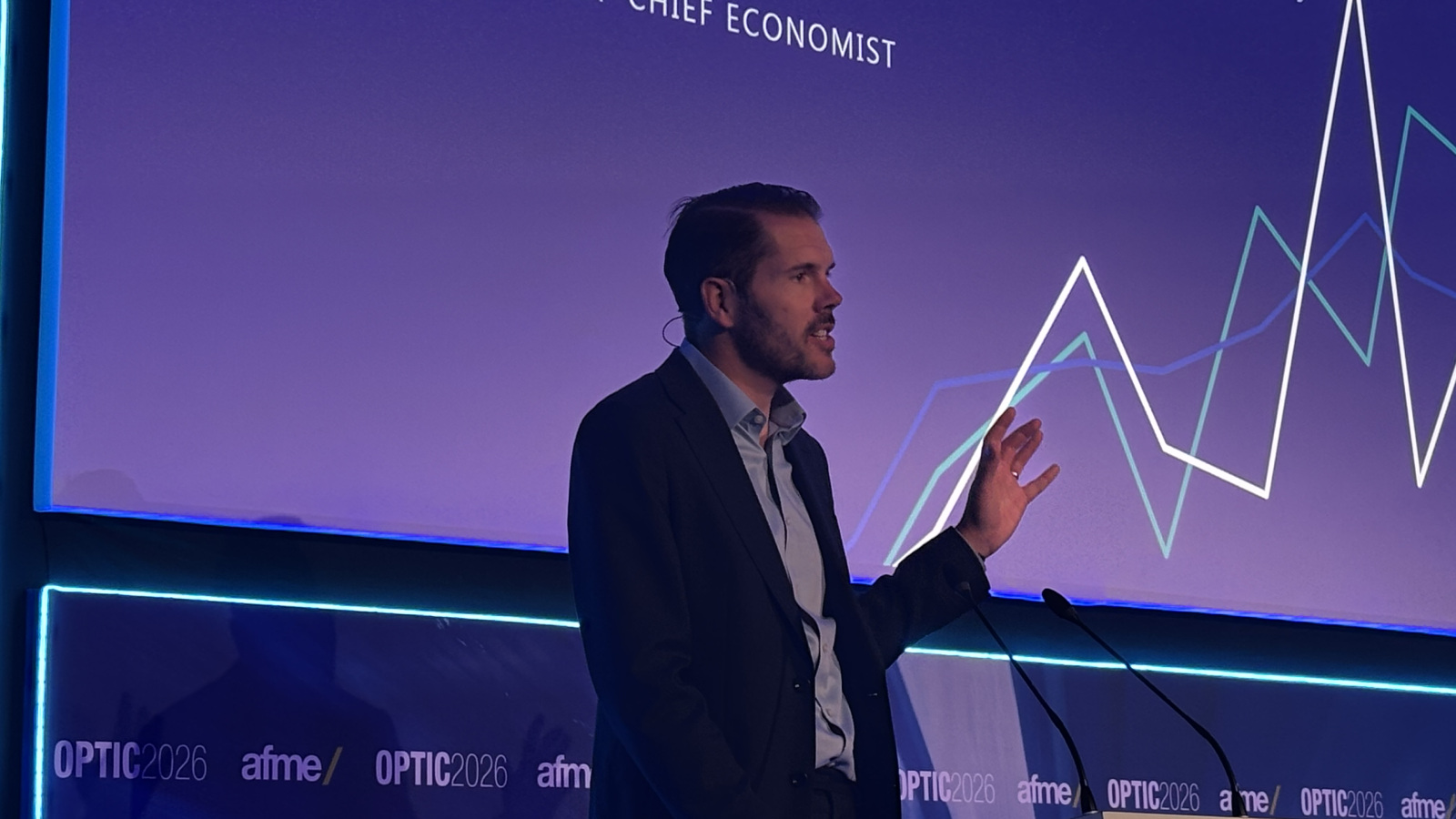
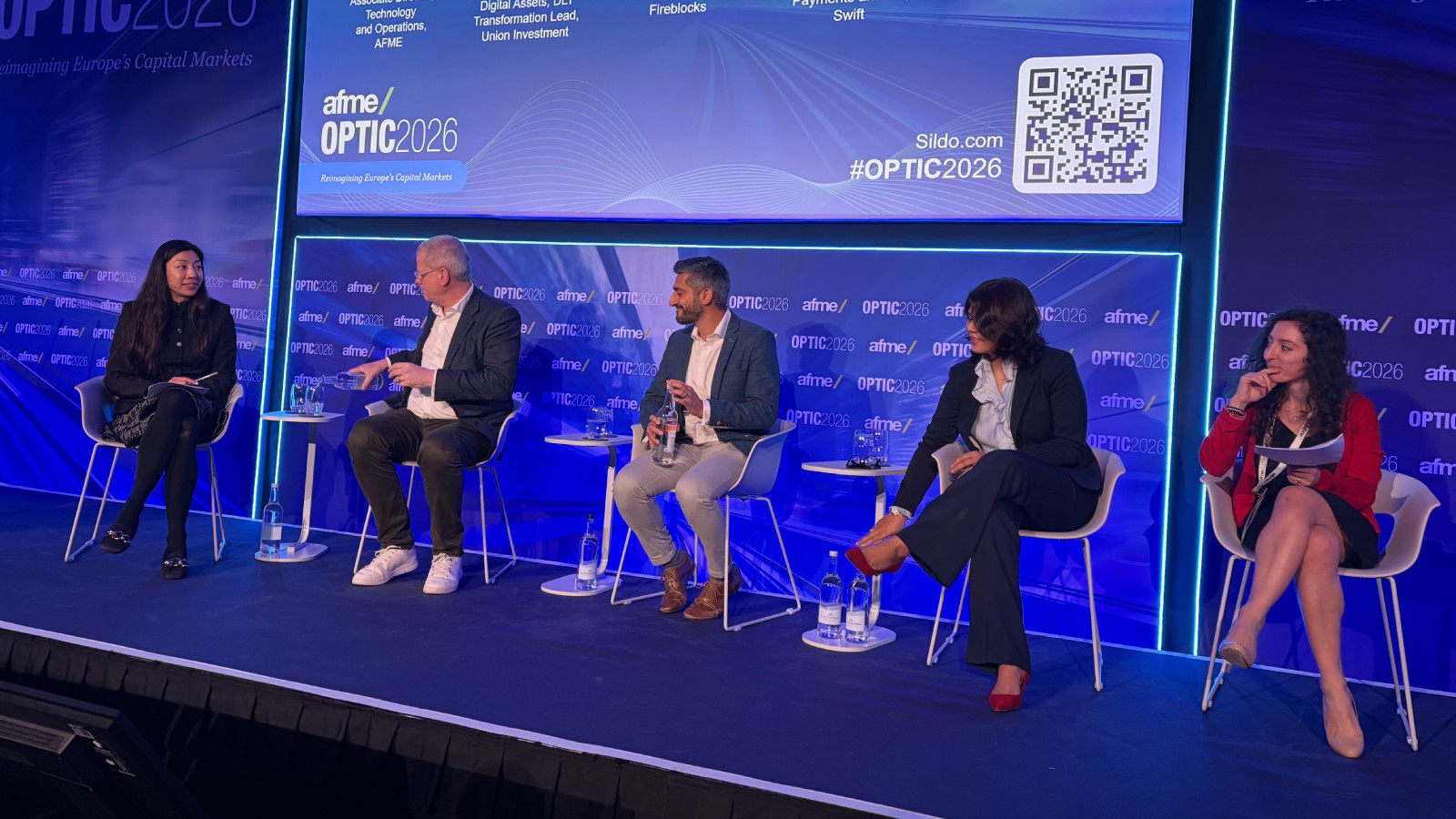
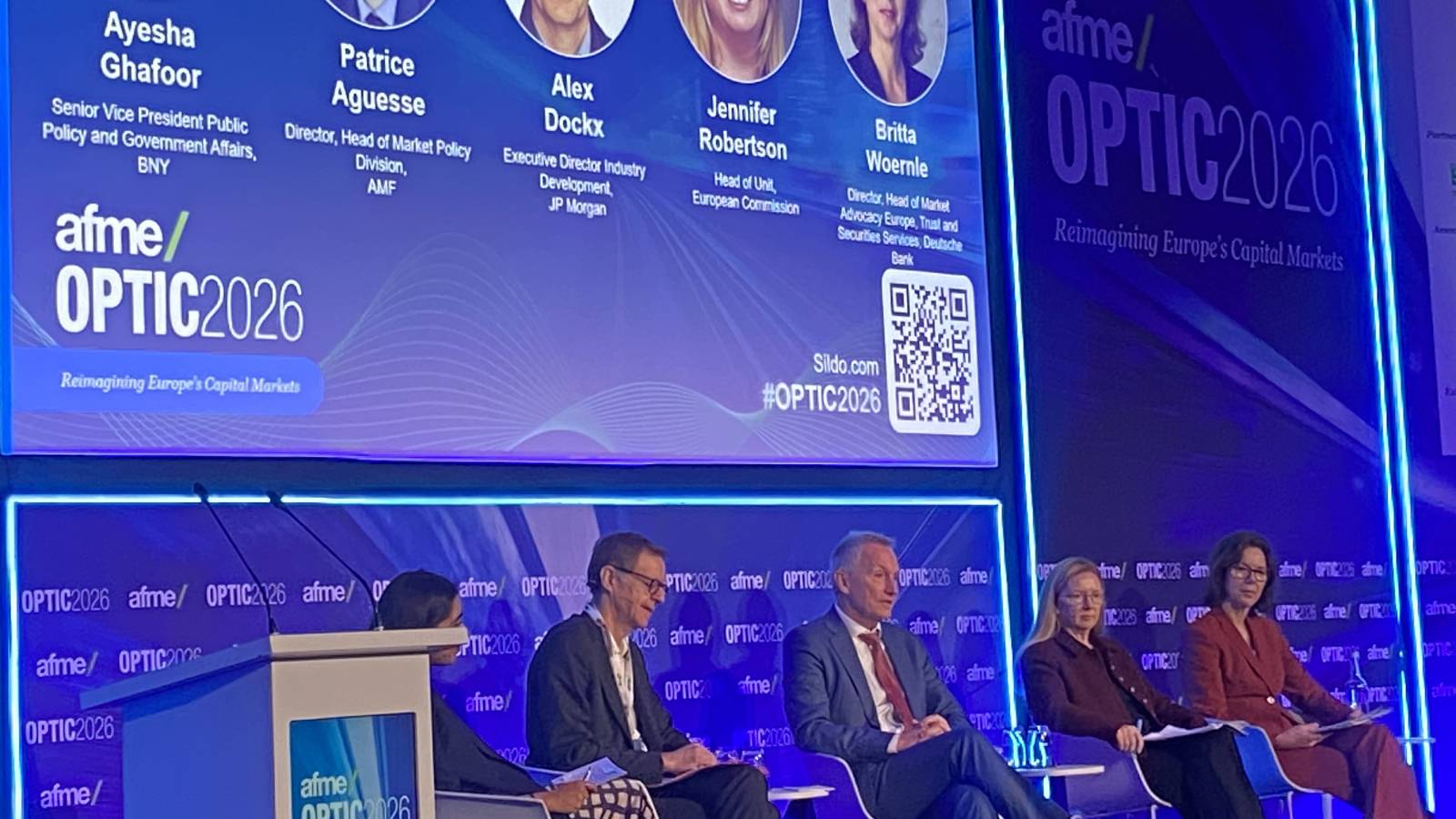
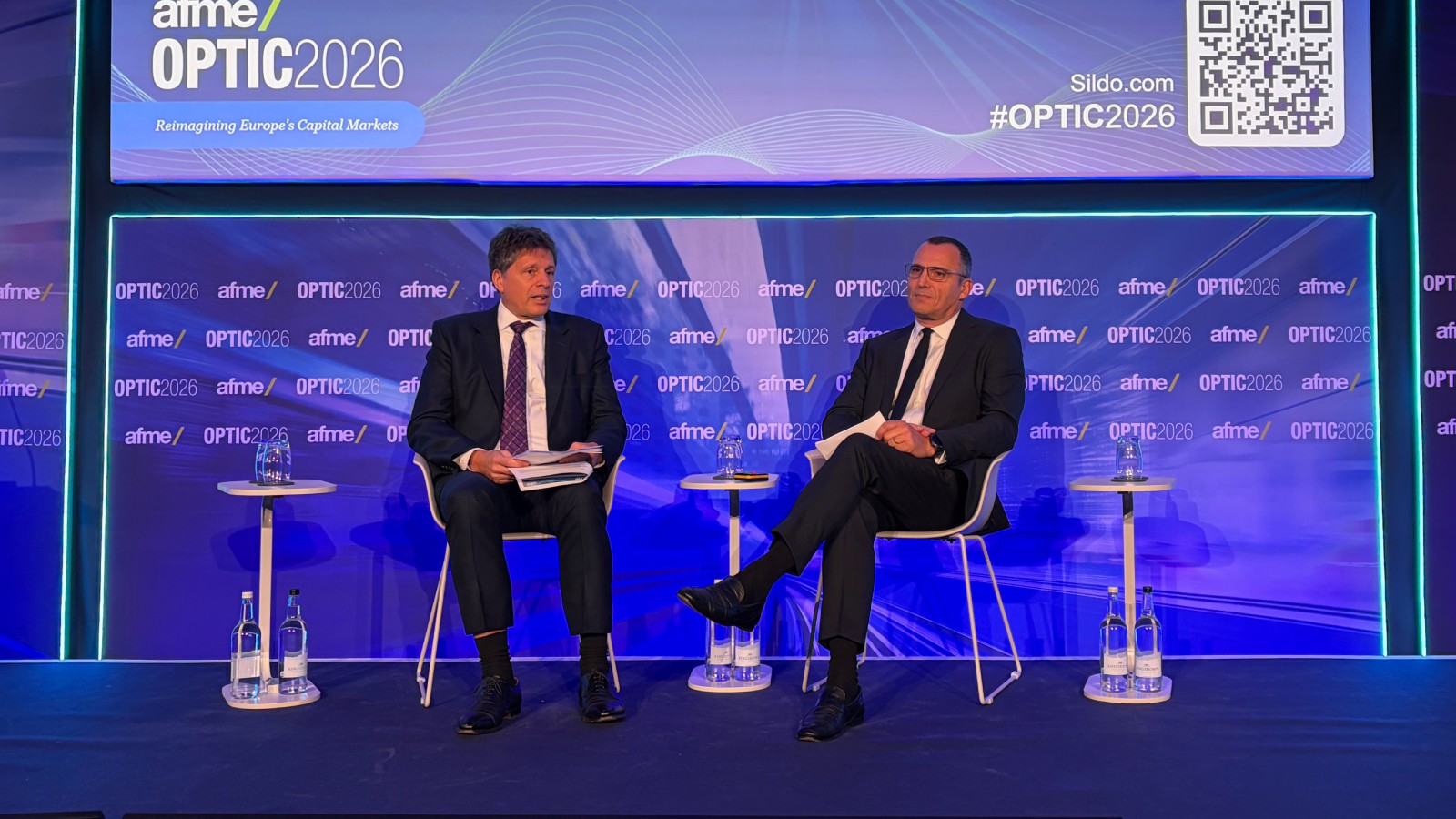
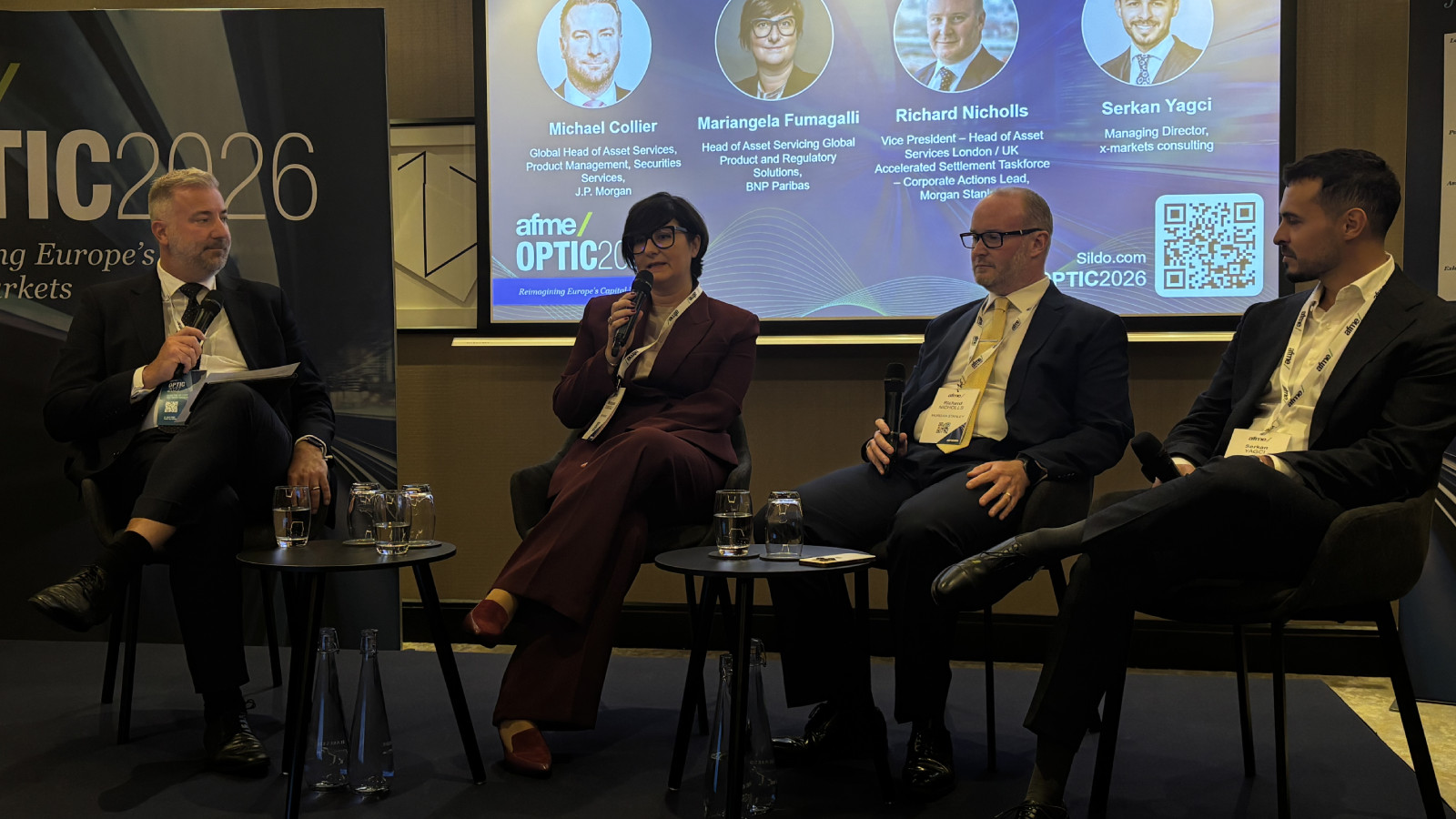
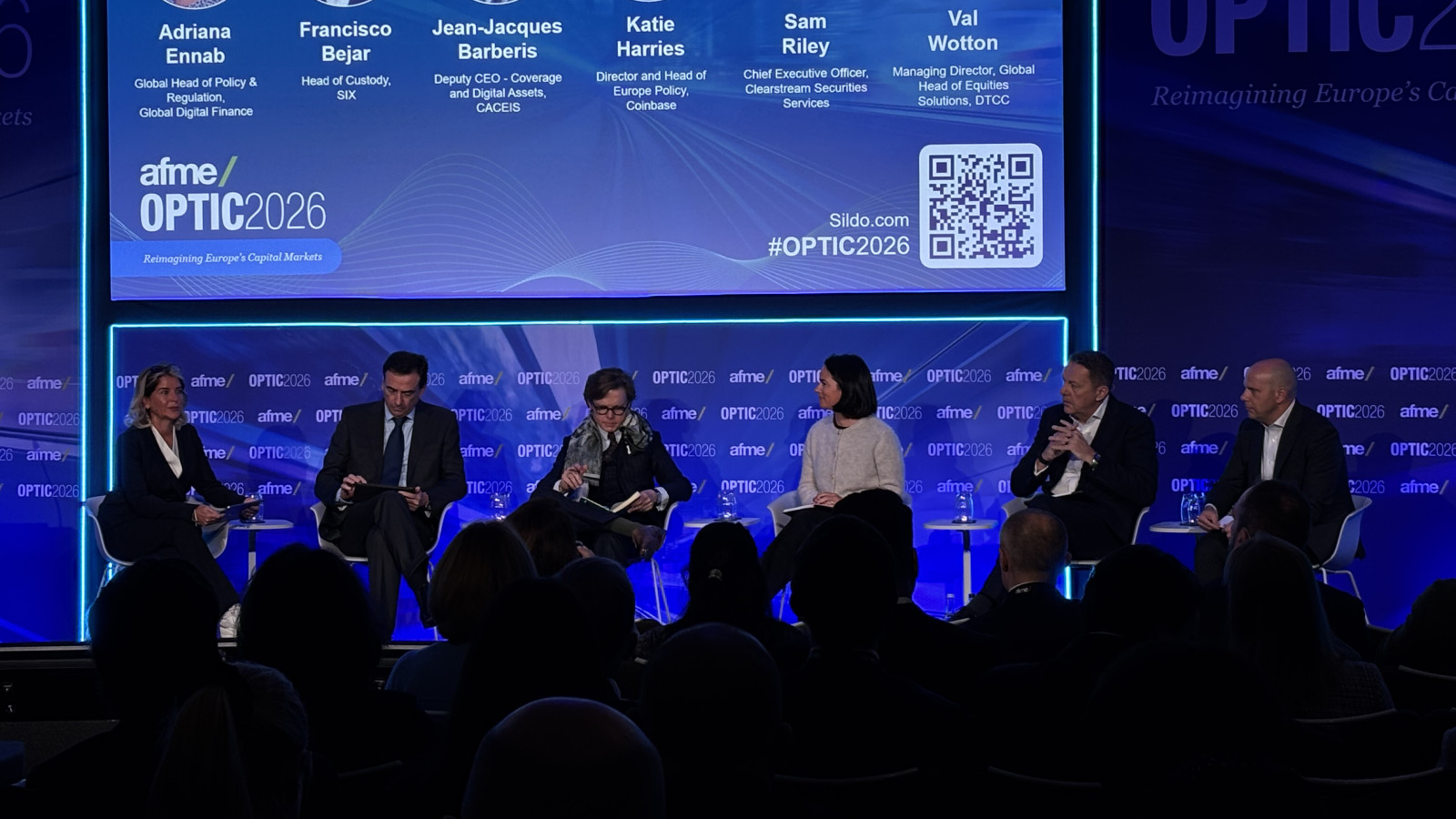




“If you conclude there is nothing for you to do, I am very happy for you – but I will be very surprised.” On stage with the Optic conference in Amsterdam, UK T+1 industry coordinator Andrew Douglas – like his EU colleague Giovanni Sabatini – stayed consistent in their urge for all market participants to fully map out what action they each need to take.
Regular readers of PostTrade 360° could recognise their key message from articles such as our detailed interview with Giovanni Sabatini, or our recent meeting with them both at PostTrade 360° 2025 in Stockholm: As a market participant, such as an asset manager, you can’t ultimately trust your service suppliers to fix everything for you.
“My concern is not with the people who come to these events, but the ones who don’t,” said Douglas.

By speaking with the securities sell-side and services-provider participants in the room in Amsterdam, they hope that their message could be passed on to their less centrally engaged counterparties on the investor side.
With the session styled as an “ask me anything” chat, led by Euroclear’s Gareth Jones, with live questions from the audience, discussions could also reach into narrower detail. One was the exception from T+1 handling for securities financing transactions (SFTs), which has been a hot issue. While Sabatini finds it unfortunate that the European Commission has adopted “a wording that is not straightforward” (singling out “undocumented buy-and-sell transactions”, which are not clearly defined), he views positively that in reality, the majority of SFTs will go outside the T+1 scope.
The yearly Optic conference, in Amsterdam on 7–8 October 2025, is hosted by the Association for Financial Markets in Europe (AFME). Optic stands for the “Operations, post trade, technology and innovation conference”. PostTrade 360° is there, with our coverage collected here.