
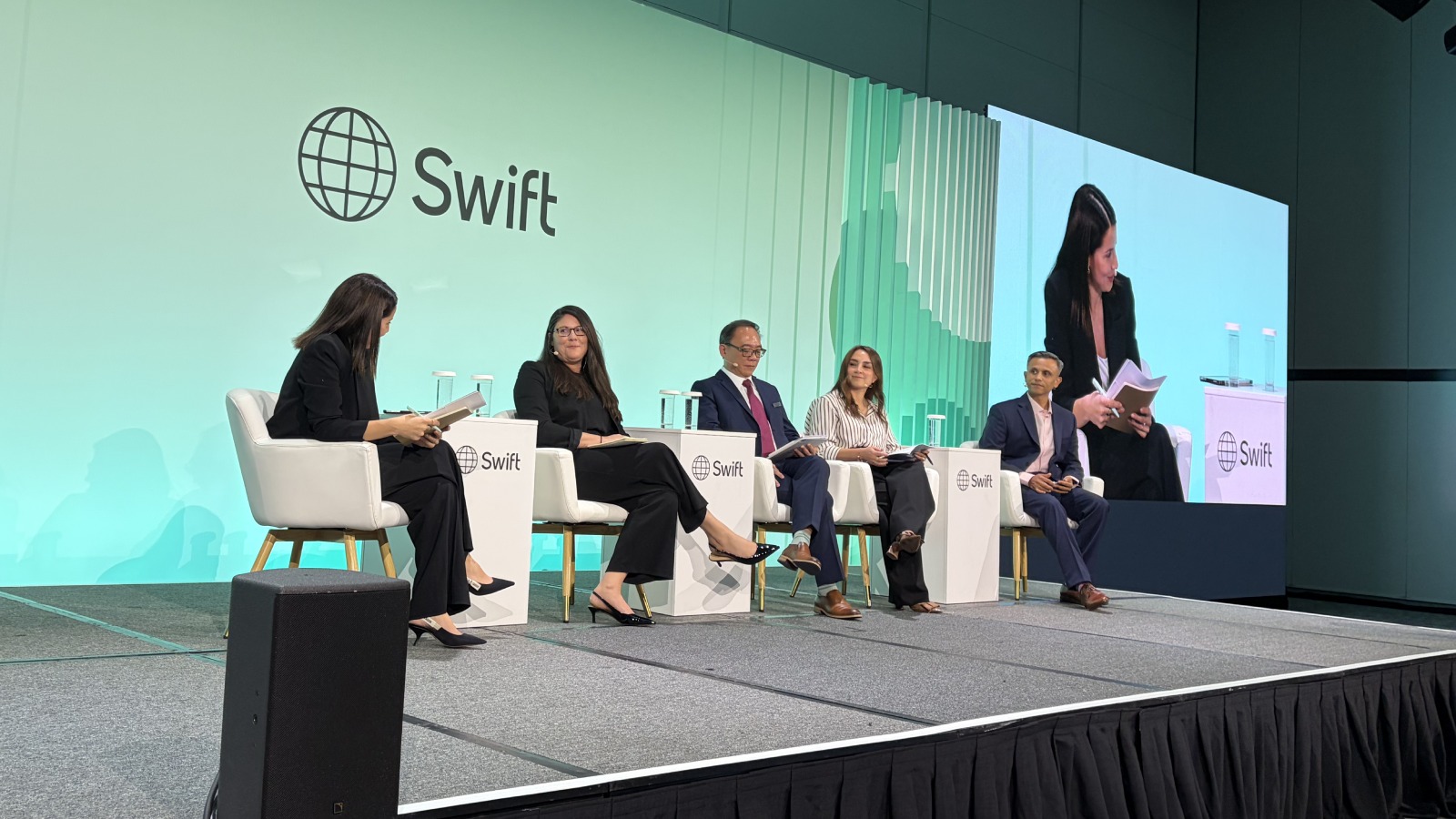
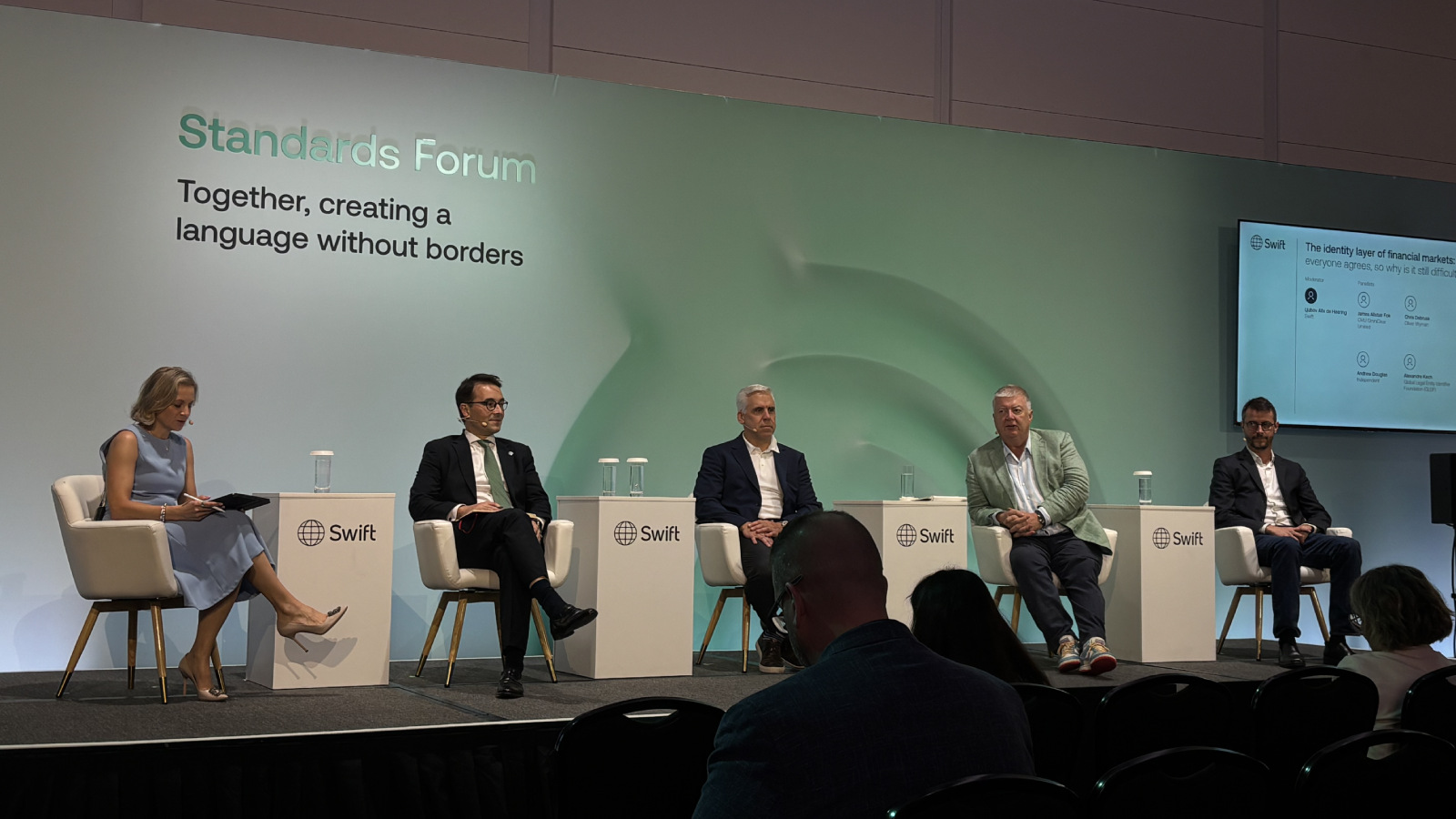








Even the most well-intentioned market reforms might backfire on application. At Sibos 2025, five experts took to the stage in the session titled “Capital market reforms: how policies can foster economic growth, innovation, and efficiency” to discuss the best practices for implementing regulation. Three key themes emerged: communication, adaptability to changes, and nationalism as a hurdle to effective reforms.
Let’s talk
Giovanni Sabatini, chairperson of the EU T+1 Industry Committee, singled out the T+1 project as a prime example of what good communication can do: “The public sector identified the “what”, which is the shortening of the settlement cycle and they tasked the industry to identify the “how” – the roadmap to a smooth transition to T+1.”
He believes that the same approach can be extended to other initiatives, such as the Savings and Investments Union (SIU). “Promoting the integration of European capital markets cannot be achieved simply by an additional layer of regulation. A top-down approach will not work. We need again a strong cooperation between the public authorities and the industry promoting interoperability and removing barriers.”

Margaret Harwood Jones, managing director and global head of Financing and Securities Services at Standard Chartered Bank pointed out a major obstacle to smooth communication – capital markets are global, but regulation is predominantly at the national level. Therefore, Jones believes that it is important to have discussions in three dimensions – internationally, regionally, and nationally. “It takes collaboration and conversations. Starting that collaboration and conversation very early on is important so that you have the right people from the onset of the conversation,” she says.
Pride before a downfall
Jones’ point about the global and national divide between capital markets and regulation led to the discussion’s next theme – that nationalism is often a hurdle to effective reforms. “International coordination is absolutely critical,” she emphasises. “It’s the way to deal with the dichotomy of inward looking national agendas vis-à-vis the right environment to enable the optimisation of global markets.”
For James Fok, Chief Commercial Officer of CMU OmniClear Limited, the issue can be more easily tackled if the industry remembers where its allegiance should lie – always with the client, and not nations. “Our first duty to our clients is to protect asset security. Where you have these issues arising and particularly sudden shifts in rules or policies that could put client assets at risk, I think it’s incumbent on the industry to find essentially resolution mechanisms.”
The price of stability
In the digital age, it has become more important than ever that regulation is able to move from the past and adapt to changes. “Regulation is still driven by the financial crisis. The focus is always on financial stability,” Giovanni says. “I think we should reconsider the mandate given to the authorities. Yes, financial stability is a precondition, but you should not deliver additional regulation if this additional regulation will hamper innovation, digitalisation, competitiveness, and growth.”
Jones suggested that here, the solution might lie in the first point made in the discussion: communication. Policymakers might be more open to innovation if they understand the point of view of the market participants. “If we can start the conversation early on, we are likely to find the right balance between resiliency and innovation, which is an important balance that we absolutely need to have. The understanding is helped when working with policymakers that have within their teams market and industry practitioners.”
When it backfires
Fok warned that overly conservative regulation might have unintended consequences. “These policies haven’t necessarily reduced risks but have shifted them into other areas where they’re less easy to track. Some policies reduce short-term risks or cushion short-term market crises but stored up longer term problems… The markets have to strike a balance. I think there should be a process of healthy creative destruction. That’s how economies renew themselves and you get rid of malinvestment to improve overall economic productivity.”
“A lot of rules have been put in place to achieve certain specific objectives are entirely meritorious in their own right but the way the markets operate, they’re very interlinked and so changes in one area of policy have reverberations around markets. Quite often the solutions to one crisis become the seeds of the next.”
Sibos 2025 plays out in Frankfurt from 29 September to 2 October, with about 12,000 registered delegates. We are there, overview our coverage here.